
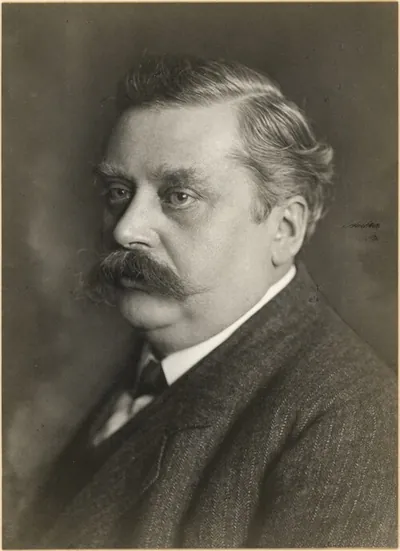
Fritz Haber
German chemist who developed the Haber process for ammonia synthesis and pioneered chemical warfare · 1868–1934
- Born
- December 9, 1868
- Died
- January 29, 1934
- Country
- Kingdom of Prussia, Weimar Republic
- Section
- Chemistry
- Awards
- Nobel Prize in Chemistry
Extended biography
Childhood and training
Fritz Haber was born on 9 December 1868 in Breslau, then part of the Kingdom of Prussia and today Wrocław, in Poland. He came from a well-off Jewish family that had become thoroughly part of German society. His father, Siegfried, was a well-known merchant who ran a business dealing in dye pigments, paints and pharmaceuticals. His mother, Paula, died only a few weeks after giving birth, and the loss shaped the difficult relationship between father and son for the rest of their lives. The boy was raised for a time by various aunts. When he was about six, Siegfried remarried Hedwig Hamburger, who bore him three daughters. Haber grew close to his stepmother and his half-sisters, though he never felt fully accepted by his father.
He was educated at a school that mixed Catholic, Protestant and Jewish pupils, and he went on to a classical secondary school. He passed his final examinations in 1886. His father wanted him to join the family business, but Haber persuaded him to let him study chemistry. He began in Berlin under August Wilhelm von Hofmann, but found his first semester disappointing. He then spent a summer in Heidelberg with Robert Bunsen, whose name survives in the laboratory burner, before returning to Berlin to study at the technical college in Charlottenburg under Carl Liebermann, an expert in organic chemistry and dyes.
In 1889 he completed a compulsory year of military service. During this period he met Clara Immerwahr, a fellow chemist who would become his first wife. In 1891 he earned his doctorate with a thesis on derivatives of piperonal, an aromatic compound. He then returned to Breslau to work in his father's firm, where relations were increasingly strained. Siegfried sent him on practical placements to a distillery, an ammonia works and a paper mill, and eventually allowed him a semester at the Zurich Polytechnic with Georg Lunge, a specialist in industrial processes. That experience convinced him that his vocation lay in technical chemistry, the branch that turns raw materials into useful products on a large scale.
From the laboratory to the factory: the ammonia problem
To understand Haber's most important work, it helps to know the problem he was trying to solve. Nitrogen is the most abundant gas in the atmosphere, but its atoms are bonded so tightly that they rarely react with other substances. Plants need nitrogen compounds to grow, and for centuries farming relied on manure, plant residues and natural deposits of nitrates, such as the saltpetre mined in Chile. By the late nineteenth century, Europe's population was growing quickly and these sources were no longer enough. Nitrogen compounds were also the basis of explosives, which gave the deposits a strategic importance as well.
Ammonia, a compound made of nitrogen and hydrogen, was the key. It could be turned into fertilisers and many other chemicals. The challenge was combining the two gases cheaply. In theory this could be done, but in practice the reaction produced very little ammonia because the chemical equilibrium, the balance point at which a reaction stops changing, favoured the starting materials. A principle announced by Henry Le Châtelier in 1884 suggested that when a balanced system is disturbed, it shifts to counteract the disturbance. Applied here, it implied that high pressure would help produce more ammonia, but a faster reaction would also require something more.
Haber worked at Karlsruhe, where he was appointed professor of physical chemistry in 1906, with a collaborator named Robert Le Rossignol. They tested high pressures, high temperatures and various catalysts, which are substances that speed up a reaction without being consumed. In 1909 Haber made ammonia in the laboratory by combining nitrogen and hydrogen at about 500 degrees Celsius and high pressure, using an iron-based catalyst. The result was promising, but it was far from usable in industry. That would need equipment strong enough to withstand enormous pressures, and a continuous process that recycled the gases that had not reacted.
That step was taken by Carl Bosch, an engineer at BASF, who around 1913 managed to scale the method up to industrial production. Bosch designed robust reactors and found catalysts that were cheaper and longer-lasting than those tried before. The result is what is now called the Haber-Bosch process. Haber was the first to demonstrate the synthesis on a laboratory scale, but the industrial version depended on the work of both men, and it is fair to credit them together.
The Nobel Prize and its consequences
The Haber-Bosch process had enormous effects on the economy and on agriculture. It made nitrogen fertilisers from a nearly inexhaustible raw material, the air, instead of depending on limited deposits. Crops received more nutrients, and harvests grew. Estimates often cited suggest that a very large share of the food produced today depends on ammonia made this way, though such figures should be read as approximations rather than precise counts. What is well documented is that the method became the foundation of the fertiliser industry and of much of the chemical trade in raw materials.
The economic impact was also visible in Chile, which for decades had been one of the main and almost only exporters of natural nitrate. According to the figures commonly quoted, Chilean nitrate output fell from about 2.5 million tonnes in 1925 to around 800,000 in 1934, with a sharp drop in employment and prices. That crisis shows how a scientific innovation can reshape entire economies, for better and for worse.
In 1918 Haber was awarded the Nobel Prize in Chemistry for this work. The ceremony actually took place the following year, which was not unusual given the circumstances after the war. In his acceptance remarks he was cautious. He suggested that the solution he had found might not be the final one, and he noted that nitrogen-fixing bacteria perform the same task naturally, using methods that science could not yet imitate. That reflection anticipated a problem we know well today: excess fertiliser can pollute rivers and lakes, encouraging algae blooms that consume the oxygen in the water.
Haber pursued other lines of research too. He studied combustion reactions, adsorption (the way molecules stick to the surface of a solid), electrochemistry and free radicals, which are highly reactive molecules that take part in many reactions. Much of this work between 1911 and 1933 was carried out at the Kaiser Wilhelm Institute for Physical Chemistry and Electrochemistry in Berlin-Dahlem, which was renamed after him in 1953. It is sometimes stated, incorrectly, that he first synthesised MDMA. That compound was actually first made in 1912 by Anton Köllisch, a chemist at Merck.
The First World War and poison gas
When the First World War began, Haber enthusiastically joined the German war effort. He signed, with ninety-two other German intellectuals, the manifesto of October 1914 that backed the war, and soon afterwards he was made a captain and head of the chemistry section of the War Ministry. His position was unusual: a civilian scientist in his forties with authority over a military programme. From there he promoted the use of toxic gases at the front. Chlorine, which is heavier than air, could roll over trenches and cause severe damage to the lungs. Commanders wanted to break the stalemate of the trenches, and Haber saw gas as a technical answer.
The programme was large. He led teams of more than 150 scientists and many technicians. Work also went into gas masks with absorbent filters that protected against these gases. A special unit for gas warfare was formed, and among those who served in it were scientists who would later win Nobel Prizes, including James Franck, Gustav Hertz and Otto Hahn. Haber was personally present when chlorine was released on a large scale during the Second Battle of Ypres in Belgium, between 22 April and 25 May 1915. This use went against the Hague Convention of 1907, which banned projectiles filled with asphyxiating gases and which Germany had signed.
In his studies of poison gases, Haber noticed that long exposure to a low concentration could have the same effect as a brief exposure to a high one. From this he worked out a simple mathematical relationship between concentration and exposure time, now known as Haber's rule. It is a clear example of how a scientific analysis can help explain the effects of a toxic substance and, at the same time, make its lethal use easier to plan.
Haber defended gas warfare against the charge that it was inhuman. He argued that death was death, whatever the means, and compared gas with other weapons of the period. This stance drew strong criticism from contemporaries, including Albert Einstein, and from later historians. Haber saw himself as a patriot doing his duty, and the Kaiser gave him the rank of captain, a rank that had been refused to him twenty-five years earlier, when he was turned down for military service for reasons that were never fully explained. Because of his work, he is often called the father of chemical warfare, a title that sums up his role without reducing it to a single decision.
Family, grief and rupture
Haber's personal life was marked by tragedy and strain. Clara Immerwahr had earned a doctorate in chemistry at the University of Breslau and was one of the first women to do so. She married Haber in August 1901. She was a campaigner for women's rights and, according to some accounts, a pacifist. After the marriage she gave up her scientific career, and over time her mood deteriorated. Their son Hermann was born in 1902. Clara had converted from Judaism to Christianity a few years before marrying, as Haber himself had done earlier, a sign of the social pressure that many Jewish families felt at the time.
On 2 May 1915, after an argument with Haber, Clara shot herself in the garden of their home with his service revolver. She did not die immediately. She was found by their twelve-year-old son, Hermann, who had heard the shot. The reasons for her suicide remain a matter of speculation. It has been suggested that she opposed her husband's work on chemical warfare, and that his personal supervision of the first large chlorine release at Ypres, only days earlier, may have affected her state of mind. Haber left soon afterwards for the Eastern Front to oversee gas release against the Russian army. Clara was first buried in Dahlem, and years later her remains were moved to Basel, beside his.
Haber married Charlotte Nathan in 1917. She had worked as a secretary at a Berlin hotel and had also converted to Christianity before the wedding. They had two children, Eva-Charlotte and Ludwig Fritz, known as Lutz. The marriage also had conflicts and ended in divorce in December 1927.
The family suffered terribly in the decades that followed. Hermann, Haber's son with Clara, lived in France until 1941 without being able to obtain French citizenship. When Germany invaded France, Hermann, his wife and their daughters escaped on a ship heading for the Caribbean, and from there they emigrated to the United States. Hermann died by suicide in 1946. His eldest daughter, Claire, also a chemist, took her own life in 1949, after learning that her research on an antidote to chlorine had been set aside in favour of the atomic bomb programme. Several members of Haber's wider family died in Nazi concentration camps. His son Lutz became a prominent British economist and in 1986 wrote a history of chemical warfare, The Poisonous Cloud.
Final years and exile
During the 1920s Haber continued his research and took on administrative duties. Between 1919 and 1925 he managed a fund financed by money donated by a Japanese businessman, which helped German researchers in years of financial hardship. In those years he also searched intensively for a way to extract gold from seawater. He published several papers on the subject, but concluded that the concentration of dissolved gold was far lower than earlier researchers had reported, and that extraction would not pay. It is a telling episode of his methodical habit: he tested an attractive idea and ended up correcting earlier figures.
In the 1920s scientists at his institute developed Zyklon A, a cyanide-based formulation used as an insecticide, especially for fumigating grain stores. Later the Nazi regime refined it into Zyklon B, which was used in the gas chambers of the extermination camps to kill a very large number of people, most of them Jews. Haber took no part in that later stage, but his original work was the starting point. It shows how a technique developed for one purpose can be transformed by others to criminal ends.
When the Nazis came to power in 1933, Haber's situation changed completely. The law of April that year required the removal of Jewish officials, including scientists at the Kaiser Wilhelm institutes. Haber, who had converted to Christianity and had a long record of service to Germany, had expected to be protected by his war service and his reputation. He nevertheless resigned as director and as professor. He tried to delay the departure of his Jewish staff so they would have time to find somewhere to go. Some accounts say the regime offered him funding for military research, which he did not accept.
His health was fragile. He travelled to Paris, Spain and Switzerland, and suffered attacks of angina, chest pain caused by an insufficient blood supply to the heart, which can leave lasting damage if repeated. In England, former wartime rivals helped arrange an official invitation for him to Cambridge, where he lived and worked for a few months with his assistant Joseph Joshua Weiss. Ernest Rutherford refused to shake his hand because of his part in gas warfare. Later, Chaim Weizmann offered him the directorship of the Sieff Research Institute, the forerunner of today's Weizmann Institute, in Rehovot in British-mandated Palestine. Haber accepted and set out in January 1934. He died on 29 January 1934, aged 65, of heart failure in a hotel in Basel, where he had stopped to rest on the journey.
Legacy and memory
Haber left an ambivalent legacy, and his figure still provokes debate. On one side, his work on ammonia is regarded as one of the most important advances in industrial chemistry. It is often cited as one of the factors that made the growth of the world population in the twentieth century possible, although fertilisers are also linked to environmental problems. On the other side, his role in developing chemical weapons is, for many historians, an indelible stain. Both facets cannot cancel each other out: the same technical skill fed millions of people and also caused mass suffering.
His institutional legacy is visible. His private library was donated to the Sieff Institute, which dedicated it as the Fritz Haber Library in 1936. It survives as a private collection at the Weizmann Institute. In 1981 the Fritz Haber Research Center for Molecular Dynamics was created in Jerusalem, a joint venture between the Max Planck Society and the Hebrew University. The former Kaiser Wilhelm Institute in Dahlem was renamed the Fritz Haber Institute in 1953 and remains part of the Max Planck Society. A lunar crater also bears his name.
His honours include the Nobel Prize in Chemistry in 1918, the Rumford Medal in 1932, and honorary membership of several scientific societies, as well as the Goethe Medal for Art and Science. These distinctions sit alongside criticism from scientists and the public. Albert Einstein, his old friend, summed up his life in a phrase describing it as the tragedy of the German Jew, the tragedy of unrequited love.
Haber has also appeared in fiction. The Swedish band Sabaton wrote a song about him, and the playwright Vern Thiessen's Einstein's Gift portrays him as a man caught between his Jewish origins and the moral consequences of his science. Several radio and television productions have dramatised his marriage to Clara and his relationship with Einstein. His story is often used to raise a question that remains current: how far a scientist is responsible for the uses to which discoveries are put.
Quotes
“During peace time a scientist belongs to the World, but during war time he belongs to his country.”
“The field of scientific abstraction embraces the independent realms of ideas and of experiments, and within these, those whose fame lasts longer than centuries.”
“We want only one limit, the limit of our own capacity.”
Main contributions
- 1898A handbook on technical electrochemistry, setting out the theory behind electricity-driven chemical processes for industry.
- 1905A book on the thermodynamics of gas reactions, examining the energy exchanged when gases react.
- 1909Synthesis of ammonia from nitrogen and hydrogen in the laboratory, using high pressure and a catalyst.
- 1913Scaling up of the process to industrial production together with Carl Bosch, giving the Haber-Bosch process its name.
- 1915Release of chlorine at the Second Battle of Ypres, the first release of lethal gas by the German army at the front.
- 1918Nobel Prize in Chemistry for the synthesis of ammonia, formally presented in 1919.
Teachers and students
Trivia and anecdotes
An umbrella and a reply
According to the account of his life, when he met Charlotte Nathan she lent him an umbrella in the rain. He thanked her with a gallant remark, and she replied: "I prefer the opposite."
A mistaken attribution
Haber is sometimes wrongly credited with first synthesizing MDMA. That substance was first made in 1912 by the Merck chemist Anton Köllisch.
A Nobel delivered late
The 1918 Nobel Prize was not formally presented until 1919, so the honour reached him a year after the year it bears.
Related discoveries and inventions
- 1909Haber-Bosch processAn industrial process that combines nitrogen from the air with hydrogen, using a catalyst under high pressure and temperature, to make ammonia.
Their contemporaries
While Fritz Haber was alive (1868–1934)…
Alive at the same time
Discovered or invented in those years
- 1869Periodic tableAn arrangement of the chemical elements into rows (periods) and columns (groups), ordered by atomic number, that reveals recurring chemical behaviour and lets scientists predict properties.
- 1869Deoxyribonucleic acidA double-stranded molecule that carries the genetic instructions of nearly all living things and many viruses.
- 1876TelephoneA device that carries the human voice over distance by turning sound into electrical signals and back into sound at the other end of the line.
- 1884CarA road vehicle with four wheels and its own engine, mainly built to carry people.
- 1903AirplaneA fixed-wing aircraft, heavier than air, powered by engines or rockets, that stays aloft because its wings generate lift.
- 1925TelevisionA system that sends moving pictures and sound over distance and shows them on a receiver, the television set.
 Marie Curie1867–1934 · Chemistry
 Alfred Werner1866–1919 · Chemistry
 Walther Hermann Nernst1864–1941 · Chemistry
 Svante August Arrhenius1859–1927 · Chemistry
 Otto Hahn1879–1968 · Chemistry
 Johannes Nicolaus Brønsted1879–1947 · Chemistry
