
Naoko Yamazaki
Japanese aerospace engineer and former JAXA astronaut, the second Japanese woman in space · 1970
- Born
- December 27, 1970
- Country
- Japan
- Section
- Astronomy and space
Biography
Naoko Yamazaki, born on 27 December 1970, is a Japanese aerospace engineer and former astronaut at the Japan Aerospace Exploration Agency (JAXA). She was the second Japanese woman to fly in space, after Chiaki Mukai. Her 2010 mission aboard the space shuttle Discovery took place while the International Space Station (ISS) was being assembled piece by piece by several space agencies, and her career shows how a generation of Japanese astronauts came to work on that station.
She was born Naoko Sumino in Matsudo City, near Tokyo, and spent two years of her childhood in Sapporo. After finishing high school at the Ochanomizu University Senior High School in 1989, she earned a bachelor's degree in aerospace engineering from the University of Tokyo in 1993 and a master's degree in the same field in 1996. Aerospace engineering covers the design of aircraft, rockets and spacecraft, and her training prepared her for the systems that keep such vehicles working.
In 1996 she joined the National Space Development Agency of Japan (NASDA), the predecessor of JAXA. There she worked on the team that integrated the systems of the Japanese Experiment Module (JEM), Japan's laboratory for the station. Her tasks included analysing failures in the module and writing the initial operating procedures, the step-by-step instructions a crew would follow to bring the equipment into use. From June 1998 to March 2000 she was part of the team designing the ISS Centrifuge, a facility for life science experiments, where she worked on its conceptual framework and preliminary design. A centrifuge spins samples to recreate different levels of gravity, which lets researchers study how living things respond to them.
In February 1999 she was selected as an astronaut candidate. She began the station's basic astronaut training that April and was certified as an astronaut in September 2001. Afterwards she took part in advanced training and helped develop the hardware and operations of the JEM. In May 2004 she completed training at the Yuri Gagarin Cosmonaut Training Center in Star City, Russia, to serve as a flight engineer on the Soyuz TMA spacecraft, the vehicles that then carried crews to the station.
In June 2004 she moved to the Johnson Space Center in Houston, Texas, to begin NASA's astronaut candidate training, and she was assigned to the robotics branch of the Astronaut Office. NASA named her a mission specialist in 2006. In November 2008 JAXA announced that she would fly on STS-131, a shuttle mission. The launch took place on 5 April 2010 aboard Discovery, and the shuttle landed on 20 April. In total she spent 15 days and 12 hours in space. The shuttle programme ended the following year, which made her the last Japanese astronaut to fly on the shuttle.
After the flight she went back to the University of Tokyo, first as a researcher and later as a doctoral student at its Intelligent Space Systems Laboratory. She retired from JAXA on 31 August 2011. Since that year she has promoted STEM education, meaning science, technology, engineering and mathematics, and she has sat on the Japanese government's Space Policy Committee. In July 2018 she co-founded the Space Port Japan Association, a group that supports plans to open spaceports in Japan through cooperation between companies, organisations and government bodies. She also advises the Young Astronaut Club and chairs the Women in Aerospace programme of the Japan Rocket Society.
In her personal life she was married to Taichi Yamazaki, and the couple had two children. They divorced in February 2012. Her hobbies include scuba diving, snow skiing, flying and music.
Her legacy rests on her flight as well as on her role as a model for young women who want to pursue science and engineering in Japan, a country where women have long been underrepresented in those fields.
Main contributions
- 1996Systems integration of the Japanese Experiment Module (JEM): work on Japan's laboratory for the International Space Station, including failure analysis and initial operating procedures.
- 1998Design of the ISS Centrifuge: a life science facility that spins samples to simulate different levels of gravity.
- 2010Mission STS-131 aboard the space shuttle Discovery: 15 days and 12 hours in space, and the second Japanese woman to fly in space.
- 2018Co-founding of the Space Port Japan Association: an organisation that promotes the opening of spaceports in Japan.
Trivia and anecdotes
Voice in an anime
In 2007 she voiced herself in episode 7 of the anime series Rocket Girls.
Last Japanese shuttle astronaut
Her 2010 flight was the last by a Japanese astronaut on the shuttle, which was retired in 2011.
Their contemporaries
While Naoko Yamazaki was alive (1970–)…
Alive at the same time
Discovered or invented in those years
- 1971EmailA network service that lets users send and receive digital messages through addressed mailboxes, much like postal mail but electronic.
- 1973Mobile phoneA handheld wireless phone that lets people make and receive calls while moving across a cellular network area.
- 1975Global warmingThe long-term rise in Earth's average surface temperature, driven mainly by greenhouse gases released through human activity.
- 1989World Wide WebA system of linked documents and resources, connected by hyperlinks and accessed over the Internet with web browsers.
- 1990Web browserA program that lets people access the web by fetching a page's files from a server and displaying them on screen as an interactive page.
- 1991HTMLThe markup language used to structure web page content so that a browser can display it.
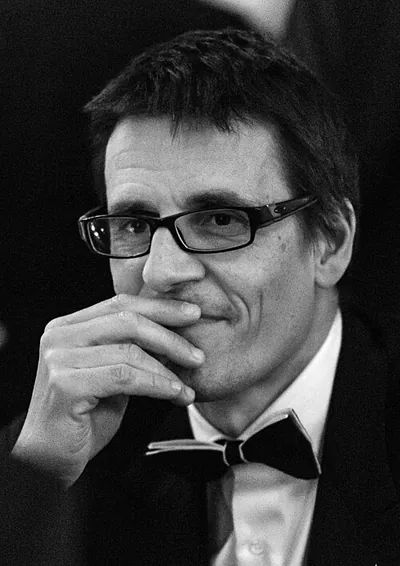 Didier Queloz1966 · Astronomy and space
 Saul Perlmutter1959 · Astronomy and space
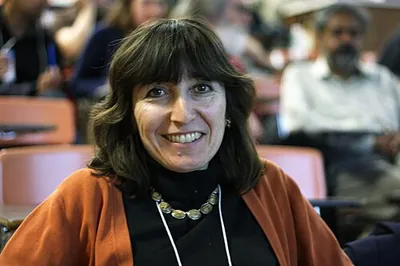 Wendy Freedman1957 · Astronomy and space
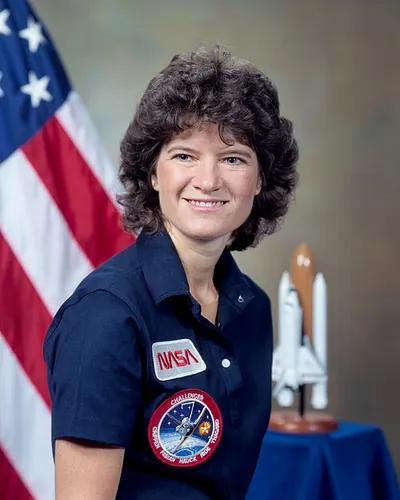 Sally Ride1951–2012 · Astronomy and space
 Russell A. Hulse1950 · Astronomy and space
 Michel Mayor1942 · Astronomy and space
