
Nevil Maskelyne
English astronomer, fifth Astronomer Royal and director of the Royal Observatory at Greenwich · 1732–1811
- Born
- October 6, 1732
- Died
- February 9, 1811
- Country
- United Kingdom of Great Britain and Ireland
- Section
- Astronomy and space
Biography
Nevil Maskelyne (London, 1732 – 1811) was an English astronomer who served as Astronomer Royal from 1765 until his death in 1811, the fifth person to hold the post. He matters because he ran the Greenwich observatory at a time when sailors far from land depended on knowing their longitude, meaning their east-west position on the globe, and because he pushed practical methods for finding it.
He was the third son of Edmund Maskelyne of Purton in Wiltshire and his wife, Elizabeth Booth. His father died when Nevil was twelve, leaving the family in reduced circumstances. He attended Westminster School, and his biographers relate that a solar eclipse in July 1748 so impressed him that he resolved to devote himself to astronomy. That story is best treated with some caution, since it comes down as a recollection rather than a documented event. In 1749 he entered St Catharine's College, Cambridge, and in 1754 he graduated as seventh wrangler, a high placing in the university's mathematics examinations. He was ordained as a minister of the Church of England in 1755, but astronomy remained his main pursuit. That same year he met the astronomer James Bradley, who trained him in observation. He became a fellow of Trinity College in 1756 and a Fellow of the Royal Society in 1758.
His chance came in 1761, when the Royal Society sent him to the island of Saint Helena to observe the transit of Venus, the passage of the planet across the face of the Sun. Timing such passages from distant places allowed astronomers to work out the Earth's distance from the Sun. Bad weather prevented him from seeing the transit, but he used the voyage to test a way of finding longitude from the Moon's position against the stars, known as the lunar distance method. In 1763 he published The British Mariner's Guide, which included tables to make the method usable and suggested that lunar distances be calculated in advance for each year and printed, so that navigators could consult them without heavy calculation on board.
In 1763 the Board of Longitude sent him to Barbados to test three rival candidates for its longitude prize. They were John Harrison's marine timekeeper, Tobias Mayer's lunar tables, and a marine chair devised by Christopher Irwin to help observe Jupiter's moons from a ship. Both Harrison's watch and the lunar-distance observations met the conditions of the Longitude Act, although the watch seemed the more accurate, with an error of less than ten miles against about thirty nautical miles for the lunar method. Maskelyne reported on 9 February 1765, and on 26 February 1765 he was appointed Astronomer Royal after the unexpected death of Nathaniel Bliss. In that role he oversaw the production of The Nautical Almanac, which made the lunar method practical because mariners could look up the figures instead of computing them at sea. Harrison and his son later accused Maskelyne of bias against the timekeeping method, a charge repeated by writers such as Dava Sobel and Rupert Gould. According to the sources, however, Maskelyne never put a method of his own before the Board. Because the almanac observations were made at Greenwich, that meridian became the reference for longitude in the Royal Navy and on British Admiralty charts, and it was adopted as the international Prime Meridian in 1884.
Maskelyne also took a keen interest in geodesy, the science of measuring the shape and size of the Earth. He supported the measurement of a degree of latitude in Maryland and Pennsylvania, carried out by Mason and Dixon between 1766 and 1768, and later took part in determining the difference in longitude between Greenwich and Paris. His best-known work was the Schiehallion experiment. In 1772 he proposed to the Royal Society that the Earth's density could be estimated by measuring how a mountain pulls a plumb line, a weighted cord that shows the vertical. He was not the first to suggest it, as Pierre Bouguer and Charles-Marie de la Condamine had tried the idea in the Andes in 1738, but in 1774 he carried it out on Schiehallion in Scotland, whose regular conical shape made its volume easier to estimate. Charles Hutton worked out from the results a mean density of about 4.5 times that of water, a figure now known to be somewhat low, since the modern value is about 5.5. The experiment settled doubts about Newton's law of universal gravitation, and in 1775 Maskelyne received the Royal Society's Copley Medal for it. His observations appeared in four large volumes between 1776 and 1811.
Maskelyne married in 1784 and had children, although the surviving accounts differ on the details of his family. He died in London in 1811 and was buried at Purton, his father's home village. His legacy rests on the Nautical Almanac and the Greenwich meridian, which helped sailors navigate for more than a century, and on the Schiehallion experiment, which gave a practical estimate of the Earth's density. His name survives in the lunar crater Maskelyne and in the Maskelyne Islands of Vanuatu, named during James Cook's second voyage. He also appears as a central figure in Dava Sobel's 1995 book Longitude and in the television series based on it.
Main contributions
- 1760A proposal for measuring the annual parallax of Sirius, a way of estimating the distance to a nearby star.
- 1763The lunar distance method, with tables published in The British Mariner's Guide for finding longitude at sea.
- 1765Report on the Barbados trial, which compared Harrison's watch with the lunar-distance method.
- 1774The Schiehallion experiment, which estimated the Earth's mean density by measuring how a mountain deflected a plumb line.
- The Nautical Almanac, yearly astronomical tables that let navigators work out longitude at sea.
Teachers and students
Trivia and anecdotes
An unscientific expense
According to the expedition's accounts to Saint Helena, 141 of the 292 pounds spent went on his personal consumption of spirits.
Names on the map
During James Cook's second voyage, William Wales named the Maskelyne Islands in Vanuatu after him, and a spot beside the new observatory at Botany Bay was called Point Maskelyne.
Their contemporaries
While Nevil Maskelyne was alive (1732–1811)…
Alive at the same time
Discovered or invented in those years
- 1766HydrogenThe lightest and most abundant chemical element in the universe, atomic number 1, which under normal conditions is a colourless, odourless and highly flammable gas.
- 1772NitrogenChemical element with atomic number 7, a colourless, odourless gas that makes up about 78% of Earth's air and is an essential part of proteins and nucleic acids.
- 1774OxygenA colorless, odorless gas, symbol O and atomic number 8, that forms the dioxygen in air and is essential for respiration in most living things.
- 1781UranusThe seventh planet from the Sun, an ice giant discovered by William Herschel in 1781, the first planet found with a telescope.
- 1803AtomThe basic unit of a chemical element: a nucleus of protons and usually neutrons surrounded by a cloud of electrons.
- 1811MoleculeAn electrically neutral group of at least two atoms held together by chemical bonds in a defined arrangement.
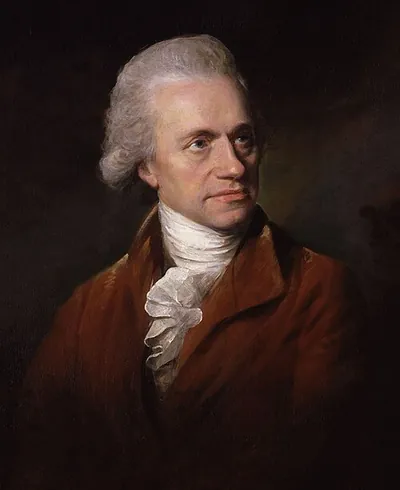 William Herschel1738–1822 · Astronomy and space
 James Bradley1693–1762 · Astronomy and space
 John Frederick William Herschel1792–1871 · Astronomy and space
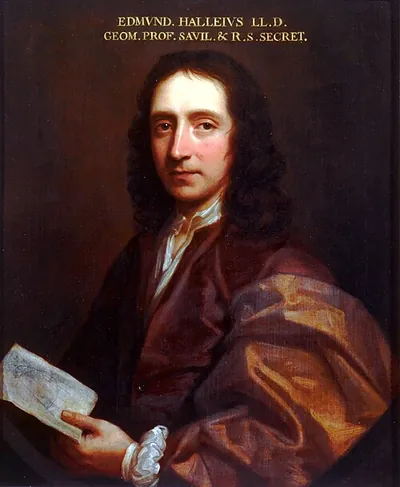 Edmond Halley1656–1742 · Astronomy and space
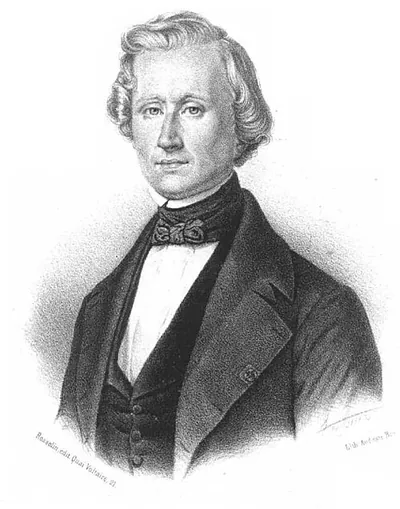 Urbain Le Verrier1811–1877 · Astronomy and space
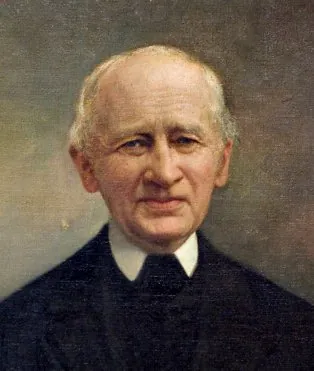 Johann Gottfried Galle1812–1910 · Astronomy and space
