
Olga Holtz
Russian mathematician specializing in numerical analysis · 1973
- Born
- August 19, 1973
- Section
- Mathematics
Biography
Olga Holtz is a Russian mathematician who specializes in numerical analysis, the branch of mathematics that designs methods for approximating solutions to problems that have no simple exact answer. Born in 1973 in Chelyabinsk, in the Soviet Union, she has received several of the most prestigious awards in her field in Europe and the United States.
Holtz grew up in a household connected to computing: both of her parents were programmers, and their influence is usually cited as the first spark of her interest in mathematics. At 15 she was chosen to attend a secondary school specializing in the subject, and she graduated two years later. She then studied at South Ural State University in Chelyabinsk, earning her degree in 1995, and later at the University of Wisconsin–Madison, where she completed her PhD in 2000 and stayed on as a postdoctoral researcher until 2002.
After that she spent about eighteen months in Germany on a Humboldt research fellowship, a grant for visiting researchers, at the Institute of Mathematics of the Technische Universität Berlin. In 2004 she returned to the United States as a Morrey Assistant Professor at the University of California, Berkeley, a post she held until 2007. Her career took a major turn in 2006, when she won the Sofia Kovalevskaya Award, worth one million euros, which allowed her to build her own research group in Berlin, where she became a professor of applied mathematics. She later returned to Berkeley as a full professor.
Her work centres on numerical linear algebra, the study of how to solve systems of equations and handle large arrays of numbers (matrices) with computers, and on approximation theory, which seeks to represent complicated functions with simpler ones. These tools underpin scientific and engineering simulations. In 2008 she received the European Mathematical Society prize, in 2010 the European Research Council awarded her a grant of 880,000 euros, and in 2015 she was elected a fellow of the American Mathematical Society. Since 2008 she has been a member of the Junge Akademie, Germany's academy for young researchers.
Outside mathematics, Holtz once considered a career in music before choosing science. She now sings with the Berlin Philharmonic Choir and practises ballroom dancing. Her legacy lies in combining rigorous research in numerical computation with a career that has spanned several countries, and in serving as a role model for young women in mathematics.
Main contributions
- 2006Sofia Kovalevskaya Award, worth one million euros, given to support research by promising young scientists in Germany.
- 2008European Mathematical Society Prize, for her work in mathematics.
- 2010European Research Council Starting Grant of 880,000 euros to fund research projects for early-career researchers.
- 2015Election as a fellow of the American Mathematical Society for her contributions to numerical linear algebra and numerical analysis.
Teachers and students
Studied under:
Taught:
Trivia and anecdotes
From music to mathematics
Holtz considered a career in music before choosing mathematics, and today she sings with the Berlin Philharmonic Choir.
Ballroom dancing
Besides singing, she practises ballroom dancing as a hobby.
Their contemporaries
While Olga Holtz was alive (1973–)…
Alive at the same time
Discovered or invented in those years
- 1973Mobile phoneA handheld wireless phone that lets people make and receive calls while moving across a cellular network area.
- 1975Global warmingThe long-term rise in Earth's average surface temperature, driven mainly by greenhouse gases released through human activity.
- 1989World Wide WebA system of linked documents and resources, connected by hyperlinks and accessed over the Internet with web browsers.
- 1990Web browserA program that lets people access the web by fetching a page's files from a server and displaying them on screen as an interactive page.
- 1991HTMLThe markup language used to structure web page content so that a browser can display it.
- 1998International Space StationA permanently crewed research laboratory in low Earth orbit, about 400 kilometres up, built and operated by five space agencies from different countries.
 Maryam Mirzakhani1977–2017 · Mathematics
 Andrew Wiles1953 · Mathematics
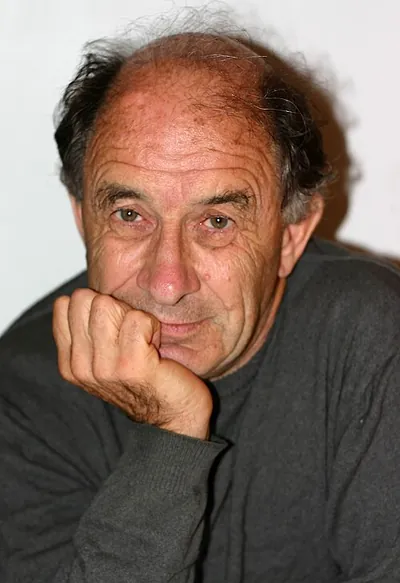 Vladimir Arnold1937–2010 · Mathematics
 Robert Aumann1930 · Mathematics
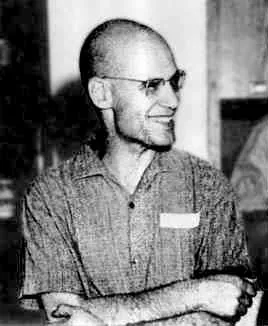 Alexander Grothendieck1928–2014 · Mathematics
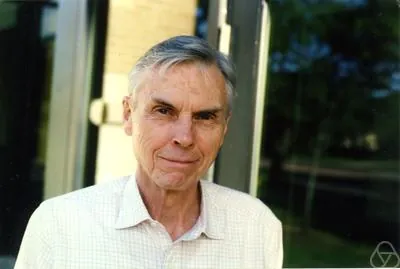 John Tate1925–2019 · Mathematics
