
Raphael Mechoulam
Israeli chemist born in Bulgaria, pioneer in THC research and the endocannabinoid system · 1930–2023
- Born
- November 5, 1930
- Died
- March 9, 2023
- Country
- Israel
- Section
- Chemistry
Biography
Raphael Mechoulam (Sofia, 1930 – Jerusalem, 2023) was a Bulgarian-born Israeli chemist and professor at the Hebrew University of Jerusalem. His name is tied to cannabis: he isolated and determined the structure of Δ9-tetrahydrocannabinol (THC), the main psychoactive component of the plant, and led the studies that revealed the endocannabinoid system, a signalling network present in the human body. His work, carried out over more than half a century, turned a plant used for millennia into a subject of rigorous scientific study.
He was born on 5 November 1930 into a well-off Sephardic Jewish family. His father was a physician who ran a local hospital, and his mother had studied in Berlin. He attended an American-style school in Sofia until Bulgaria, in 1941, aligned itself with Nazi Germany and passed antisemitic laws. The school closed and the family moved to a small village in the Balkans, where they hoped to be safer. His father was sent to a concentration camp and survived. After the communist takeover in 1944 he began studying chemical engineering, a field he did not enjoy. In 1949 the family emigrated to Israel.
There he studied chemistry. He earned a master's degree in biochemistry at the Hebrew University in 1952 and, during his military service from 1953 to 1956, researched insecticides, his first applied research work. He completed his doctorate at the Weizmann Institute of Science under Franz Sondheimer, with a thesis on the synthesis of steroids, molecules built on a ring structure found in many hormones. He then did a postdoctoral stay at the Rockefeller Institute in New York, focusing on terpenes, the aromatic compounds that plants produce.
Back at the Weizmann Institute, between 1960 and 1965, he studied natural substances, including cannabinoids. In 1963 he began work on the components of cannabis, whose active ingredients had never been isolated in pure form, unlike morphine and cocaine, which had been isolated back in the 19th century. Together with Yehiel Gaoni and his group, he worked out the structure of cannabidiol (CBD) in 1963 and of THC in 1964, and isolated cannabigerol (CBG), which proved not to be psychoactive. In 1965 he achieved the total synthesis of THC, meaning he built the molecule in the laboratory from simpler starting materials.
In 1966 he joined the Hebrew University of Jerusalem, where he became a full professor of medicinal chemistry in 1975 and served as rector from 1979 to 1982. His research widened into pharmacology. In the 1980s he worked with clinicians on trials of THC and CBD. In 1987, with A. Abrahamov, he started a trial of Δ8-THC, a more stable variant of THC, in children undergoing chemotherapy. The substance helped control nausea and vomiting, and it has since been used clinically for that purpose.
His most influential finding came with endocannabinoids, molecules the body produces itself. In 1992 his group isolated anandamide, a project he had launched, working with postdoctoral researchers William Devane and Lumír Ondřej Hanuš. Shortly afterwards, in 1995, his doctoral student Shimon Ben-Shabat described 2-AG. Together with receptors identified by other teams, these compounds made it possible to describe the endocannabinoid system, which takes part in many physiological functions. In 1998 he and Ben-Shabat proposed the so-called entourage effect, the idea that several compounds acting together can produce a stronger effect than each one alone.
His interests also extended to history. He studied the ancient use of cannabis and argued that hashish is not named in the Bible, a personal interpretation that should be treated with caution. He was a founding member of the International Association for Cannabinoid Medicines, president of the International Cannabinoid Research Society from 1999 to 2002, and a member of the Israel Academy of Sciences and Humanities from 1994. He received the Israel Prize in Chemistry in 2000 and the Harvey Prize for 2019–2020. He died in Jerusalem on 9 March 2023, at the age of 92.
His legacy is twofold: a group of molecules now studied as possible medicines, and a conceptual framework, the endocannabinoid system, that changed how scientists understand neurotransmission and physiology. Known as the godfather of cannabis research, he left a lasting mark on chemistry and medicine.
Main contributions
- 1963Determination of the structure of cannabidiol (CBD), a cannabis component that does not produce psychoactive effects.
- 1964Determination of the structure of THC, the main psychoactive ingredient of marijuana, together with Yehiel Gaoni.
- 1965Total synthesis of THC, meaning its laboratory construction from simpler starting materials.
- 1992Isolation of anandamide, the first described endocannabinoid, a molecule the body produces itself.
- 1995Description of 2-AG, another endocannabinoid, identified by his doctoral student Shimon Ben-Shabat.
- 1998Proposal of the entourage effect, the idea that several compounds acting together can enhance each other's activity.
- 2006Identification of arachidonoyl L-serine, an endocannabinoid probably linked to a novel receptor not yet fully characterised.
Teachers and students
Trivia and anecdotes
The godfather of cannabis
Colleagues called him the godfather of cannabis research, a nickname that reflects the weight of his work in the field.
A thesis on steroids
His first major research task was not cannabis but the synthesis of steroids, the subject of his doctoral thesis at the Weizmann Institute.
A documentary about his life
The life and career of Mechoulam, from his childhood in Bulgaria to his cannabis research, are the subject of the documentary The Scientist: Are We Missing Something?, which premiered at the Virginia Film Festival in 2015.
Their contemporaries
While Raphael Mechoulam was alive (1930–2023)…
Alive at the same time
Discovered or invented in those years
- 1931Big BangA cosmological model describing how the universe expanded from an early state of extreme density and temperature, about 13.8 billion years ago.
- 1932NeutronA subatomic particle with no net electric charge, found in the nucleus of almost every atom alongside protons.
- 1945ComputerA programmable machine that takes in data, processes it by following stored instructions, and produces results, able to switch tasks simply by running different software.
- 1969InternetA global network of interconnected computer networks that communicate using the TCP/IP protocol suite.
- 1973Mobile phoneA handheld wireless phone that lets people make and receive calls while moving across a cellular network area.
- 1989World Wide WebA system of linked documents and resources, connected by hyperlinks and accessed over the Internet with web browsers.
 Paul Lauterbur1929–2007 · Chemistry
 Elias James Corey1928 · Chemistry
 Manfred Eigen1927–2019 · Chemistry
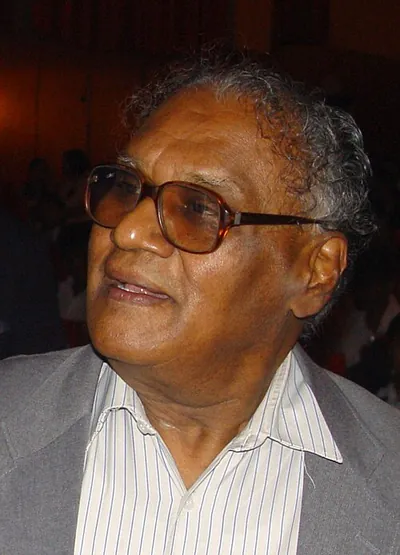 Chintamani Nagesa Ramachandra Rao1934 · Chemistry
 John Pople1925–2004 · Chemistry
 Alan J. Heeger1936 · Chemistry
