
Reginald Fessenden
Canadian engineer and inventor, a pioneer of radio and voice transmission · 1866–1932
- Born
- October 6, 1866
- Died
- July 22, 1932
- Country
- Canada
- Section
- Technology and communications
Biography
Reginald Aubrey Fessenden (born in East Bolton, Quebec, in 1866; died in 1932) was a Canadian engineer and inventor who did most of his work in the United States, a country whose citizenship he also claimed through his American-born father. He lived at a time when radio was moving from laboratory experiment to a practical means of communication, and his importance lies in proposing methods that still underpin broadcasting and wireless communication.
He was born on October 6, 1866, the eldest of four children. His father, Elisha Joseph Fessenden, was an Anglican clergyman, and the family moved between several postings in the province of Ontario. Reginald was a diligent pupil. In 1877, at eleven, he began two years at Trinity College School in Port Hope, and at fourteen he returned to the Eastern Townships to attend Bishop's College School in Lennoxville. There he taught mathematics to younger pupils, some of them older than himself, while also studying natural sciences with the university students. At eighteen he left without a degree, although he later said he had done nearly all the work required. That gap may have cost him when McGill University opened an electrical engineering department and chose an American candidate over him for its leadership.
He spent two years as headmaster and sole teacher at the Whitney Institute in Bermuda, where he became engaged to Helen Trott. They married in 1890. In 1886 he had moved to New York hoping to work for Thomas Edison. By his own account, his first approach failed: he wrote that he knew nothing about electricity but could learn quickly, and Edison replied that he already had enough men who knew nothing about electricity. Fessenden persisted, took a junior testing job at the Edison Machine Works, and by late 1886 was working directly for Edison at the new laboratory in West Orange, New Jersey. In 1890, facing money troubles, Edison let most of his staff go, Fessenden included. He then moved through jobs with electrical manufacturers. In 1892 he became a professor at Purdue University, and soon after George Westinghouse recruited him to lead the electrical engineering department at what is now the University of Pittsburgh.
In the late 1890s, news of Guglielmo Marconi's progress in wireless telegraphy reached a wide audience, and Fessenden concluded he could build a more efficient system than the spark transmitters and coherer receivers then in use. In 1900 he joined the United States Weather Bureau, hoping to send weather data from coastal stations without relying on telegraph lines. There he designed the barretter detector and then the electrolytic detector, a fine wire dipped in nitric acid, which set the standard for receiver sensitivity for years. He also developed the heterodyne principle: when two signals of nearby frequency are combined, they produce a third tone that can be heard, which made Morse code easier to pick up. That method only became practical once the vacuum tube could generate a stable local signal. His experiments took place at Cobb Island, Maryland. On December 23, 1900, he sent the human voice about 1.6 kilometres, which appears to be the first audio radio transmission, although the records are sparse.
Relations with the Weather Bureau soured when its chief sought a share of his patents. Fessenden refused and his contract ended in 1902. That November, two Pittsburgh businessmen financed the National Electric Signaling Company, known as NESCO, to support his work. Sales were hard to win, and the U.S. Navy had other firms build equipment based on his designs, which led to patent lawsuits. The company then turned to a transatlantic radiotelegraph service, with towers at Brant Rock, Massachusetts, and Machrihanish in Scotland. In January 1906 the two stations completed the first two-way transatlantic exchange, using Morse code. In December 1906, however, the Machrihanish tower collapsed in a gale, and an investigation blamed poor workmanship in its joints.
In December 1906 Fessenden gave demonstrations of point-to-point telephony at Brant Rock. On Christmas Eve he broadcast a short programme in which he played O Holy Night on the violin and read the second chapter of Luke, repeating the performance on New Year's Eve. His main audience was ship radio operators along the Atlantic coast. Decades later, in 1932, he claimed these had been the first broadcasts of entertainment, though that claim is poorly documented. Today they are regarded as a milestone, yet at the time they drew little notice.
His achievements brought him little financial reward. In 1911 he was dismissed from NESCO after serious disagreements with its owners. He won his lawsuit at first instance and was awarded compensation, but lost on appeal. NESCO was sold to Westinghouse in 1920, and the following year its patents, along with the legal claims, passed to the Radio Corporation of America. Fessenden largely left radio, though he kept inventing in other fields and eventually held more than 500 patents. After reaching an agreement with RCA, he bought a small property in Bermuda called Wistowe. His legacy rests on three points: the first transmission of speech by radio, the first two-way transatlantic communication, and the broadcast of music and speech to a general audience, the last of which remains the most debated.
Main contributions
- 1900First transmission of the human voice by radio, over about 1.6 kilometres, at Cobb Island.
- 1900Heterodyne principle: combining two nearby signals produces an audible tone that makes radio signals easier to receive.
- 1900Electrolytic detector, a fine wire dipped in nitric acid that set the standard for reception sensitivity for years.
- 1906First two-way transatlantic communication by radiotelegraph, using Morse code.
- 1906Broadcast of speech and music to a general audience on Christmas Eve, by his own later account and poorly documented.
Teachers and students
Trivia and anecdotes
The letter to Edison
By his own account, Fessenden told Edison he knew nothing about electricity but learned quickly; Edison replied that he already had enough men in that position.
An admirer of Edison
In 1925 Fessenden claimed that in all of history only Archimedes stood on the same level as Edison as an inventor.
A tower that fell
A review in the magazine Engineering blamed the collapse of the Machrihanish tower on poorly made joints by a subcontractor.
Their contemporaries
While Reginald Fessenden was alive (1866–1932)…
Alive at the same time
Discovered or invented in those years
- 1869Periodic tableAn arrangement of the chemical elements into rows (periods) and columns (groups), ordered by atomic number, that reveals recurring chemical behaviour and lets scientists predict properties.
- 1869Deoxyribonucleic acidA double-stranded molecule that carries the genetic instructions of nearly all living things and many viruses.
- 1876TelephoneA device that carries the human voice over distance by turning sound into electrical signals and back into sound at the other end of the line.
- 1884CarA road vehicle with four wheels and its own engine, mainly built to carry people.
- 1903AirplaneA fixed-wing aircraft, heavier than air, powered by engines or rockets, that stays aloft because its wings generate lift.
- 1925TelevisionA system that sends moving pictures and sound over distance and shows them on a receiver, the television set.
 Louis Lumière1864–1948 · Technology and communications
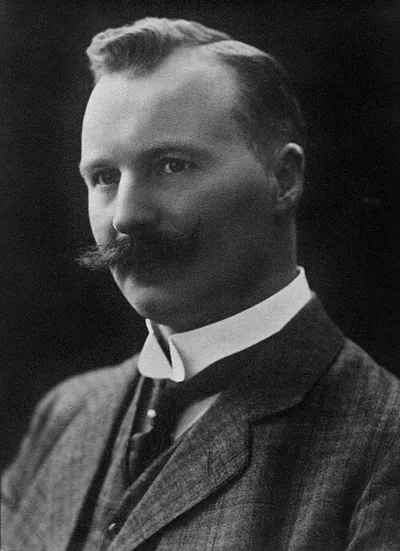 Nils Gustaf Dalén1869–1937 · Technology and communications
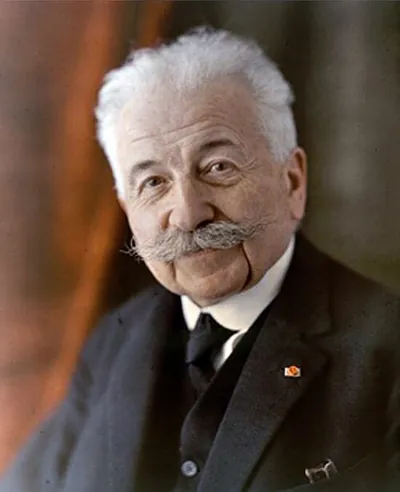 Auguste Lumière1862–1954 · Technology and communications
 Aleksandr Popov1859–1906 · Technology and communications
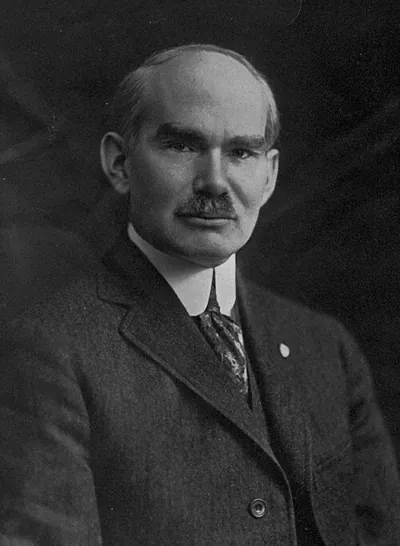 Lee de Forest1873–1961 · Technology and communications
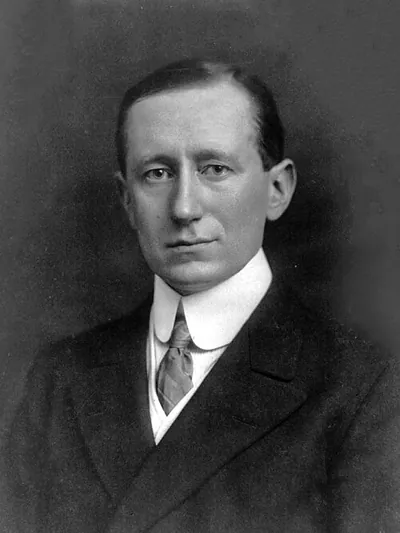 Guglielmo Marconi1874–1937 · Technology and communications
