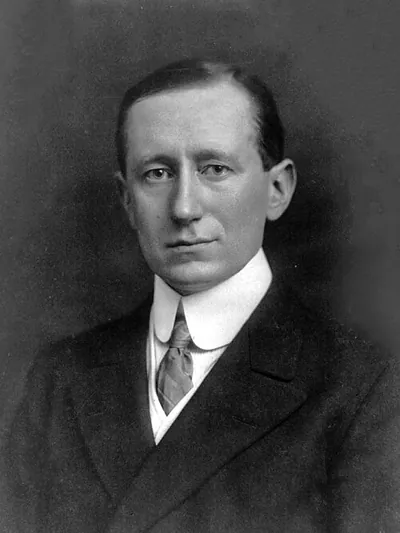
Guglielmo Marconi
Italian electrical engineer, pioneer of radiotelegraphy and 1909 Nobel laureate in Physics · 1874–1937
- Born
- April 25, 1874
- Died
- July 20, 1937
- Country
- Kingdom of Italy
- Section
- Technology and communications
- Awards
- Nobel Prize in Physics
Extended biography
Childhood and training
Guglielmo Giovanni Maria Marconi was born on 25 April 1874 in Bologna, into a wealthy family. His father, Giuseppe Marconi, was an Italian landowner, and his mother, Annie Jameson, came from an Irish family linked to the whiskey distilling business. This double heritage later helped explain his many contacts and journeys in Great Britain and Ireland. As a small child he spent time with his mother and older brother, Alfonso, in England, and his father decided that the family should take British citizenship, a right Guglielmo could have claimed at any moment.
Marconi did not follow a conventional school path. He learned chemistry, mathematics and physics at home, from private tutors his parents hired and from extra lessons during the winters, when the family moved to milder places in Tuscany. A physics teacher in Livorno, Vincenzo Rosa, introduced him to the basic ideas of electricity and to newer theories. This self-directed education became the foundation of his interest in waves.
At eighteen he returned to Bologna and befriended Augusto Righi, a physics professor at the university. Righi allowed him to attend lectures and to use the laboratory and library, an unusual privilege for someone without a degree. There Marconi studied the work of Heinrich Hertz, who had shown that electromagnetic waves could be produced and detected. These waves are the same kind of radiation as light, but invisible to the human eye.
First experiments
The idea of sending messages without wires was not new. For decades inventors had tried to signal without cables, using electric conduction, induction or light, but none had produced a practical and profitable system. The ordinary telegraph depended on wires carrying electrical pulses, and replacing them with empty space looked very difficult. Hertz's waves offered a new possibility, yet most physicists regarded them as a scientific curiosity rather than a means of communication.
After Hertz died in 1894, reviews of his discoveries appeared, including an article by Righi that revived Marconi's interest. Around 1895 he began building his own equipment in the attic of the family home at Pontecchio, helped by his servant Mignani. He used a detector called a coherer, based on the work of the French physicist Édouard Branly, whose electrical resistance changed when radio waves reached it. In the summer of 1894 he had already built a storm alarm that rang when it picked up waves produced by lightning.
His complete system combined several parts: a simple spark transmitter, an elevated wire or metal plate acting as an antenna, the coherer as receiver, a telegraph key to send the dots and dashes of Morse code, and a recorder that printed the signals on paper tape. His decisive improvement was to raise the antenna and connect the transmitter and receiver to the ground, a method borrowed from wired telegraphy. This allowed him to reach much greater distances and to send signals over hills, something that had seemed impossible until then.
The British patent and the search for backing
Marconi presented his invention to the Italian Ministry of Posts and Telegraphs but received no reply. A frequently repeated story claims that the minister wrote a remark on the file referring to an asylum in Rome, yet the document has never been found, so it should be treated as a legend. Faced with little interest in Italy, a family friend, Carlo Gardini, gave him a letter of introduction to the Italian ambassador in London. The ambassador advised him not to reveal his results before securing a patent and encouraged him to work in Britain, where funding was easier to find.
Marconi reached Dover in early 1896, accompanied by his mother. At customs officers opened his luggage, and, amid worries about Italian anarchists and suspicions that he was carrying a bomb, his apparatus was destroyed. Despite this setback, he won the interest of William Preece, the chief electrical engineer of the British Post Office, who provided contacts and support for his tests.
On 2 June 1896 he applied for a British patent for improvements in transmitting electrical impulses and signals. It became the first patent for a communication system based on radio waves. The patent gave him a strong position for later business, although historians would later debate whether it contained ideas that others had already developed. In 1897 he received a grant of 15,000 francs, and his public demonstrations in London brought him wide attention among scientists and the press.
From the English Channel to the Atlantic
On 13 May 1897 Marconi sent the first wireless message over open sea, across the Bristol Channel from Flat Holm island to Lavernock Point near Cardiff. The words were "Are you ready". The equipment was soon moved to a fort on the Somerset coast, which extended the range. In 1899, at the request of the French government, he linked Dover with Wimereux. On 27 March 1899 a transmission crossed the Channel over a distance of about 48 kilometres, which is recorded as the first transmission between the two countries.
That year he also travelled to the United States to cover a yacht race for a New York newspaper, and on the return voyage he installed radio equipment aboard the liner. The sea offered a clear demonstration of the value of the new technology. When the merchant ship Elbe ran aground on the Goodwin Sands, the first wireless distress signal was sent from a lightship, which allowed the Ramsgate lifeboat to be called to help.
His greatest ambition was to cross the Atlantic, a goal that would compete with undersea telegraph cables. In 1901 he built a high-power station at Poldhu in Cornwall. On 12 December 1901 he said that he had received, at Signal Hill in Newfoundland, the Morse letter S sent from England. The claim is now debated. The wavelength used is not known precisely, the test took place in daylight, which was very unfavourable for waves of that kind, and the reception was faint and intermittent amid atmospheric noise. Marconi knew in advance which signal to expect, and no independent confirmation exists. His later tests, made from a ship in 1902, showed better range at night and proved that signals could travel hundreds of kilometres, but regular transatlantic service only began in 1907. Reginald Fessenden had already transmitted human speech by radio in 1900, a fact often overshadowed by Marconi's fame.
Commercial services and the Titanic
Radio gained practical value through ships. In 1904 Marconi's company set up a commercial service that sent nightly news summaries to subscribing vessels, which printed them in their on-board newspapers. Rival inventors competed in the same market, and the firm had to build high-power stations on both sides of the Atlantic. Yet the company took years to offer reliable service, and its technology, based on spark transmitters, was less efficient than the continuous-wave methods that would later replace it.
In 1903 a station called WCC was established in the United States, and greetings were exchanged between President Theodore Roosevelt and King Edward VII. In 1904 he reached an agreement with the British Post Office for commercial message transmission. Around 1908 a branch of his company at Bernal, near Buenos Aires, made contact with Canada and Europe, which was an early wireless link in South America.
Radio became famous through its role in shipwrecks. The sinking of the Titanic in April 1912 is the best known example. The ship's radio operators worked for the Marconi company, not for the shipping line, and the distress call allowed the liner Carpathia to reach the survivors. Marconi gave evidence to the British inquiry into the disaster, and his public reputation grew. A story says he had a reserved place on the Titanic but had travelled on the Lusitania instead, a detail his daughter explained by pointing to his work commitments. It is worth remembering that the rescues depended on crews, operators and shipping companies working together, not on a single person.
Disputes over the invention of radio
It is common to say that Marconi invented radio, but the story is more complicated. Radio emerged from the work of many scientists and engineers in a short period. Hertz showed that the waves existed, Branly and Lodge developed detectors, and other inventors patented devices that are now regarded as ancestors of the receiver. Among them were Alexander Popov and the Spaniard Julio Cervera, who registered a patent in the United Kingdom in 1897. Marconi's achievement was to combine these elements into a practical and commercially viable system, which earned him international recognition.
One specific dispute concerns the detector used in his 1901 experiment. He used a mercury detector obtained from an Italian naval officer, which derived from work by the Indian scientist Jagadish Chandra Bose, who had described the device in 1899. The case led to arguments about authorship, including debates over whether a naval signalman named Paolo Castelli or a professor named Tommaso Tommasina had priority. In his lectures Marconi presented these contributions separately and did not always credit Bose.
The most famous controversy came in the United States. In 1943 the Supreme Court confirmed a 1935 ruling that found the broad claims of one of Marconi's patents invalid, because earlier patents by Oliver Lodge, John Stone Stone and Nikola Tesla already covered the same ground. The decision did not settle who invented radio, and it did not cancel Marconi's original patents. It clarified that certain improvements to his circuits had been anticipated. For this reason, claims that the court gave Tesla priority over Marconi should be read with care.
A widely repeated story says that Tesla refused the Nobel Prize because Marconi had used his patents and that he would not accept it while the award was given to Marconi. The account is very popular, but the Nobel Foundation rejects it, since no letters supporting it have been found.
Personal life and politics
In 1904 Marconi met Beatrice O'Brien, the daughter of an Irish baron, and they married on 16 March 1905. They had three daughters and a son. One daughter, Lucia, died in 1906, shortly after birth. In 1913 the family settled in Rome, where Beatrice served as a lady-in-waiting to Queen Elena. The marriage ended in divorce, and in 1927 Marconi requested an annulment so that he could remarry. That same year he married Cristina Bezzi-Scali, and their daughter Maria Elettra was born in 1930. Some sources say that Marconi left his entire fortune to his second wife and daughter, a decision whose reasons remain unclear.
His public life also had a political dimension. He was made a senator of the Kingdom of Italy in 1914. During the First World War he directed the wireless communications of the Italian armed forces and held military ranks in the army and navy. In 1929 he was made a marquess. In 1930 he became president of the Royal Academy of Italy, a post linked to the regime, and in 1923 he had joined the National Fascist Party.
His support for the regime was open and enthusiastic. He defended fascist ideology and backed actions such as the Italian invasion of Ethiopia in 1935. In a speech on joining the party he claimed the honour of being the first fascist in radiotelegraphy, comparing the bundling of electric rays to the gathering of the country's energies. Documents that came to light in 2002 showed that he also went along with the regime's campaign against Jews, preventing their admission to the academy during the 1930s.
His career also included religious and cultural moments. In 1931 he personally introduced the first radio broadcast of a pope, Pius XI, and that same year Vatican Radio was inaugurated.
Final years and legacy
In his later years Marconi took part in the development of microwave technology, which uses waves shorter than those of his early experiments and was later applied to radar and satellite communication. He suffered a series of heart attacks during the three years before his death, nine according to some accounts. He died in Rome on 20 July 1937, at the age of sixty-three. He received a state funeral, and many broadcasters around the world observed two minutes of silence in his memory.
His remains are kept in a mausoleum at Sasso Marconi, a town that adopted his name in 1938. His yacht Elettra, which he had used as a floating laboratory, was requisitioned during the Second World War, converted into a warship by the Germans and sunk in 1944. After the war an attempt was made to recover it, but its remains were eventually divided among Italian museums.
Marconi's legacy is broad. His work helped turn wireless communication into an everyday service, with applications on ships, aircraft and broadcasting stations and, later, in television and modern communications. His name is kept alive in broadcasting awards, institutions, a lunar crater, an asteroid and many streets and buildings. The so-called Marconi law, which relates antenna height to transmission distance, still serves as a teaching example of how waves travel.
Assessing his figure requires balance. He was an engineer with a remarkable ability to organise and publicise his work, and his practical system was decisive. But he did not invent radio alone, his claims to priority for his patents were disputed, and his allegiance to fascism and his discriminatory acts are an inseparable part of his biography.
Quotes
“So be it, let it be so.”
“This new form of communication could have some utility.”
“Have I done the world good, or have I added a menace?”
Main contributions
- 1895A practical wireless telegraph system using a raised and earthed antenna, which extended the range of earlier experiments.
- 1896The first British patent for a communication system based on radio waves.
- 1897The first wireless message sent over open sea, across the Bristol Channel.
- 1901Reception, by his account, of the Morse letter S across the Atlantic, a result disputed for lack of independent confirmation.
- 1907Start of the regular transatlantic radiotelegraph service between Clifden and Glace Bay.
- 1909Nobel Prize in Physics, shared with Carl Ferdinand Braun, for their contributions to wireless telegraphy.
- 1931Establishment of Vatican Radio, with the first radio broadcast by a pope.
Trivia and anecdotes
A greeting message
In 1903 President Theodore Roosevelt and King Edward VII exchanged greetings through a Marconi station.
The Titanic and the Lusitania
According to his daughter Degna, Marconi was offered a place on the Titanic but preferred to sail earlier on the Lusitania, where he had paperwork to do.
Their contemporaries
While Guglielmo Marconi was alive (1874–1937)…
Alive at the same time
Discovered or invented in those years
- 1876TelephoneA device that carries the human voice over distance by turning sound into electrical signals and back into sound at the other end of the line.
- 1884CarA road vehicle with four wheels and its own engine, mainly built to carry people.
- 1903AirplaneA fixed-wing aircraft, heavier than air, powered by engines or rockets, that stays aloft because its wings generate lift.
- 1925TelevisionA system that sends moving pictures and sound over distance and shows them on a receiver, the television set.
- 1925Quantum mechanicsPhysical theory describing how matter and light behave at atomic and subatomic scales, where energy is exchanged in minimal packets and results are expressed as probabilities.
- 1931Big BangA cosmological model describing how the universe expanded from an early state of extreme density and temperature, about 13.8 billion years ago.
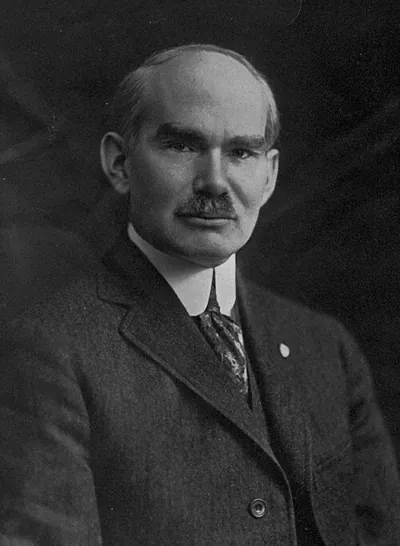 Lee de Forest1873–1961 · Technology and communications
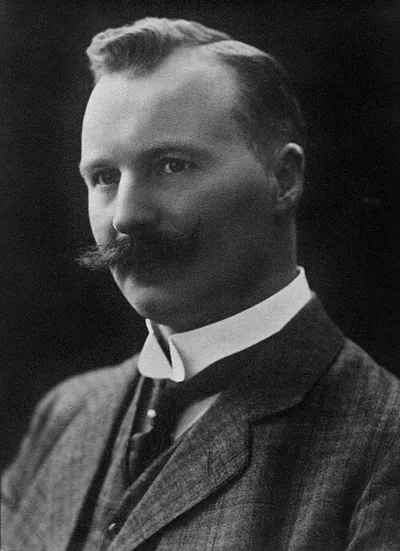 Nils Gustaf Dalén1869–1937 · Technology and communications
 Louis Lumière1864–1948 · Technology and communications
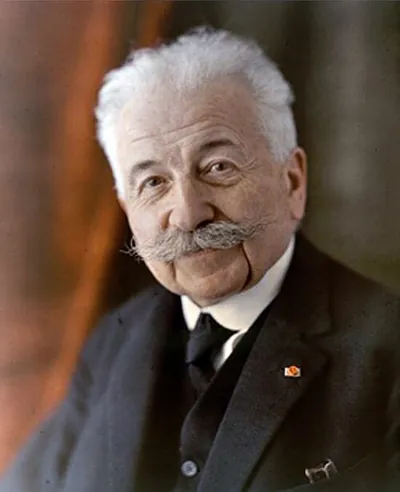 Auguste Lumière1862–1954 · Technology and communications
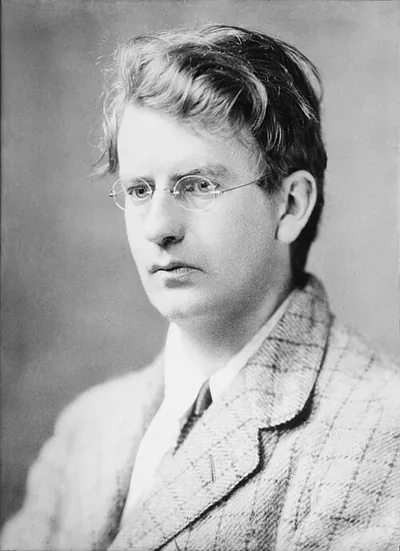 John Logie Baird1888–1946 · Technology and communications
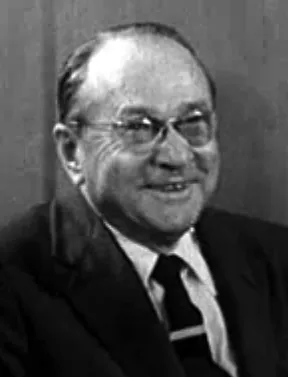 Vladimir K. Zworykin1888–1982 · Technology and communications
