
Richard Axel
American physician and researcher, Nobel laureate in Physiology or Medicine in 2004 for his work on the sense of smell · 1946
- Born
- July 2, 1946
- Country
- United States
- Section
- Biology
- Awards
- Nobel Prize in Physiology or Medicine
Biography
Richard Axel is an American physician and researcher whose work on the olfactory system earned him, together with Linda Buck, the 2004 Nobel Prize in Physiology or Medicine. He built his career in the decades when molecular biology began to make it possible to read and copy genes with real precision. His importance lies in showing, through genetic methods, how the nose recognises the vast range of smells we can detect.
Born in New York City on July 2, 1946, to Polish Jewish immigrants, he grew up in Brooklyn. He earned his undergraduate degree at Columbia University in 1967 and then trained in medicine at Johns Hopkins University. By his own account he was poorly suited to clinical work, and he left medical school on the understanding that he would not practise as a doctor. He found his calling in research, returned to Columbia, and became a full professor there in 1978.
In the late 1970s, working with the microbiologist Saul J. Silverstein and the geneticist Michael H. Wigler, he helped develop a method called cotransformation via transfection, which lets scientists insert foreign DNA into a host cell so that it manufactures particular proteins. The patents covering it, now known informally as the Axel patents, were filed in 1980 and granted in 1983. Because the technique was central to biotechnology work in industry, it brought Columbia very large licensing income, at one point close to 100 million dollars a year, before the patents expired in 2000.
His best-known research concerned smell. In 1991, with Linda Buck, he cloned olfactory receptors, the proteins in the nose that catch odour molecules, and showed they belong to the family of G protein coupled receptors, which relay signals into the cell. By studying rat DNA, the pair estimated that the mammalian genome holds roughly a thousand different olfactory receptor genes. Later work showed that each olfactory neuron produces just one type of receptor, and that all neurons carrying the same receptor send their signals to a single glomerulus, a small cluster in the olfactory bulb.
Axel has also contributed to immunology, and his laboratory was among the first to link HIV infection with the CD4 molecule. His current research asks how the brain interprets smells and which regions respond to specific receptors. He has trained many scientists, and seven of his former trainees have become members of the US National Academy of Sciences. His private life includes his marriage to the neuroscientist Cornelia Bargmann, who also studies olfaction.
His relationship with Jeffrey Epstein is the most controversial episode of his career. He met Epstein in the 1980s through the biotech world, and in 2010 attended a birthday party for him in Paris, although Epstein had been convicted of sex offences in 2008. Later documents indicate that Axel was a frequent guest at Epstein's Manhattan home and acted as a link to the university on admissions and philanthropy. In February 2026 he resigned as co-director of Columbia's Zuckerman Mind Brain Behavior Institute and stepped down from the Howard Hughes Medical Institute, calling the association "a serious error in judgment."
Axel is remembered for showing that the sense of smell rests on a large family of genes and for explaining how neurons organise odour information. His work set the foundations for a line of research that remains active, although his reputation is also shaped by the controversy over his ties to Epstein.
Main contributions
- 1980Cotransformation via transfection patents: a technique for inserting foreign DNA into cells so they make specific proteins.
- 1991Cloning of olfactory receptors: identification of the proteins that detect odours and their membership of the G protein coupled receptor family.
- Organisation of olfactory neurons: each neuron makes one receptor type, and neurons with the same receptor converge on a single glomerulus.
- HIV and CD4 link: one of the first laboratories to connect HIV infection with this immune system molecule.
Trivia and anecdotes
Very profitable patents
The cotransformation method brought Columbia so much licensing income that it ranked among the top universities by licensing revenue.
A high-school basketball player
His tall stature led him to play basketball during his high school years.
A Nobel shared with a former colleague
Linda Buck had been a postdoctoral researcher in his group before the two shared the 2004 Nobel Prize.
Their contemporaries
While Richard Axel was alive (1946–)…
Alive at the same time
Discovered or invented in those years
- 1947TransistorA semiconductor component that amplifies or switches electrical current between two terminals, depending on a signal applied to a third.
- 1957Artificial satelliteAn artificial satellite is a human-made object placed in orbit around a celestial body, usually Earth, to collect information, relay signals, or carry out a specific task.
- 1969InternetA global network of interconnected computer networks that communicate using the TCP/IP protocol suite.
- 1971EmailA network service that lets users send and receive digital messages through addressed mailboxes, much like postal mail but electronic.
- 1973Mobile phoneA handheld wireless phone that lets people make and receive calls while moving across a cellular network area.
- 1989World Wide WebA system of linked documents and resources, connected by hyperlinks and accessed over the Internet with web browsers.
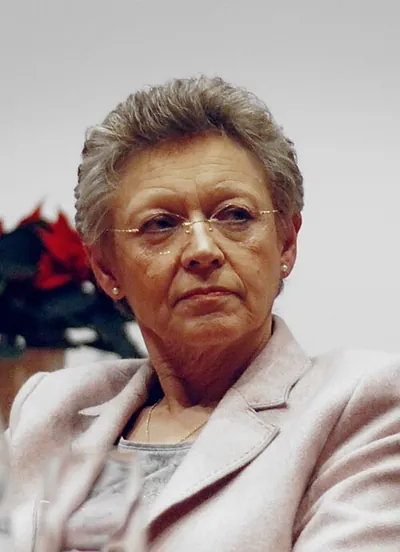 Françoise Barré-Sinoussi1947 · Biology
 Yoshinori Ohsumi1945 · Biology
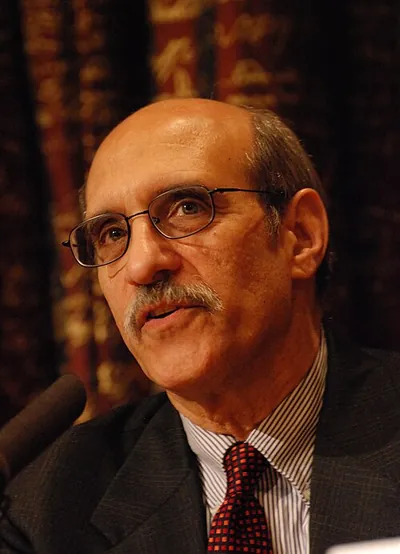 Martin Chalfie1947 · Biology
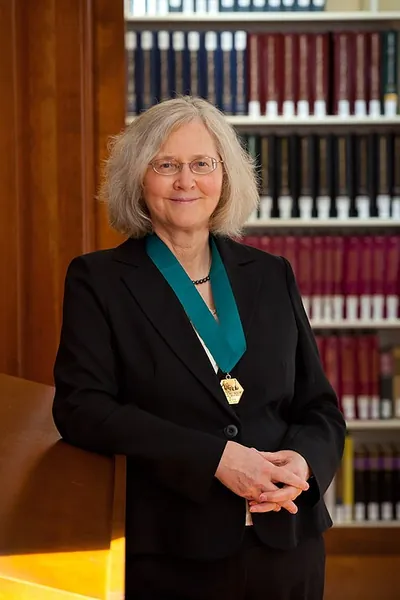 Elizabeth Blackburn1948 · Biology
 Kary Mullis1944–2019 · Biology
 Christiane Nüsslein-Volhard1942 · Biology
