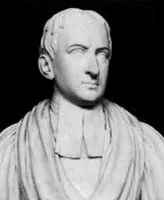
Roger Cotes
English mathematician and physicist who helped Isaac Newton prepare the second edition of the Principia and became the first Plumian Professor of Astronomy at Cambridge · 1682–1716
- Born
- July 10, 1682
- Died
- June 5, 1716
- Country
- Kingdom of Great Britain
- Section
- Mathematics
Biography
Roger Cotes (1682 - 1716) was an English mathematician and physicist who worked in the early eighteenth century, when Isaac Newton's ideas were spreading through Europe. He is remembered above all for his close partnership with Newton on the second edition of the Principia, and for the numerical integration formulas that carry his name alongside Newton's. He died before reaching the age of thirty-four, yet his influence on the science of his day was considerable.
Cotes was born in Burbage, in Leicestershire, the son of Robert Cotes, the parish rector who also farmed, and his wife Grace. He had an elder brother, Anthony, born in 1681, and a younger sister, Susanna, born in 1683; both died young. He first attended the school in Leicester, where his gift for mathematics was noticed. His aunt Hannah had married the Reverend John Smith, who acted as his tutor and encouraged his talent. The Smiths' son, Robert, remained a close associate for the rest of Cotes's life. He later moved to St Paul's School in London and in 1699 entered Trinity College, Cambridge, where he took his bachelor's degree in 1702 and his master's in 1706.
His early work centred on astronomy, the branch that calculates how the heavenly bodies move. He became a fellow of Trinity in 1707 and, at the age of twenty-six, was appointed the first Plumian Professor of Astronomy and Experimental Philosophy. To equip the college with an observatory he opened a subscription list for donations, but the building was still unfinished when he died, and it was pulled down in 1797. Working with Newton, he designed a heliostat telescope, an instrument with a mirror that turns by clockwork to follow the Sun. He recalculated the solar and planetary tables produced by Cassini and Flamsteed, and planned new tables for the Moon based on Newtonian principles. That same year he set up, together with William Whiston, a school of physical sciences at Trinity.
Between 1709 and 1713 Cotes threw himself into the second edition of the Principia, the book in which Newton set out universal gravitation, the idea that every body attracts every other in proportion to its mass and falls off with distance. The first edition had been printed in very small numbers and needed revising to add Newton's newer work on lunar and planetary theory. Newton, who had almost stopped doing research, was at first unenthusiastic, but Cotes's energy rekindled his appetite for the work. For roughly three and a half years the two collaborated to derive from the laws of motion the theory of the Moon, the precession of the equinoxes and the orbits of comets. Only 750 copies were printed, yet an unauthorised edition from Amsterdam met the demand. As a reward, Cotes received a share of the profits and twelve copies. His own contribution was the preface, which argued that Newton's principles were scientifically superior to René Descartes's vortex theory, in which planets are carried around by swirling matter. Cotes concluded that celestial observations contradicted the vortex idea and confirmed Newton's law of gravitation.
His most substantial work was in mathematics, particularly integral calculus, which deals with areas and accumulations, logarithms, and numerical analysis, the art of approximating results with manageable steps. He published just one scientific paper in his lifetime, Logometria, in which he successfully constructed the logarithmic spiral, sometimes called the spiral of Cotes. After his death his cousin Robert Smith gathered his papers into the volume Harmonia mensurarum. His writing could be dense, yet his systematic methods won the respect of his peers. He discovered an important theorem about the n-th roots of unity, anticipated the method of least squares, which fits a curve to scattered data, and found a way to integrate rational fractions with binomial denominators. His quadrature formulas, which grew out of Newton's research, estimate the area under a curve using only a handful of points. In a geometric argument he also produced what can be read as a logarithmic version of Euler's formula, though that result is more commonly linked to the Swiss mathematician's name.
Cotes died of a violent fever in Cambridge in 1716 at the age of 33. Newton is reported to have said that, had Cotes lived, they would have come to know something. Today he is remembered as one of the few British mathematicians of his time able to follow Newton's demanding work, and as the man who helped the Principia reach a fuller form. His name lives on in the numerical integration formulas still used by scientists and engineers.
Main contributions
- 1707First Plumian Professor of Astronomy and Experimental Philosophy at Cambridge, a post he took at only 26.
- 1713Second edition of Newton's Principia, revised and completed with its author between 1709 and 1713, with a preface by Cotes.
- Newton-Cotes formulas: rules for estimating the area under a curve from a few of its points.
- Logometria: his only scientific paper published during his lifetime, in which he constructed the logarithmic spiral.
- Harmonia mensurarum: a posthumous collection of his mathematical work, assembled by Robert Smith.
- Least squares: he anticipated the procedure now used to fit a curve to data.
Teachers and students
Trivia and anecdotes
A remark by Newton
Newton is reported to have said that had Cotes lived they would have known something. The quote is recorded in the sources, though its exact wording varies between translations.
An unauthorised edition
Only 750 copies of the second edition of the Principia were printed, but an unauthorised version printed in Amsterdam met the great demand.
An unfinished observatory
The observatory Cotes promoted for Trinity College was not finished before his death and was demolished in 1797.
Their contemporaries
While Roger Cotes was alive (1682–1716)…
Alive at the same time
Discovered or invented in those years
- 1687GravityThe attraction that every body with mass exerts on every other, responsible for objects falling and planets circling the Sun.
- 1687ForceA vector quantity that changes the motion of a body or deforms it, measured in newtons.
- 1687Newton's laws of motionThree principles linking the motion of a body to the forces acting on it, the foundation of classical mechanics.
- 1687Newton's law of universal gravitationA law of physics stating that all bodies with mass attract each other, with a force that grows with the product of their masses and falls with the square of the distance between them.
- 1700PianoA keyboard instrument in which each key sets a felt-covered hammer moving to strike a tensioned string, letting the player control loudness through touch.
- 1712Steam engineAn engine that turns the heat energy of water vapour into mechanical motion, using a piston that moves back and forth inside a cylinder.
 Johann Bernoulli1667–1748 · Mathematics
 Daniel Bernoulli1700–1782 · Mathematics
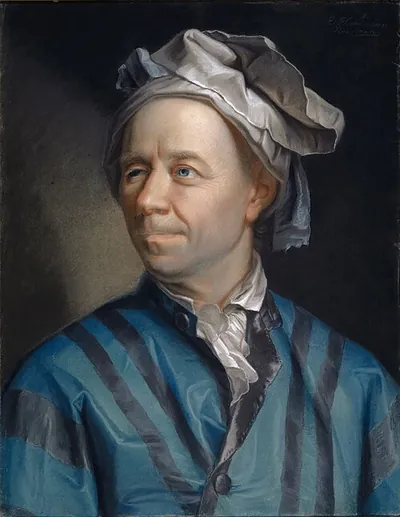 Leonhard Euler1707–1783 · Mathematics
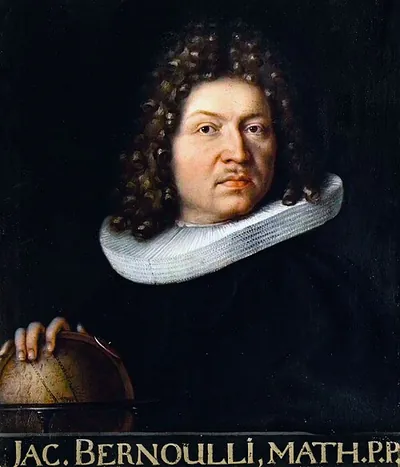 Jacob Bernoulli1654–1705 · Mathematics
 Gottfried Wilhelm Leibniz1646–1716 · Mathematics
 Joseph-Louis Lagrange1736–1813 · Mathematics
