
Sandra Cauffman
Costa Rican electrical engineer and physicist who worked on NASA space missions · 1962
- Born
- May 10, 1962
- Country
- Costa Rica
- Section
- Astronomy and space
Biography
Sandra Cauffman is a Costa Rican electrical engineer and physicist who spent decades working at NASA, the United States space agency. Her career matters both for the missions she helped run and for her role as a role model for women and young people in Costa Rica and across Latin America.
She was born in San José on May 10, 1962, under the name Sandra Molina Rojas. She grew up in Hatillo, in a single-parent household with very few resources, and from an early age she had to work to help her family. Her mother, María Jerónima 'Mary Alba' Rojas Montero, raised her and worked to give her chances to study. In 1976 her mother married the American Charles Alba, who became her adoptive father, and Sandra legally took the name Sandra Alba Rojas.
When she tried to enter the University of Costa Rica to study electrical engineering, a career counselor told her that the field was not for women and suggested industrial engineering instead. She completed seven semesters of that program between 1980 and 1983, though her interest lay elsewhere. At 21, her family moved to the United States for economic, personal and educational reasons. There she studied and worked at the same time to pay for her education. At George Mason University she earned a bachelor's degree in physics and electrical engineering in 1987, and a master's in electrical engineering in 1995.
She joined NASA as a contractor in 1988 and became a government employee in 1991. She spent about 25 years at the Goddard Space Flight Center in Maryland. She was deputy project manager for MAVEN, a mission that studies the atmosphere of Mars, and later deputy systems program director for the GOES-R geostationary weather satellites. She then became deputy director of the Earth Science Division and, from February 2019 to June 2020, acting director of that division. The sources we consulted disagree about her most recent post, so we do not specify it here.
Her work earned her NASA honors, including the Exceptional Achievement Medal, and she is an honorary member of the National Academy of Sciences of Costa Rica. In 2017 her country issued a postage stamp in her honor for her outreach work. In 2023 the University of Costa Rica awarded her an honorary doctorate, making her the fourth woman to receive that distinction there.
Her legacy is above all an example: a humble background does not have to limit how far you can go. Her outreach work aims to encourage more young Costa Ricans, especially girls, to pursue science and engineering.
Main contributions
- 2016Deputy director of NASA's Earth Science Division, a management role overseeing Earth-observation missions.
- 2016Took six Costa Rican high-school students to the launch of a GOES satellite at Cape Canaveral as VIP guests.
- 2019Acting director of the Earth Science Division from February 2019 to June 2020.
- 2023Honorary doctorate from the University of Costa Rica, awarded for her scientific work and her encouragement of young people, especially women, in science.
- MAVEN: a Mars mission studying the planet's atmosphere and how it escaped into space, where she served as deputy project manager.
- GOES-R: a program of geostationary satellites that monitor Earth's weather and environment, where she served as deputy systems program director.
Trivia and anecdotes
Steered away from her first choice
As she told La Nación, a counselor said electrical engineering was not a career for women and recommended industrial engineering instead.
A dream sparked by the Moon landing
Inspired by the first Moon landing, she told her mother that she too wanted to go to the Moon, as she recalls.
Their contemporaries
While Sandra Cauffman was alive (1962–)…
Alive at the same time
Discovered or invented in those years
- 1969InternetA global network of interconnected computer networks that communicate using the TCP/IP protocol suite.
- 1971EmailA network service that lets users send and receive digital messages through addressed mailboxes, much like postal mail but electronic.
- 1973Mobile phoneA handheld wireless phone that lets people make and receive calls while moving across a cellular network area.
- 1975Global warmingThe long-term rise in Earth's average surface temperature, driven mainly by greenhouse gases released through human activity.
- 1989World Wide WebA system of linked documents and resources, connected by hyperlinks and accessed over the Internet with web browsers.
- 1990Web browserA program that lets people access the web by fetching a page's files from a server and displaying them on screen as an interactive page.
 Saul Perlmutter1959 · Astronomy and space
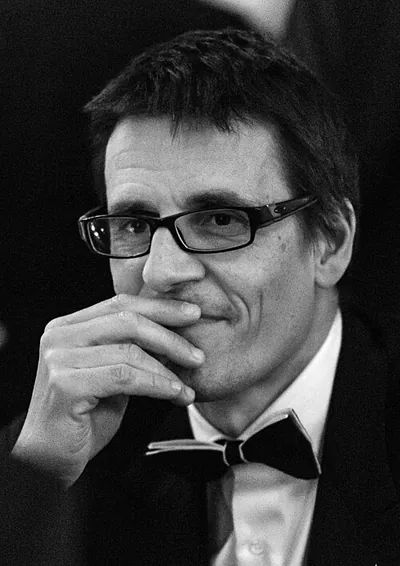 Didier Queloz1966 · Astronomy and space
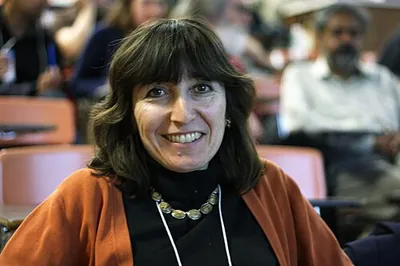 Wendy Freedman1957 · Astronomy and space
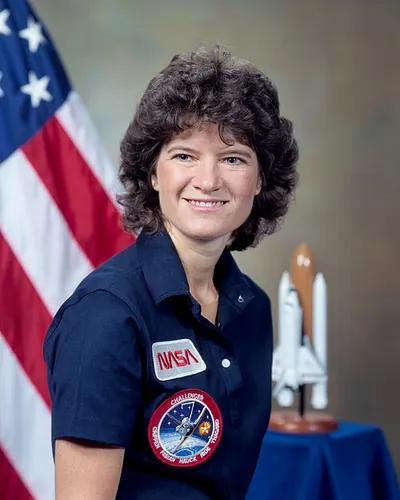 Sally Ride1951–2012 · Astronomy and space
 Russell A. Hulse1950 · Astronomy and space
 Michel Mayor1942 · Astronomy and space
