
Semyon Lavochkin
Soviet aerospace engineer and aircraft designer who founded the Lavochkin design bureau · 1900–1960
- Born
- September 11, 1900
- Died
- June 9, 1960
- Country
- Soviet Union, Russian Empire
- Section
- Transport
- Awards
- Abel Prize
Biography
Semyon Lavochkin (Smolensk, 1900 – Moscow, 1960) was a Soviet aerospace engineer and aircraft designer whose name became attached to one of the most productive fighter design bureaus of the Second World War. His aircraft formed much of the backbone of Soviet fighter units during that conflict, and later in his career he turned to missiles.
Born into a Jewish family in Smolensk, he was the son of a teacher who worked in a traditional religious school and of a mother who kept the household. He finished his schooling in Kursk in 1917 and joined the Red Army during the Russian Civil War, serving as an infantryman. In 1920 he enrolled at the Moscow State Technical University, graduating in 1927.
His first serious contact with aviation came at the Central Aerohydrodynamic Institute, TsAGI, the country's leading research centre. Working there as an intern for two years under Andrei Tupolev, he helped with the design of the TB-3 heavy bomber, and his colleagues included Mikhail Gurevich and Nikolay Kamov. Early in the 1930s he moved to a central design office that studied stratospheric aircraft, balloons and pressurised cabins, the sealed compartments that let crews breathe normally at high altitude.
Fighters gradually drew his attention. He joined Dmitry Grigorovich's team and helped develop the I-Z fighter. Combat experience in the Spanish Civil War and against Japanese forces at Khalkhin Gol revealed that Soviet fighters were falling behind foreign designs, and in 1939 Lavochkin set up his own bureau to tackle the problem. Its first aircraft, the LaGG-1, took its name from the initials of its three creators, Lavochkin, Gorbunov and Gudkov. An improved LaGG-3 followed, carrying extra fuel tanks for longer range.
From 1942 the La-5 entered series production. Its air-cooled engine gave it more power, and the La-7 and La-9 grew out of it. Ivan Kozhedub, three times a Hero of the Soviet Union, shot down more than sixty German aircraft while flying Lavochkin fighters. Between 1941 and 1945 more than 22,000 of these fighters were built.
His fortunes declined after the war. From 1947 he worked on jet aircraft with swept wings, angled backwards to reduce drag at high speed. A prototype that first flew in 1948 led to the La-15 jet fighter, a modest success. The La-176 was the first Soviet supersonic aircraft, yet his designs repeatedly placed second in competitions, especially against those of Artem Mikoyan. His last fighter was the La-250. He then moved into surface-to-air missiles, which produced the SA-2 Guideline, and into the Burya (LA-350), which is said to have been the first in the world to use titanium in production, a claim best treated with caution.
Lavochkin died in 1960, aged 59, of a heart attack during trials of an air defence system in Kazakhstan. He was buried at Novodevichy Cemetery in Moscow, and his bureau went on to focus on missiles and space projects. He joined the Communist Party in 1953, sat in the Supreme Soviet from 1950 to 1958 and became a member of the USSR Academy of Sciences in 1958. He twice received the title Hero of Socialist Labour, won four Stalin Prizes and was awarded the Order of Lenin three times. He was married to Rosa Lavochkina, a philologist, and they had a daughter, Alla, and a son, Alexander, an engineer.
Soon after his death the design office was renamed the Lavochkin Machine-Building Plant, now NPO Lavochkin. Several Russian cities, as well as Hadera in Israel, have streets named after him.
Main contributions
- 1940LaGG-1, the first fighter from Lavochkin's bureau, named after its three creators.
- 1942La-5, an air-cooled fighter built in series that led to the La-7 and La-9.
- 1947Jet aircraft with swept wings, designed for high-speed flight.
- 1948La-15, a jet fighter derived from a prototype that first flew that year.
- Burya (LA-350), a project credited with the first use of titanium in production.
- SA-2 Guideline, a surface-to-air missile that came out of his rocket work.
Trivia and anecdotes
A pilot with more than sixty kills
Ivan Kozhedub, three times a Hero of the Soviet Union, shot down more than sixty German aircraft while flying Lavochkin designs.
A death during a test
Lavochkin suffered a heart attack while an air defence system was being tested in Kazakhstan, at the age of 59.
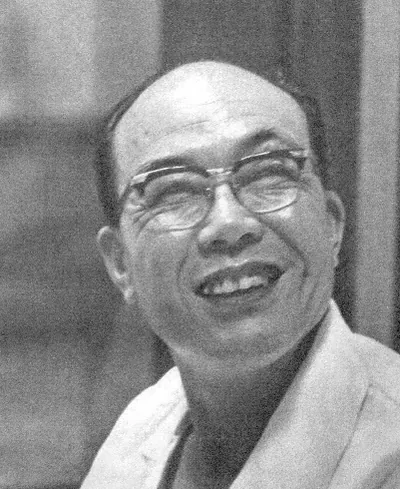
An envelope with his portrait
In 1985 the Soviet Ministry of Communications issued an illustrated stamped envelope bearing his portrait.
Streets named after him beyond Russia
Hadera in Israel has a street named after him, alongside several Russian cities.
Their contemporaries
While Semyon Lavochkin was alive (1900–1960)…
Alive at the same time
Discovered or invented in those years
- 1903AirplaneA fixed-wing aircraft, heavier than air, powered by engines or rockets, that stays aloft because its wings generate lift.
- 1916Black holeA region of space where gravity is so strong that nothing, not even light, can escape once it crosses a certain boundary.
- 1925TelevisionA system that sends moving pictures and sound over distance and shows them on a receiver, the television set.
- 1925Quantum mechanicsPhysical theory describing how matter and light behave at atomic and subatomic scales, where energy is exchanged in minimal packets and results are expressed as probabilities.
- 1931Big BangA cosmological model describing how the universe expanded from an early state of extreme density and temperature, about 13.8 billion years ago.
- 1945ComputerA programmable machine that takes in data, processes it by following stored instructions, and produces results, able to switch tasks simply by running different software.
 Charles Lindbergh1902–1974 · Transport
 Jiro Horikoshi1903–1982 · Transport
 Artem Mikoyan1905–1970 · Transport
 Sōichirō Honda1906–1991 · Transport
 Sergey Ilyushin1894–1977 · Transport
 Alec Issigonis1906–1988 · Transport
