Tapputi
Mesopotamian perfumer and chemist, regarded as one of the earliest chemists in history · 1200 BC
- Born
- 1200 BC
- Country
- Babylonia
- Section
- Chemistry
Biography
Tapputi, also known as Tapputi-Belatekallim, is one of the earliest people on record to work methodically with substances and processes that we now associate with chemistry. She lived in Babylonian Mesopotamia around 1200 BC, and her name appears on a cuneiform tablet, the wedge-shaped writing system pressed into damp clay. Her importance lies in showing that professional perfumers, many of them women, already existed and could organise a complex task and record it in writing.
Very little is known about her origins and training. The epithet Belatekallim, which can be rendered as the woman who oversees a palace, suggests she held a position of responsibility at court. Besides leading a group of perfumers, she is described as an overseer at the royal palace, where she worked alongside an official named Ninu, whose name is partly lost on the tablet. No surviving record names her teachers or explains how she learned her craft, so any detailed account of her training would be guesswork.
Her work involved making perfumes from flowers, oil and calamus, an aromatic reed, combined with cyperus, myrrh and balsam. The method on the tablet is simple in outline: water or other solvents, liquids able to dissolve other substances, were added, and the mixture was then distilled and filtered several times. Distillation means heating a liquid so that its vapours separate out and can be collected again as a purer liquid, and the text refers to an alembic, the apparatus used for this. It is the oldest surviving reference to an alembic, which makes the tablet a valuable document for the history of technology.
The fame attached to her name needs some qualification. Calling her the first chemist in history is a modern label that sums up her place in a tradition of working with substances, but it is not a category she would have used. Her legacy rests mainly on the tablet that mentions her: thanks to it we know that scent was already produced through dissolving, distilling and filtering, and that production was in the hands of women with authority in the administration. Her story is a reminder that ancient technical knowledge was not only male and was not passed on only by word of mouth.
Main contributions
- 1200 BCPerfumes from flowers, oil and calamus: fragrances made by combining flowers, oil, calamus, cyperus, myrrh and balsam.
- 1200 BCRepeated distillation and filtering: a method of dissolving in water or other solvents, then distilling and filtering several times to purify the scents.
- 1200 BCThe oldest surviving reference to an alembic, the apparatus used for distillation.
- 1200 BCLeadership of a group of professional perfumers, mostly women, and oversight at the royal palace.
Trivia and anecdotes
A role in popular culture
Tapputi is one of the main characters of the animated web series Super Science Friends, which has brought her name to audiences beyond historians.
An approximate date
The tablet that mentions her is dated to around 1200 BC, so the date is approximate rather than exact.
Their contemporaries
While Tapputi was alive (1200 BC)…
Discovered or invented in those years
- 1200 BCCast ironAn iron-carbon alloy with more than 2% carbon, poured molten into moulds to shape it.
 Robert Boyle1627–1691 · Chemistry
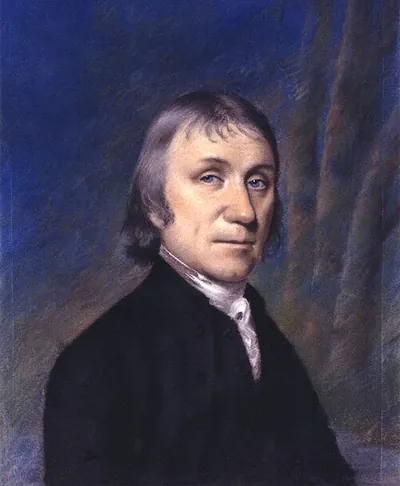 Joseph Priestley1733–1804 · Chemistry
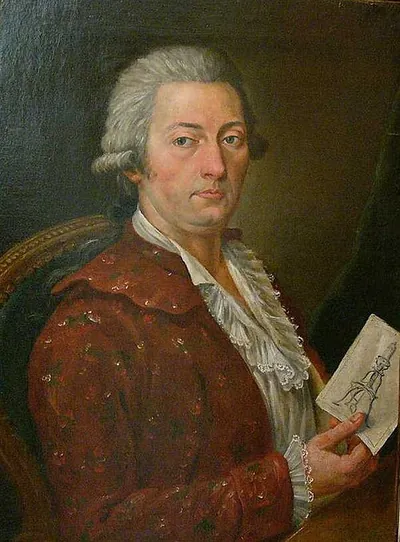 Carl Wilhelm Scheele1742–1786 · Chemistry
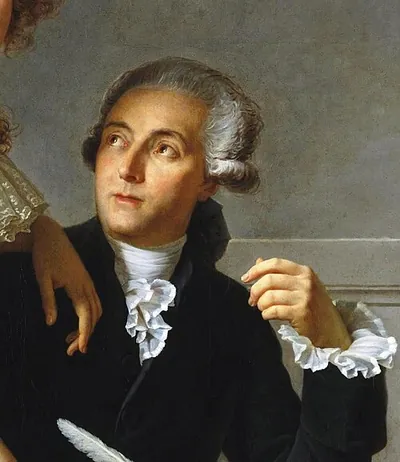 Antoine Lavoisier1743–1794 · Chemistry
 John Dalton1766–1844 · Chemistry
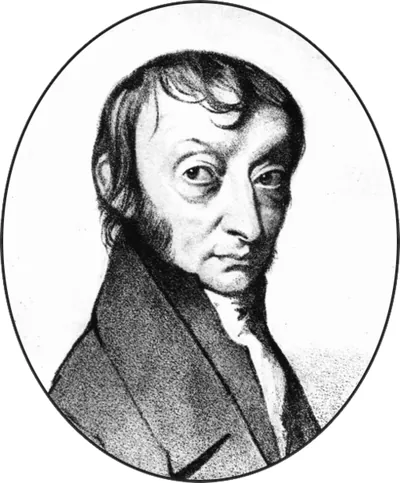 Amedeo Avogadro1776–1856 · Chemistry