
Vladimir Grigoryevich Fyodorov
Russian and Soviet scientist, weapons designer and military engineer, a pioneer of automatic firearms and of early assault rifles · 1874–1966
- Born
- May 3, 1874
- Died
- September 19, 1966
- Country
- Soviet Union, Russian Empire
- Section
- Engineering and construction
Biography
Vladimir Grigoryevich Fyodorov was a Russian and Soviet scientist and military engineer, regarded as one of the founders of the Soviet school of automatic small arms. Born in Saint Petersburg in 1874 and dying in Moscow in 1966, he lived through the late Russian Empire and the Soviet Union, a period shaped by world wars, revolution and rapid industrialisation. He matters because he helped open the path to firearms that keep firing while the trigger is held, and because he designed one of the earliest prototypes of the assault rifle.
Fyodorov trained at the Mikhailovskaya Artillery Academy and graduated in 1900. He was then transferred to the artillery committee of the Chief Artillery Directorate, where he devoted himself to automatic weapons, those that reload and fire repeatedly without a new pull of the trigger for each shot. In 1907 he wrote the first study on this type of weapon, which built his reputation among specialists of the period.
His practical work produced several automatic rifles. Around 1912 and 1913 he developed models chambered in 7.62 mm and 6.5 mm, the latter for a cartridge of his own design. In 1916 he produced the Avtomat Fyodorova, one of the first assault rifle prototypes in the world. It was originally meant to fire a shortened cartridge for the 6.5 mm Arisaka rifle, but reliability problems in testing and concern about supply difficulties led to the use of the full-sized cartridge instead. His weapons saw use in the First World War and the Russian Civil War.
After the October Revolution, Fyodorov became head and technical director of the first Soviet weapons factory, a post he held from 1918 to 1931, where submachine guns of his design were produced. In 1921 he organised and headed a design bureau at the plant. In 1922 he worked with his protégé Georgy Shpagin on the Fyodorov-Shpagin machine gun, and Shpagin later designed the PPSh-41 submachine gun. From 1931 to 1933 he served as a standardisation consultant at a weapons complex, and later, from 1942 to 1946, as a small arms adviser to the people's commissariat and the Ministry of Armaments. Between 1946 and 1953 he was a member of the Academy of Artillery Sciences.
Fyodorov was also a teacher. He mentored several key figures of Soviet arms design, among them Shpagin, Vasily Degtyaryov and Sergei Simonov. He also wrote scientific works on the history, design, production and combat use of small arms, which made him a reference for later generations of engineers. His legacy is visible in how the Soviet Union organised the development of its rifles and submachine guns during the Second World War.
Main contributions
- 1907First study on automatic weapons, analysing how firearms that fire continuously operate.
- 1912Automatic rifle chambered in 7.62 mm, one of his first practical designs.
- 1913Automatic rifle in 6.5 mm for a cartridge of his own invention.
- 1916Avtomat Fyodorova, one of the first assault rifle prototypes, used in the First World War and the Russian Civil War.
- 1922Fyodorov-Shpagin machine gun, designed together with his protégé Georgy Shpagin.
Trivia and anecdotes
A teacher of teachers
Several of the best-known Soviet weapons designers trained under his guidance, among them Shpagin, Degtyaryov and Simonov.
Their contemporaries
While Vladimir Grigoryevich Fyodorov was alive (1874–1966)…
Alive at the same time
Discovered or invented in those years
- 1876TelephoneA device that carries the human voice over distance by turning sound into electrical signals and back into sound at the other end of the line.
- 1884CarA road vehicle with four wheels and its own engine, mainly built to carry people.
- 1903AirplaneA fixed-wing aircraft, heavier than air, powered by engines or rockets, that stays aloft because its wings generate lift.
- 1925TelevisionA system that sends moving pictures and sound over distance and shows them on a receiver, the television set.
- 1931Big BangA cosmological model describing how the universe expanded from an early state of extreme density and temperature, about 13.8 billion years ago.
- 1945ComputerA programmable machine that takes in data, processes it by following stored instructions, and produces results, able to switch tasks simply by running different software.
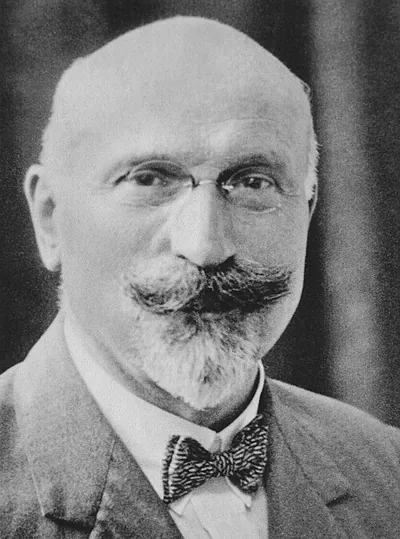 Robert Maillart1872–1940 · Engineering and construction
 Stephen Timoshenko1878–1972 · Engineering and construction
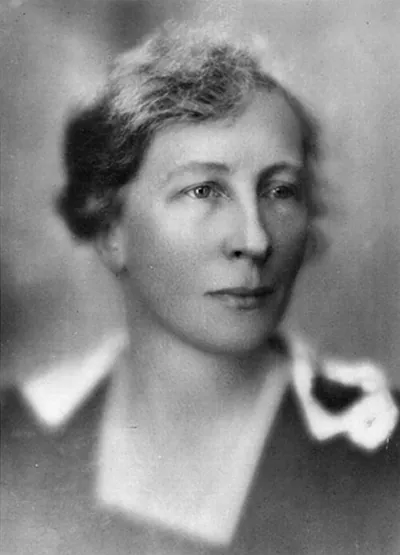 Lillian Moller Gilbreth1878–1972 · Engineering and construction
 Eugène Freyssinet1879–1962 · Engineering and construction
 Sakichi Toyoda1867–1930 · Engineering and construction
 Karl von Terzaghi1883–1963 · Engineering and construction
