
William Lawvere
American mathematician and philosopher, pioneer of category theory and topos theory · 1937–2023
- Born
- February 9, 1937
- Died
- January 23, 2023
- Country
- United States
- Section
- Mathematics
Biography
F. William Lawvere (Muncie, Indiana, 1937 – Chapel Hill, North Carolina, 2023) was an American mathematician and philosopher who turned category theory into a tool for founding mathematics and physics. His work over more than fifty years underpins categorical logic and topos theory, two fields now used in algebraic geometry, mathematical logic and theoretical computer science.
He was born in Muncie and grew up on a farm near Mathews. He began his university studies at Indiana University in 1955. He first leaned towards experimental physics, but he disliked the loose reasoning he saw in some theoretical courses, so he chose to study mathematics instead. There he came under the guidance of Clifford Truesdell, an expert in continuum mechanics, the study of deformable matter such as fluids and solids, who steered him towards that subject and kinetic theory. He also studied philosophy with Alan Donagan. It was while preparing a functional analysis course for Truesdell, working from a problem in John L. Kelley's General Topology, that he met category theory, which describes mathematical objects through the maps between them rather than through their inner contents. He saw it as a promising way to write simple, rigorous axioms for the physical ideas of Truesdell and Walter Noll.
Truesdell backed his application to work with Samuel Eilenberg, one of the founders of category theory, at Columbia University in 1960. Before finishing his doctorate he spent the 1961–62 academic year at the University of California, Berkeley, informally following lectures on model theory and set theory by Alfred Tarski and Dana Scott. In his first teaching post at Reed College he drafted the first axioms for composing maps, which later grew into the Elementary Theory of the Category of Sets, published in 1964. He completed his PhD at Columbia in 1963 under Eilenberg. His thesis, Functorial Semantics of Algebraic Theories, treated algebraic theories as categories and their models as functors; these are now called Lawvere theories.
From 1964 to 1967 he worked at the Forschungsinstitut für Mathematik at ETH Zurich on the category of categories, influenced by Pierre Gabriel's seminars on Grothendieck's foundations of algebraic geometry. He then taught at the University of Chicago with Saunders Mac Lane and at the CUNY Graduate Center with Alex Heller. Back at ETH in 1968–69, he proposed first-order axioms for topoi, generalising Grothendieck's topoi. Working with the algebraic topologist Myles Tierney, he found that a Grothendieck topology can be described as an endomorphism on the representing object of subobjects. Tierney showed that the required conditions reduce to idempotence and preservation of finite intersections. These Lawvere–Tierney topologies matter in algebraic geometry and model theory. Anders Kock later simplified the definition of an elementary topos further.
His career also had controversial moments. In 1969 Dalhousie University set up a fifteen-person research group under him, funded by a Killam grant. In 1971, however, the university ended the group and dismissed him, citing his political activity and his unauthorised teaching of the history of mathematics. The dismissal provoked strong protests among students. Years later, in 1995, Dalhousie celebrated fifty years of category theory with him and Mac Lane present. After leaving Dalhousie he ran a seminar in Perugia from 1972 to 1974, where he worked on enriched categories, in which hom-sets are replaced by objects of another category. A metric space, whose distance can be seen as enrichment over non-negative real numbers, is a standard example. In 1974 he joined the University at Buffalo, where he stayed until retiring in 2000, often working with Stephen Schanuel.
His most ambitious programme was a rigorous mathematical base for physics, particularly continuum mechanics. In 1982 he organised the Buffalo meeting Categories in Continuum Physics, made possible by a Martin professorship he had received in 1977; Truesdell took part. Lawvere also argued that category theory could formalise philosophical concepts, especially those of Hegel's dialectics, such as the unity of opposites, which he saw expressed in adjoint functors. This outlook connected his work with Marxism–Leninism, to which he remained committed throughout his life, and explains why his writing often mixes mathematics with political philosophy. His influence endures in categorical logic, topos theory and category-based alternatives for the foundations of mathematics. He died in 2023 at the age of 85 after a long illness.
Main contributions
- 1963PhD thesis on functorial semantics of algebraic theories, introducing Lawvere theories: algebraic theories treated as categories.
- 1964Elementary Theory of the Category of Sets, an alternative foundation for mathematics built on simple axioms.
- 1969Elementary axioms for topoi and Lawvere–Tierney topologies, developed with Myles Tierney.
- 1970Quantifiers and Sheaves, linking logical quantifiers to adjoint functors.
- 1982Categories in Continuum Physics meeting in Buffalo, aimed at grounding continuum physics in category theory.
- 2009Conceptual Mathematics, a book written with Stephen Schanuel as an introduction to categories.
Teachers and students
Studied under:
Taught:
Trivia and anecdotes
A controversial dismissal
Dalhousie dismissed him in 1971 over his political activism and for teaching the history of mathematics without authorisation, which sparked student protests.
Distances as categories
A metric space can be seen as a category enriched over non-negative real numbers, where each distance plays the role of a hom-object.
Their contemporaries
While William Lawvere was alive (1937–2023)…
Alive at the same time
Discovered or invented in those years
- 1945ComputerA programmable machine that takes in data, processes it by following stored instructions, and produces results, able to switch tasks simply by running different software.
- 1957Artificial satelliteAn artificial satellite is a human-made object placed in orbit around a celestial body, usually Earth, to collect information, relay signals, or carry out a specific task.
- 1969InternetA global network of interconnected computer networks that communicate using the TCP/IP protocol suite.
- 1971EmailA network service that lets users send and receive digital messages through addressed mailboxes, much like postal mail but electronic.
- 1973Mobile phoneA handheld wireless phone that lets people make and receive calls while moving across a cellular network area.
- 1989World Wide WebA system of linked documents and resources, connected by hyperlinks and accessed over the Internet with web browsers.
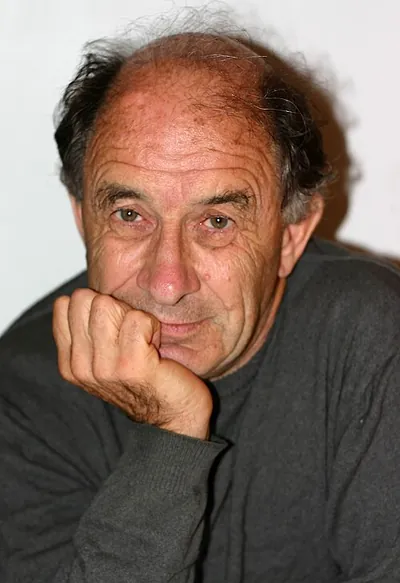 Vladimir Arnold1937–2010 · Mathematics
 Robert Aumann1930 · Mathematics
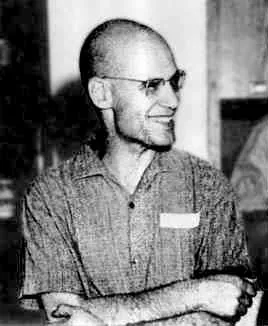 Alexander Grothendieck1928–2014 · Mathematics
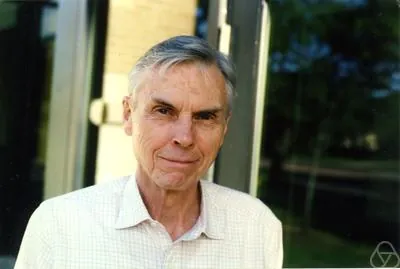 John Tate1925–2019 · Mathematics
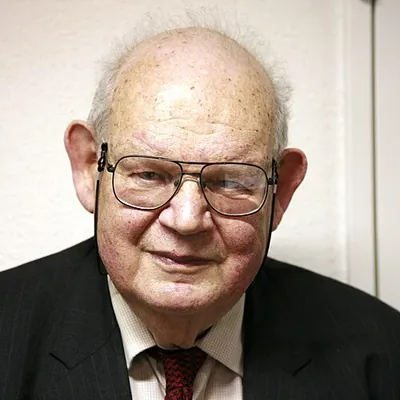 Benoit Mandelbrot1924–2010 · Mathematics
 Andrew Wiles1953 · Mathematics
