
William Roxburgh
Scottish surgeon and botanist, regarded as the founding father of Indian botany · 1751–1815
- Born
- June 29, 1751
- Died
- April 10, 1815
- Country
- United Kingdom of Great Britain and Ireland
- Section
- Biology
Biography
William Roxburgh (1751–1815) was a Scottish surgeon and botanist who spent decades working in British India. He described a great many plant species and is regarded as the founding father of Indian botany. His work unfolded during the expansion of the British East India Company, and it laid the groundwork for the systematic study of the subcontinent's flora.
He was born on the Underwood estate near Craigie, in Ayrshire, and studied medicine at Edinburgh University, where he learned surgery from Alexander Monro and botany from John Hope, curator of the city's botanic garden. While still young he sailed as a surgeon's mate on East India Company ships, and in 1776 he joined the Madras Medical Service. His training in mathematics and physics later shaped his taste for precise measurement.
In Madras he combined medicine with botany. From 1781 he ran the garden at Samalkot, where he tested plants useful for farming and industry, an area now called economic botany. To record them he employed Indian artists, who produced around 700 illustrations by 1790.
He was also a pioneer of tropical meteorology. From his arrival in Madras he took readings three times a day using instruments from well-regarded makers, a run of data unmatched in the region until the 1820s. These observations led him to think about famine and climate across the empire, and he studied the lac insect, the source of the substance called lac.
Around 1793 he took charge of the Calcutta Botanical Garden at Sibpur, and in 1814 he produced its catalogue, the Hortus Bengalensis. He received gold medals from the Society for the Encouragement of Arts in 1803, 1805 and 1814, the last presented by the Duke of Norfolk. Ill health took him back to Scotland in 1813, with a stop at Saint Helena, where he compiled an annotated list of the island's plants, published in 1816. He died in Edinburgh. Accounts differ on the exact date of his death, giving either 10 April or 18 February 1815.
His legacy grew largely after his death. William Carey published the first volume of his Flora Indica in 1820 and the second in 1824, with notes by Nathaniel Wallich. He is credited with the first documented record of the Ganges river dolphin. A rose he described in 1820 as Rosa microphylla had to be renamed, because a European species already carried that name.
Main contributions
- 1790A series of around 700 plant illustrations, drawn by Indian artists, documenting his economic botany work.
- 1814Hortus Bengalensis, a catalogue of the Calcutta Botanical Garden.
- 1816An annotated list of the plants of Saint Helena, published as an appendix to a work by Beatson.
- 1820The first volume of the Flora Indica, published posthumously by William Carey.
- 1824The second volume of the Flora Indica, with notes by Nathaniel Wallich.
- Daily meteorological records kept in Madras, pioneering the collection of tropical weather data.
- The first documented record of the Ganges river dolphin.
Teachers and students
Trivia and anecdotes
A dolphin in his notes
He is credited with the first documented record of the Ganges river dolphin, though the year of his description is not certain.
Unnamed artists
The names of the Indian artists who painted his plant illustrations were never recorded, though their drawings form the core of his work.
Their contemporaries
While William Roxburgh was alive (1751–1815)…
Alive at the same time
Discovered or invented in those years
- 1766HydrogenThe lightest and most abundant chemical element in the universe, atomic number 1, which under normal conditions is a colourless, odourless and highly flammable gas.
- 1772NitrogenChemical element with atomic number 7, a colourless, odourless gas that makes up about 78% of Earth's air and is an essential part of proteins and nucleic acids.
- 1774OxygenA colorless, odorless gas, symbol O and atomic number 8, that forms the dioxygen in air and is essential for respiration in most living things.
- 1781UranusThe seventh planet from the Sun, an ice giant discovered by William Herschel in 1781, the first planet found with a telescope.
- 1803AtomThe basic unit of a chemical element: a nucleus of protons and usually neutrons surrounded by a cloud of electrons.
- 1811MoleculeAn electrically neutral group of at least two atoms held together by chemical bonds in a defined arrangement.
 Edward Jenner1749–1823 · Biology
 Jean-Baptiste de Lamarck1744–1829 · Biology
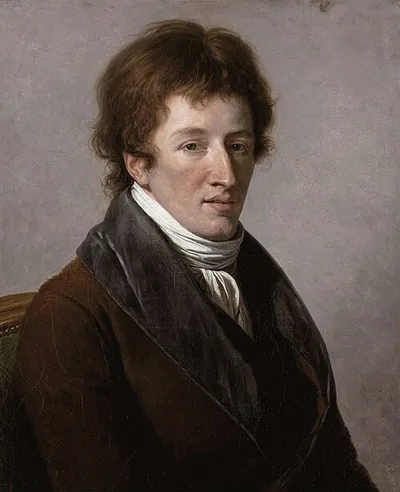 Georges Cuvier1769–1832 · Biology
 Carl Linnaeus1707–1778 · Biology
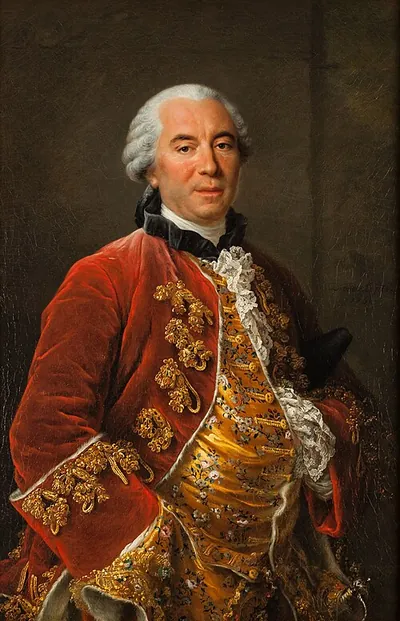 Georges-Louis Leclerc, Comte de Buffon1707–1788 · Biology
 Charles Darwin1809–1882 · Biology
