
Zénobe Gramme
Belgian electrical engineer and inventor who created a direct current dynamo and an electric motor · 1826–1901
- Born
- April 4, 1826
- Died
- January 20, 1901
- Country
- Belgium
- Section
- Energy
Biography
Zénobe Gramme (Jehay-Bodegnée, Belgium, 1826 – Bois-Colombes, France, 1901) was a Belgian electrical engineer whose direct current machines helped turn electricity from a laboratory curiosity into a practical tool for industry. He worked in the second half of the nineteenth century, when the first electrical installations and factories needed generators that could produce power on a large scale. His significance lies in designs that made electricity both practical to produce and useful for driving machines.
He was the sixth child of Mathieu-Joseph Gramme, born into a modest family. His schooling was limited, and he struggled with reading and writing for most of his life. His real gift was with his hands, and when he finished school he trained as a joiner. That trade taught him to work wood and metal with care, a skill that proved essential when he later built machines.
In Paris he found work as a model maker for a company that made electrical equipment, and there his interest in technology grew. Without any formal academic training, he learned largely by studying existing machines and testing improvements in the workshop. After building an improved dynamo, he partnered with Hippolyte Fontaine to manufacture it. Their business, the Société des Machines Magnéto-Électriques Gramme, produced the Gramme dynamo along with components such as the Gramme ring and armature.
A dynamo converts motion into electricity using magnets and rotating coils. Earlier dynamos delivered an uneven current at modest voltages. Gramme reworked the design to obtain a steadier direct current at much higher voltages. By around 1870 his generators were running on a large scale in Paris, and in 1873 one of his dynamos was shown at an exhibition in Vienna.
In 1873 Gramme and Fontaine made an accidental discovery: their machine was reversible. Connected to any direct current source, it began to turn. The same device could therefore act as a generator or as a motor, which turns electrical energy into movement. Before this, electric motors delivered little power and were used mostly as toys or demonstration pieces. The Gramme machine was among the first motors strong enough to be useful in industry.
In 1875 Nikola Tesla saw a Gramme machine at the Graz University of Technology and came up with the idea of using it to generate alternating current. He could not develop the idea at that time, but the episode shows how Gramme's work inspired other engineers of the period.
His private life also had notable moments. In 1857 he married Hortense Nysten, a widow with a daughter, Héloïse; Hortense died in 1890. In 1891 he married Antonie Schentur in Bois-Colombes. In the village where she had grown up, which he visited every year for a few months, he paid for an avenue built to cool an underground water pipe completed in 1898. The avenue was named Gramme-Allee in 1902.
The state honoured him with membership of the Legion of Honour, becoming an officer in 1877, and with the Order of Leopold, of which he was a commander. In 1888 the French government awarded him the last of the valued Volta Prizes.
Gramme died in Bois-Colombes in 1901 and was buried in the Père Lachaise Cemetery in Paris. His name lives on in the Institut Gramme in Liège, in a Belgian Navy training sailing ship and in the avenue that bears his name. His legacy is mainly practical: he showed that electricity could be generated and used as a source of mechanical power in industry.
Main contributions
- 1870Large-scale direct current generators that operated in Paris.
- 1873Discovery that his machine was reversible and could work as a motor.
- The Gramme ring, armature and dynamo, components made by his company; the exact year is not recorded in the sources.
Trivia and anecdotes
An inventor without schooling
Gramme was semi-literate for most of his life and earned his living as a joiner before he turned to electricity.
A machine that inspired Tesla
Nikola Tesla saw a Gramme machine in Graz in 1875 and considered using it to generate alternating current.
A place in Belgian television
In 2005 he placed 23rd in Le plus grand Belge, a programme broadcast by the French-speaking broadcaster RTBF and inspired by a BBC show.
Related discoveries and inventions
- 1821DC motorA machine that turns electrical energy into rotary motion using a magnetic field, powered by direct current.
Their contemporaries
While Zénobe Gramme was alive (1826–1901)…
Alive at the same time
Discovered or invented in those years
- 1846NeptuneThe eighth and most distant planet of the Solar System, an ice giant found through mathematical prediction before any direct sighting.
- 1859EvolutionThe process by which the heritable traits of living populations change over generations, explaining the diversity of life from common ancestors.
- 1869Periodic tableAn arrangement of the chemical elements into rows (periods) and columns (groups), ordered by atomic number, that reveals recurring chemical behaviour and lets scientists predict properties.
- 1869Deoxyribonucleic acidA double-stranded molecule that carries the genetic instructions of nearly all living things and many viruses.
- 1876TelephoneA device that carries the human voice over distance by turning sound into electrical signals and back into sound at the other end of the line.
- 1884CarA road vehicle with four wheels and its own engine, mainly built to carry people.
 Charles Tellier1828–1913 · Energy
 Ignacy Łukasiewicz1822–1882 · Energy
 Étienne Lenoir1822–1900 · Energy
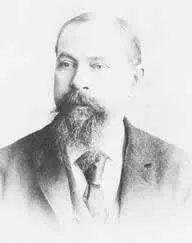 George Brayton1830–1892 · Energy
 Ludvig Nobel1831–1888 · Energy
 Nicolaus Otto1832–1891 · Energy
