
Abraham Alikhanov
Armenian-born Soviet experimental physicist who specialized in nuclear and particle physics and directed the Institute for Theoretical and Experimental Physics in Moscow · 1904–1970
- Born
- March 4, 1904
- Died
- December 8, 1970
- Country
- Soviet Union, Russian Empire
- Section
- Physics
- Awards
- Abel Prize
Biography
Abram Isaakovich Alikhanov, born Abraham Alikhanian, was an experimental physicist of Armenian origin who worked in the Soviet Union and specialized in nuclear and particle physics. His career spanned the 1920s to the 1960s, a period when the physics of the atom was being transformed, and he matters because he led the design of the first Soviet research reactors and directed a major physics institute in Moscow.
He was born on 4 March 1904 in Elizavetpol, today Ganja in Azerbaijan, then part of the Russian Empire. His parents were Armenian: his father worked as a railway engineer and his mother kept the household. His younger brother Artem also became a physicist and shared much of his path. Abraham finished a commercial college in Tiflis in 1921 and enrolled at the city's Polytechnic Institute, but he barely studied there, since he had to work as a cashier and telephone operator to support his family.
In 1923 he moved to Leningrad and enrolled at the Polytechnic, first in chemistry and from 1924 in the physics and mechanics department founded by Abram Ioffe, one of the driving figures of Soviet physics. His teachers there included Nikolay Semyonov and Yakov Frenkel. While studying he worked as a radiologist at the Mechnikov Hospital. He graduated in 1929 and that same year joined the Physical-Technical Institute full time. He also Russified his first name during this period.
His early work concerned X-rays, a radiation that passes through matter and can reveal how crystals are arranged inside. In 1929 he published his first paper, on the crystal structure of a copper-aluminium alloy. From 1930 he worked for years with his brother and Lev Artsimovich on X-ray optics, showing that the laws of classical optics also apply to hard X-rays. He collected these results in a monograph published in 1933.
He switched to nuclear physics in 1933, after the discovery of the neutron and the positron, a particle with the electron's mass but a positive charge. Ioffe put him in charge of the institute's positron laboratory. With Mikhail Kozodaev he built a magnetic spectrometer fitted with gas-discharge counters, a methodological novelty that helped open the way to Soviet nuclear electronics. In 1934 he and Igor Kurchatov built a "baby cyclotron", the first cyclotron to run outside Berkeley, California, although it did not operate for long. He earned his doctorate in 1935.
During the war he moved his research on cosmic rays, high-energy particles that arrive from space, to Armenia. From 1942 he worked on Mount Aragats, and in 1943 he founded the Yerevan Physics Institute with his brother. His group claimed to have detected particles they called varitrons, supposedly with a wide range of masses. The claim was mistaken, and other Soviet physicists attacked it, sparking a bitter dispute that was never officially settled.
Back in Moscow, he took part in the Soviet atomic bomb project led by Kurchatov, and was assigned to develop a reactor cooled and moderated with heavy water, in which hydrogen atoms are heavier than usual. In December 1945 the laboratory that would later become ITEP was established in Moscow, and he directed it until 1968. Under his leadership the first Soviet research reactor was designed and started on 25 April 1949, and the first industrial heavy-water reactor entered service in 1951.
He also advanced accelerator technology and drove the construction of the 70 GeV synchrotron at Serpukhov, completed in 1967, the largest of its kind in the world at the time. He died on 8 December 1970. His legacy lives on at ITEP, named after him in 2004, and in the Yerevan institute he founded with his brother.
Main contributions
- 1929First paper, on using X-ray analysis to study the crystal structure of a copper-aluminium alloy.
- 1933Monograph X-Ray Optics, summarizing his work on the reflection of X-rays.
- 1934Baby cyclotron, built with Kurchatov, the first cyclotron to operate outside Berkeley.
- 1938Method for determining the rest mass of the neutrino from the decay of beryllium-7 nuclei.
- 1949First Soviet research reactor, started up on 25 April.
- 1951First Soviet industrial heavy-water reactor, which entered service.
- 196770 GeV synchrotron at Serpukhov, the largest in the world at the time.
Trivia and anecdotes
A changed name
He was born Abraham Alikhanian and, while studying in Leningrad, adopted the Russian form of his name, Abram Isaakovich Alikhanov.
The varitrons
The varitrons were never confirmed, and the Lenin Prize the brothers received for this work became a much-debated episode in the scientific community.
Their contemporaries
While Abraham Alikhanov was alive (1904–1970)…
Alive at the same time
Discovered or invented in those years
- 1916Black holeA region of space where gravity is so strong that nothing, not even light, can escape once it crosses a certain boundary.
- 1925TelevisionA system that sends moving pictures and sound over distance and shows them on a receiver, the television set.
- 1925Quantum mechanicsPhysical theory describing how matter and light behave at atomic and subatomic scales, where energy is exchanged in minimal packets and results are expressed as probabilities.
- 1931Big BangA cosmological model describing how the universe expanded from an early state of extreme density and temperature, about 13.8 billion years ago.
- 1945ComputerA programmable machine that takes in data, processes it by following stored instructions, and produces results, able to switch tasks simply by running different software.
- 1969InternetA global network of interconnected computer networks that communicate using the TCP/IP protocol suite.
 J. Robert Oppenheimer1904–1967 · Physics
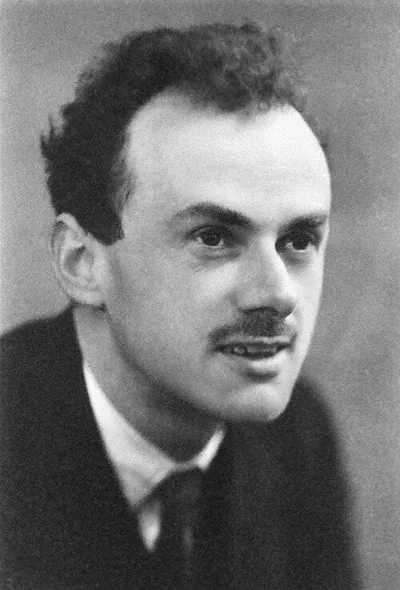 Paul Dirac1902–1984 · Physics
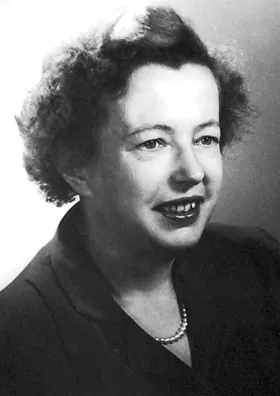 Maria Göppert Mayer1906–1972 · Physics
 Eugene Paul Wigner1902–1995 · Physics
 Hans Bethe1906–2005 · Physics
 Enrico Fermi1901–1954 · Physics
