
J. Robert Oppenheimer
American theoretical physicist who led the Los Alamos Laboratory during the Manhattan Project · 1904–1967
- Born
- April 22, 1904
- Died
- February 18, 1967
- Country
- United States
- Section
- Physics
Extended biography
Childhood and education
J. Robert Oppenheimer was born in Manhattan on April 22, 1904, into a family that was Jewish but not observant. His father, Julius Seligmann Oppenheimer, had left the German town of Hanau for the United States in 1888 with no money, no higher education and little English. He rose through a textile firm to become an executive and a wealthy man. His mother, Ella Friedman, was a painter, and the household held an art collection that included works by Picasso, Vuillard and Van Gogh.
Robert was a precocious child. He attended the Ethical Culture Society School, whose founders emphasized moral training without dogma, and he showed interests in literature, languages, mineralogy and chemistry. He skipped grades and took private flute lessons from a well-known French musician. He was a versatile student who could excel in the arts and the sciences alike, a balance he kept for the rest of his life.
His entry to university was delayed by a year after he contracted colitis, an inflammation of the intestine, while on a family holiday in Czechoslovakia. He recuperated in New Mexico, where he developed a lasting fondness for horseback riding and the desert landscape of the American Southwest. He entered Harvard in 1922 and, to make up the lost year, took six courses a term instead of four. He graduated in 1925 in only three years, summa cum laude, with a degree in chemistry. A thermodynamics course taught by Percy Bridgman drew him toward experimental physics, although he soon realized that his strength lay elsewhere.
Cambridge, Göttingen and the doctorate
After Harvard, Oppenheimer was admitted to Christ’s College, Cambridge, and wrote to Ernest Rutherford asking to work at the famous Cavendish Laboratory. Bridgman’s recommendation had warned that Oppenheimer’s clumsiness in the lab suggested theoretical rather than experimental work would suit him better. Rutherford was not impressed, but J. J. Thomson accepted him on condition that he complete a basic laboratory course.
The English period was unhappy. Oppenheimer found practical work tedious and struggled with it, and his relationship with his tutor, Patrick Blackett, was strained. A story repeated by his friend Francis Fergusson claims that Oppenheimer left a poisoned apple on Blackett’s desk. No record confirms it, and his grandson considers it unsubstantiated. What is documented is that Oppenheimer suffered periods of depression, saw a psychiatrist in London and behaved erratically enough to worry his friends.
In 1926 he moved to the University of Göttingen to work with Max Born, then one of the world’s leading centres of theoretical physics. There he mixed with a remarkable circle that included Heisenberg, Pauli, Dirac, Fermi and Teller. He was lively in discussion, sometimes to the point of taking over seminars. He received his doctorate in March 1927 at the age of 23. During his years in Europe he published more than a dozen papers on quantum mechanics, the theory that describes the behaviour of atoms and other very small particles. That period set the direction of his career.
Scientific contributions
His best-known work is the Born–Oppenheimer approximation, written with Born. A molecule is made of heavy atomic nuclei and light electrons. Solving the full equations for both at once is nearly impossible. The approximation treats the nuclei as almost fixed when calculating the motion of the electrons, which greatly simplifies the mathematics. It remains a basic tool of quantum chemistry, and it is the work he cited most often.
He also made an important early step toward the positron. In 1930 he wrote a paper that effectively anticipated the particle. Paul Dirac had proposed an equation implying a particle with positive charge and the same mass as the electron. Oppenheimer reached a similar conclusion but did not follow the idea fully, partly because he doubted Dirac’s equation. Two years later Carl Anderson detected the positron experimentally. Oppenheimer also studied quantum tunnelling, the way a particle can pass through an energy barrier that classical physics says it could not cross. His calculations of electron emission from metals in strong electric fields helped shape that concept.
In the 1930s he widened his work to nuclear physics and astrophysics. With Melba Phillips he worked on the reactions produced when deuterons bombarded nuclei, and the resulting theory is now called the Oppenheimer–Phillips process. With students including George Volkoff and Hartland Snyder he studied neutron stars and gravitational collapse. In 1939 Snyder and Oppenheimer described how a sufficiently massive star could collapse without limit, an idea that anticipated what are now called black holes. His papers were dense and difficult, and some contained mathematical slips made in haste. Many physicists today regard his work on gravitational collapse as his most important contribution, although his contemporaries paid it little attention. He was nominated for the Nobel Prize in Physics four times but never won it.
Berkeley, politics and private life
From 1936 Oppenheimer was a full professor at the University of California, Berkeley, where he trained a generation of physicists. His students often copied his walk, his speech and even his habit of reading texts in their original languages. He worked closely with Ernest Lawrence, the cyclotron pioneer, helping to interpret the data his machines produced. This partnership brought him close to experiment, though he remained primarily a theorist.
In the 1920s he kept his distance from public affairs. He later admitted he rarely read newspapers and only learned of the 1929 Wall Street crash months afterwards. From about 1934 his views changed. He donated part of his salary to help German scientists fleeing the Nazis, joined a longshoremen’s rally during a strike in San Francisco, and organized fundraising for the Spanish Republic during the civil war. Between 1937 and 1942 he took part in a discussion group of Berkeley faculty that, according to some witnesses, operated as a secret unit of the Communist Party. Oppenheimer never openly joined the party, though historians disagree about how close he was to it. His brother Frank did join, against Robert’s wishes.
His private life was also complicated. In 1936 he began a relationship with Jean Tatlock, a medical student and left-wing activist, which continued on and off until 1941. She introduced him to the poetry of John Donne. In November 1940 he married Katherine “Kitty” Puening, a biologist and former communist, and they had two children, Peter, born in 1941, and Toni, born in 1944. Tatlock took her own life in January 1944, and her death deeply affected him. He was tall, thin and a heavy smoker, reserved and shy in public. He had a strong interest in Sanskrit and Hindu philosophy and often cited the Bhagavad Gita, which he kept on his desk.
The Manhattan Project and Los Alamos
The Manhattan Project was the codename for the American wartime programme to build nuclear weapons, carried out with partial help from Britain and Canada. Experiments before the war had shown that splitting the nucleus of uranium released enormous energy, and there was fear that Nazi Germany was pursuing a similar weapon. Fission means splitting a heavy nucleus into lighter pieces, releasing energy and extra neutrons that can split further nuclei and set off a chain reaction.
Oppenheimer joined the project in 1942 to lead calculations on how a fast neutron chain reaction would spread inside a bomb. He organized a summer school at Berkeley, attended by Bethe, Teller, Serber and others, where the team worked out the steps needed to build a bomb. When the army took over the project, General Leslie Groves made him scientific director. Groves was aware of Oppenheimer’s political past, but judged him the best person to coordinate physicists, chemists and engineers, and believed that his earlier views would not stand in the way of the work.
Together they chose a remote, secret site on a mesa near Santa Fe, New Mexico, not far from Oppenheimer’s ranch. The Los Alamos laboratory was built on the grounds of a former boys’ school. Oppenheimer assembled some of the leading physicists of the age, among them Fermi, Feynman, Bethe and Teller. He first underestimated how large the project would become, as its staff grew from a few hundred in 1943 to more than six thousand by 1945. He learned quickly to run large teams and to mediate between scientists and soldiers, who worked in very different ways. His key technical decisions included abandoning the gun-type design for plutonium in 1944, because reactor-made plutonium contained impurities that could trigger a premature explosion. He turned instead to the implosion design, in which conventional explosives compress a sphere of fissile material to a higher density.
Trinity, Hiroshima and Nagasaki
The first nuclear test took place in the early hours of July 16, 1945, in the desert near Alamogordo, New Mexico. Oppenheimer had named the site Trinity and later said the word came from a poem by John Donne. Some historians, including Gregg Herken, suggest the name may also have held a personal meaning connected to Jean Tatlock. His brother Frank recalled that Oppenheimer’s first words after the blast were roughly, “I guess it worked.” In a 1965 interview he described the moment and quoted from the Bhagavad Gita. The best-known line, “Now I am become Death, the destroyer of worlds,” comes from a 1949 magazine profile, so it should be read as his recollection rather than a verified record of what he said at that instant.
On August 6, 1945, the uranium bomb Little Boy was dropped on Hiroshima. Three days later the plutonium bomb Fat Man fell on Nagasaki. Hundreds of thousands of people, most of them civilians, died immediately or in the months that followed. Oppenheimer’s reaction was mixed. At Los Alamos, after the Hiroshima bombing, he received applause from the crowd, but his pride soon gave way to guilt and horror. He wrote to Secretary of War Henry Stimson urging that nuclear weapons be banned. Earlier, several scientists, including Szilard and Teller, had signed a petition against using the bomb on cities, but Groves had the petition intercepted and it never reached President Truman.
When he met Truman in October 1945 Oppenheimer said that he felt he had blood on his hands. A widely repeated account says that Truman was angered and afterwards called him a crybaby scientist. That anecdote comes from second-hand sources and should be treated with caution. On his only visit to Japan after the war, in 1960, he answered a question about remorse with a wry remark that he did not feel worse today than he had felt yesterday. His consistent position was that he mourned the deaths of innocent people, while not regretting the work itself, which he had judged necessary at the time.
The Atomic Energy Commission and the Red Scare
In 1946 the United States created the Atomic Energy Commission, a civilian agency to oversee nuclear research and weapons. Oppenheimer became chairman of its General Advisory Committee and left the directorship of Los Alamos. From that post he argued for placing nuclear energy under international control and for an agreement with the Soviet Union to avoid an arms race. The Baruch Plan of 1946 partly reflected his ideas, but it also included features that he thought were meant mainly to stop the Soviets from building their own bomb. He soon concluded that mutual distrust made an arms race almost inevitable.
He opposed developing the hydrogen bomb, a weapon based on nuclear fusion, on ethical grounds and for practical reasons. He thought it would mainly threaten civilians and that no workable design existed at the time. When President Truman decided to proceed after the Soviet Union’s first atomic test in 1949, Oppenheimer lost the argument. In 1951 Edward Teller and Stanislaw Ulam developed what became known as the Teller–Ulam design, which made a hydrogen bomb feasible, and Oppenheimer changed his view. The first true hydrogen bomb test, Ivy Mike, took place in 1952 and released about 10.4 megatons.
The political climate of the 1950s transformed his position. The Red Scare targeted anyone suspected of sympathy with communism. Lewis Strauss, chairman of the commission, resented Oppenheimer for his earlier opposition to the hydrogen bomb and for an earlier public humiliation before Congress. Together with Teller and others he pushed for an investigation of Oppenheimer’s past links with the left. The 1954 security hearing examined his leftist associations, the Chevalier affair and his testimony about friends. Oppenheimer described himself as a fellow traveller, meaning someone who shared many communist goals without following party discipline. His security clearance was revoked, ending his access to military secrets and his direct political influence. Many scientists saw the hearing as unjust and came to regard him as a victim of McCarthyism. Teller, who had testified against him, faced strong hostility from much of the scientific community as a result.
Final years and legacy
After the hearing Oppenheimer kept teaching, writing and working in physics from the Institute for Advanced Study in Princeton, which he had directed since 1947 and where he held the professorship once occupied by Albert Einstein. He travelled through Europe, Japan and Canada giving lectures on the history of science and on the role of research in society. His books were widely read. By his own assessment his influence on real policy was minimal, and the arms race he had feared became a reality.
In 1963 President John F. Kennedy awarded him the Enrico Fermi Award, a gesture of political rehabilitation. The award had been unexpectedly recommended by Edward Teller. After Kennedy’s assassination, his successor Lyndon B. Johnson presented the prize in December 1963. Oppenheimer thanked the president with remarks about the charity and courage it had required to honour him. The rehabilitation was symbolic, since his security clearance was not restored. In 2022 the 1954 decision was formally vacated.
In 1957 he bought land at Gibney Beach on Saint John, in the United States Virgin Islands, where he built a simple holiday house. He spent several months a year there with his wife and enjoyed sailing. A heavy pipe smoker, he died of recurrent throat cancer on February 18, 1967, in Princeton. His ashes were scattered in the Virgin Islands. His daughter Toni inherited the property and left it to the people of Saint John as a public park, and the beach is still known informally as Oppenheimer Beach.
His legacy has two sides. He is remembered as the scientific director of the Manhattan Project and as the figure behind the atomic bomb, which earned him the nickname “father of the atomic bomb”. He is also remembered as a theoretical physicist and teacher whose work shaped quantum mechanics, nuclear physics and the study of neutron stars and black holes. His life remains a subject of ethical debate about the responsibilities of scientists who build weapons. He has been portrayed in several films, and in 2023 Christopher Nolan directed a film about him starring Cillian Murphy. The lunar crater Oppenheimer and the asteroid (67085) Oppenheimer also commemorate his name.
Quotes
“There are no secrets about the world of nature. There are secrets about the thoughts and intentions of men.”
“In some sort of crude sense which no vulgarity, no humor, no overstatement can quite extinguish, the physicists have known sin; and this is a knowledge which they cannot lose.”
“Science is not everything, but science is very beautiful.”
“A man whose errors can take that long to correct is quite a man.”
“It is a profound and necessary truth that the deep things in science are not found because they are useful; they are found because it was possible to find them.”
Main contributions
- 1927Born–Oppenheimer approximation: a method that separates nuclear motion from electron motion when calculating molecules.
- 1930Anticipation of the positron: a prediction of a particle with the electron's mass but a positive charge.
- 1935Oppenheimer–Phillips process: an explanation of certain nuclear reactions with deuterons involving heavier nuclei.
- 1939Gravitational collapse: a description of how a very massive star can collapse without limit, an early step toward the idea of black holes.
- 1945Scientific direction of the Manhattan Project and Los Alamos, culminating in the Trinity test.
Teachers and students
Studied under:
Taught:
Trivia and anecdotes
A line from Donne
Oppenheimer took the name of the Trinity test from a poem by John Donne.
An inherited name
Oppenheimer said the J in his name stood for nothing; according to his brother Frank, it was a way to avoid naming him a 'junior'.
Their contemporaries
While J. Robert Oppenheimer was alive (1904–1967)…
Alive at the same time
Discovered or invented in those years
- 1916Black holeA region of space where gravity is so strong that nothing, not even light, can escape once it crosses a certain boundary.
- 1925TelevisionA system that sends moving pictures and sound over distance and shows them on a receiver, the television set.
- 1925Quantum mechanicsPhysical theory describing how matter and light behave at atomic and subatomic scales, where energy is exchanged in minimal packets and results are expressed as probabilities.
- 1931Big BangA cosmological model describing how the universe expanded from an early state of extreme density and temperature, about 13.8 billion years ago.
- 1932NeutronA subatomic particle with no net electric charge, found in the nucleus of almost every atom alongside protons.
- 1945ComputerA programmable machine that takes in data, processes it by following stored instructions, and produces results, able to switch tasks simply by running different software.
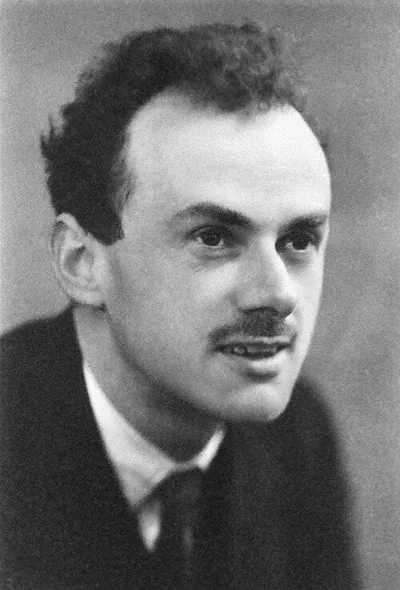 Paul Dirac1902–1984 · Physics
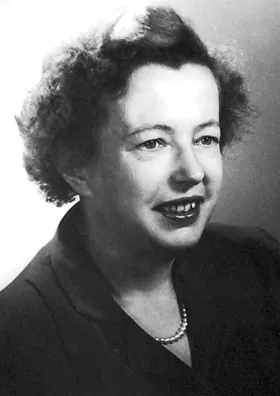 Maria Göppert Mayer1906–1972 · Physics
 Eugene Paul Wigner1902–1995 · Physics
 Hans Bethe1906–2005 · Physics
 Enrico Fermi1901–1954 · Physics
 Werner Heisenberg1901–1976 · Physics
