
Aleksander Wolszczan
Polish astronomer who co-discovered the first confirmed planets outside the Solar System · 1946
- Born
- April 29, 1946
- Country
- Poland
- Section
- Astronomy and space
Biography
Aleksander Wolszczan is a Polish astronomer best known for finding the first confirmed planets beyond the Solar System. His work, carried out mainly between the late twentieth century and the early twenty-first, showed that planets could exist around a pulsar, the dense, fast-spinning remnant of a star that has exploded. That discovery opened a field of research that now includes thousands of known worlds.
Wolszczan was born on 29 April 1946 in Szczecinek, in what is now the West Pomeranian Voivodeship of Poland. In the 1950s his family moved to Szczecin. His father, Jerzy, taught economics at the local polytechnic, and his mother, Zofia, worked for the Polish Writers' Union. It was his father who first sparked his interest in the sky, telling him stories and myths linked to the constellations. By the age of seven he had learned the basics of astronomy and was observing the night sky through a small telescope he had built himself. He finished secondary school at Stefan Czarniecki VI High School in Szczecin.
He studied at the Nicolaus Copernicus University in Toruń, earning a master's degree in 1969 and a doctorate in 1975. Between 1969 and 1973 he worked in the radio astronomy department of the university's Institute of Astronomy. Radio astronomy studies the universe through the radio waves that reach us from space rather than through visible light. In 1973 he went to Bonn to train at the Max Planck Institute for Radio Astronomy, and from 1979 to 1982 he worked at the Astronomical Center of the Polish Academy of Sciences in Toruń.
In 1982 he emigrated to the United States, first to Cornell University in Ithaca, New York, and then to Princeton. He later became an astronomy professor at Pennsylvania State University. There he worked with the Canadian radio astronomer Dale Frail. Using the Arecibo Observatory in Puerto Rico, the pair observed the pulsar PSR B1257+12, which had been found in 1990. A pulsar sends out radio pulses at a very steady rhythm, so even a small change in that rhythm can reveal nearby bodies whose gravity tugs on it. Analysis of the data showed that the pulsar had two planets. Their masses were first estimated at 3.4 and 2.8 times that of the Earth, and their orbits lie at 0.36 and 0.47 astronomical units, meaning fractions of the distance between the Earth and the Sun.
He announced the finding in 1992 at a meeting of the American Astronomical Society in Atlanta, and published the results that year and in 1994. At first some experts were cautious, since pulsars are unusual objects and the signal could have had another explanation. Today the discovery is regarded as fully established. The astronomer Bohdan Paczyński called it the greatest discovery by a Polish astronomer since Copernicus, and Astronomy magazine included it in 1998 among the 25 greatest astronomical findings of all time.
In 2003, together with Maciej Konacki, he determined the tilt of the orbits of the pulsar planets, which allowed their true masses to be estimated at roughly 3.9 and 4.3 Earth masses. In 2007 he was part of a Polish team led by Andrzej Niedzielski that found another planet, HD 17092 b. In 2012, with Matthew Route, he detected bursts of radio waves from a brown dwarf, an object heavier than a planet but too light to sustain nuclear fusion like a star.
His career also had a controversial chapter. In 2008 the newspaper Gazeta Prawna revealed that, between 1973 and 1981, he had worked as an informant for the security service of Poland's communist government, under the code name Lange. Wolszczan confirmed this, saying he had passed on only minor information, usually already public, and had harmed no one. The public controversy led him to resign from the Nicolaus Copernicus University.
His work has been recognised with the Prize of the Foundation for Polish Science in 1992 and the Beatrice M. Tinsley Prize of the American Astronomical Society in 1996. In 2006 he became an honorary citizen of Szczecin, and in 2017 he received the Bohdan Paczyński Medal. On his retirement in 2024 he was given the title of Atherton Professor. His legacy is twofold: he showed that planets exist beyond the Solar System, and he opened a line of search that still bears fruit today.
Main contributions
- 1990Observation of the pulsar PSR B1257+12 with Dale Frail at the Arecibo radio telescope, the basis of the discovery.
- 1992The first confirmed planets outside the Solar System, two worlds orbiting the pulsar PSR B1257+12.
- 1994Full publication of the results of the pulsar planet discovery.
- 2003Determination of the tilt of the pulsar planets' orbits, which allowed their true masses to be estimated.
- 2007Participation in the discovery of the planet HD 17092 b, which orbits the star HD 17092.
- 2012Detection of radio bursts from a brown dwarf, an object too light to be a star.
Teachers and students
Trivia and anecdotes
A homemade telescope
As a child he watched the sky through a small telescope he had built himself.
A Polish compliment
The astronomer Bohdan Paczyński described his discovery as the greatest made by a Polish astronomer since Copernicus.
Their contemporaries
While Aleksander Wolszczan was alive (1946–)…
Alive at the same time
Discovered or invented in those years
- 1947TransistorA semiconductor component that amplifies or switches electrical current between two terminals, depending on a signal applied to a third.
- 1957Artificial satelliteAn artificial satellite is a human-made object placed in orbit around a celestial body, usually Earth, to collect information, relay signals, or carry out a specific task.
- 1969InternetA global network of interconnected computer networks that communicate using the TCP/IP protocol suite.
- 1971EmailA network service that lets users send and receive digital messages through addressed mailboxes, much like postal mail but electronic.
- 1973Mobile phoneA handheld wireless phone that lets people make and receive calls while moving across a cellular network area.
- 1989World Wide WebA system of linked documents and resources, connected by hyperlinks and accessed over the Internet with web browsers.
 Michel Mayor1942 · Astronomy and space
 Russell A. Hulse1950 · Astronomy and space
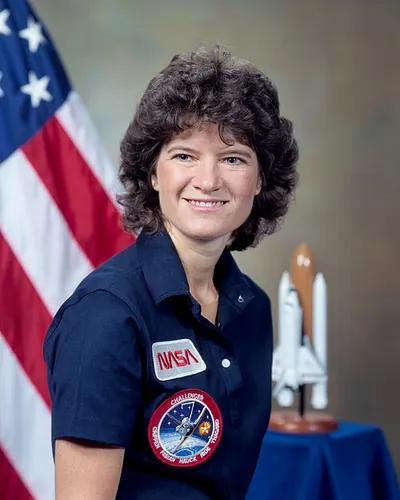 Sally Ride1951–2012 · Astronomy and space
 Joseph Hooton Taylor1941 · Astronomy and space
 Valentina Tereshkova1937 · Astronomy and space
 Robert Wilson1936 · Astronomy and space
