Alexander Nadiradze
Soviet engineer of Georgian origin, pioneer of mobile intercontinental ballistic missiles · 1914–1987
- Born
- September 2, 1914
- Died
- September 3, 1987
- Country
- Soviet Union, Russian Empire, Democratic Republic of Georgia
- Section
- Engineering and construction
- Awards
- Abel Prize
Biography
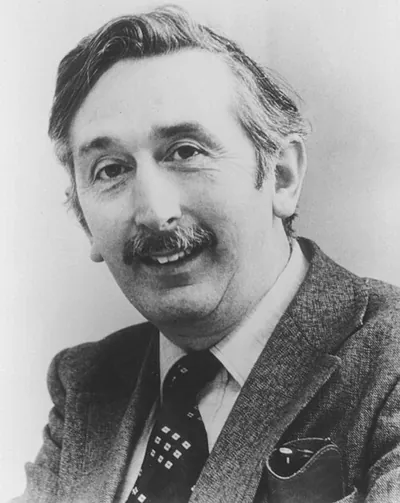
Alexander Nadiradze, whose full name in Russian was Aleksandr Davidovich Nadiradze, was a Soviet engineer of Georgian origin who led the development of many of the Soviet Union's missiles during the Cold War. He is regarded as the father of mobile intercontinental ballistic missiles, which are carried on vehicles so that they are harder to locate, and his work forms the basis of systems still in service today.
Born in 1914 in Gori, Georgia, he grew up in Tbilisi in a family of teachers. After working as an assistant in a small aerospace faculty, he made his first invention in May 1934. He graduated from the Transcaucasian Industrial Institute in 1936 and moved to Moscow.
From 1938 he worked at the Central Aerohydrodynamic Institute, where he led a team studying aircraft landing gear that used air cushions, meaning supports held up by a layer of pressurised air. He also took part in fighter projects powered by turbojets, engines that push a plane forward by expelling fast-moving gases.
At the end of 1941 he turned to rockets. During the Second World War he designed five versions of anti-tank shells, one of which gave satisfactory results. In 1950 he developed the Swift anti-aircraft system, and in 1953 he took charge of the Raven project. His experience fed into the MR-1 Meteo, a weather rocket launched in 1951 to carry instruments into the stratosphere.
In 1957 his institute merged with Chelomey's bureau in Reutov, and in 1961 Nadiradze took charge of the whole bureau while remaining chief designer. His team won a competition to design a mobile ballistic missile. In 1966 the defence ministry ordered the Temp-20, later known as the RT-21 Temp 2S. By 1971 he had already created the RSD-10 Pioneer, built on his earlier work on the Temp-2S, and some of his versions entered service in 1976.
His last major project, the RT-2PM Topol, began in 1977 and entered service in 1988. Its main difficulty was the battle management system, which absorbed much of his attention. For this work he received the USSR State Prize in 1987.
He died in Moscow on 3 September 1987 and was buried at Novodevichy Cemetery. He wrote more than a hundred scientific articles and registered over 220 inventions and operating guidelines. His legacy is a scientific foundation for missile systems that his followers went on to develop.
Main contributions
- 1950Swift anti-aircraft system, a missile designed to defend against aircraft.
- 1951MR-1 Meteo weather rocket, launched to carry instruments into the stratosphere.
- 1955Tshaika radio-controlled bombs, accepted for service that year.
- 1971RSD-10 Pioneer missile, an intermediate-range weapon launched from mobile vehicles.
- 1976RT-21 Temp 2S, a mobile intercontinental missile using solid fuel.
- 1988RT-2PM Topol missile, which remains a key part of Russia's nuclear capability.
Teachers and students
Trivia and anecdotes
A portrait on the tombstone
His grave shows him holding a sheet of paper, a gesture meant to recall his dedication to invention and work.
A medal with a launcher
In 1993 a medal was created in his honour, engraved on the reverse with a mobile intercontinental missile launcher.
Their contemporaries
While Alexander Nadiradze was alive (1914–1987)…
Alive at the same time
Discovered or invented in those years
- 1916Black holeA region of space where gravity is so strong that nothing, not even light, can escape once it crosses a certain boundary.
- 1925TelevisionA system that sends moving pictures and sound over distance and shows them on a receiver, the television set.
- 1925Quantum mechanicsPhysical theory describing how matter and light behave at atomic and subatomic scales, where energy is exchanged in minimal packets and results are expressed as probabilities.
- 1931Big BangA cosmological model describing how the universe expanded from an early state of extreme density and temperature, about 13.8 billion years ago.
- 1945ComputerA programmable machine that takes in data, processes it by following stored instructions, and produces results, able to switch tasks simply by running different software.
- 1969InternetA global network of interconnected computer networks that communicate using the TCP/IP protocol suite.
 Borys Paton1918–2020 · Engineering and construction
 Godfrey Hounsfield1919–2004 · Engineering and construction
 Fazlur Khan1929–1982 · Engineering and construction
 Eduardo Torroja1899–1961 · Engineering and construction