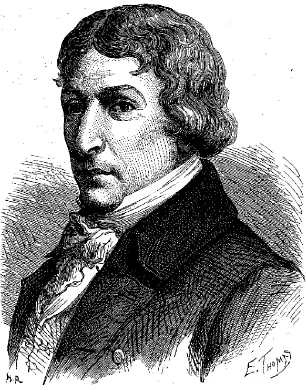
Ami Argand
Swiss physicist and chemist, inventor of the Argand lamp · 1750–1803
- Born
- July 5, 1750
- Died
- October 14, 1803
- Country
- Republic of Geneva
- Section
- Chemistry
Biography
Aimé Argand (Geneva, 1750 – London, 1803) was a Swiss physicist and chemist best remembered for inventing an oil lamp far brighter than those in common use in his day. Known as the Argand lamp, it replaced the candle-based and simple oil lamps as the main source of household and shop lighting for decades, and it shows how an everyday device can transform daily life.
Argand was born in Geneva, the ninth of ten children. His father, a watchmaker, hoped he would join the clergy, but the young man showed a stronger gift for science. He became a pupil of the botanist and meteorologist Horace-Bénédict de Saussure, and while in Paris in his late twenties he published several papers on weather-related subjects. He also took a teaching post in chemistry and worked on improving the distillation of wine into brandy. With one of his brothers he built a large distillery successfully.
Around 1780 he turned his attention to oil lamps, which gave dim light. His key idea was a cylindrical wick that let air flow both through and around it, so the flame burned with more oxygen and gave off more light. A cylindrical glass chimney strengthened this airflow, and a series of experiments fixed the best proportions. A mechanism for raising and lowering the wick allowed fine control. According to the sources, the lamp gave five to ten times the light of a candle, burned more cleanly and cost less. Turning it into a marketable product took years. Problems included making the wick, finding glass that could survive the heat, testing and purifying different oils, and even fixing solder joints in the reservoir that leaked. The lamp was therefore not one single idea but a complete system of parts working together.
In 1783 Argand met the Montgolfier brothers in France and became involved in their hot-air balloon experiments. Meanwhile Antoine-Aroult Quinquet, to whom he had shown an early prototype, began making similar lamps with small changes, and Argand fought a long legal battle over patent infringement. In England he partnered with William Parker and Matthew Boulton to manufacture the lamp, and in 1784 he received a patent for his design. He also had a close relationship with James Watt, who tested the lamp's efficiency and advised him in his lawsuits. Demand was high, and the partners struggled at first, but the lamp eventually became the standard illumination in homes and shops. Imitators multiplied, and in the following decades many workshops produced them. The invention was not profitable for Argand, however. He contracted malaria, suffered from it for about twenty years, and died at 53 in 1803; sources differ on whether he died in Geneva or London. The lamp was displaced around 1850 by the kerosene lamp. Today he is remembered as the inventor who perfected a whole lighting system.
Main contributions
- 1780Improvements in distilling wine into brandy, work that led to a large distillery built with one of his brothers.
- 1784Argand lamp: an oil lamp with a cylindrical wick and glass chimney that gave much more light than earlier designs.
- 1784Patent for his lamp design, obtained in England.
Trivia and anecdotes
Why the lamp is called a quinquet
The lamp is named after Argand, but in Spain and elsewhere it is known as a quinqué after Antoine Quinquet, who made similar lamps after seeing one of Argand's prototypes.
Many failed attempts
According to the sources, the lamp went through many failed trials before reaching a practical design, and even the solder on the oil reservoir caused problems.
Their contemporaries
While Ami Argand was alive (1750–1803)…
Alive at the same time
Discovered or invented in those years
- 1766HydrogenThe lightest and most abundant chemical element in the universe, atomic number 1, which under normal conditions is a colourless, odourless and highly flammable gas.
- 1772NitrogenChemical element with atomic number 7, a colourless, odourless gas that makes up about 78% of Earth's air and is an essential part of proteins and nucleic acids.
- 1774OxygenA colorless, odorless gas, symbol O and atomic number 8, that forms the dioxygen in air and is essential for respiration in most living things.
- 1781UranusThe seventh planet from the Sun, an ice giant discovered by William Herschel in 1781, the first planet found with a telescope.
- 1789UraniumA radioactive metal with atomic number 92, used as fuel in nuclear power plants and in nuclear weapons, and in various military and civilian applications.
- 1803AtomThe basic unit of a chemical element: a nucleus of protons and usually neutrons surrounded by a cloud of electrons.
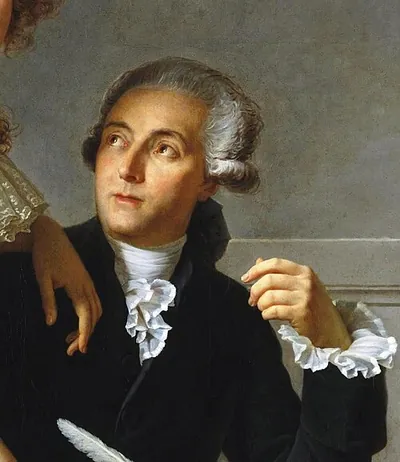 Antoine Lavoisier1743–1794 · Chemistry
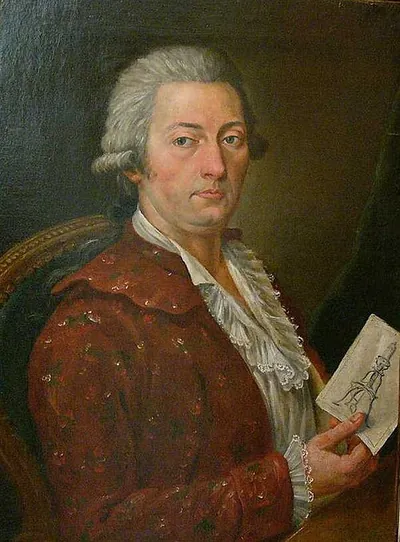 Carl Wilhelm Scheele1742–1786 · Chemistry
 John Dalton1766–1844 · Chemistry
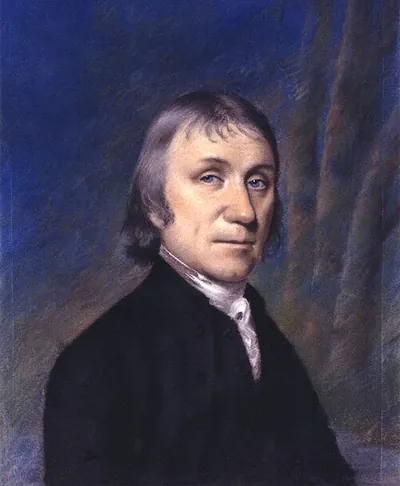 Joseph Priestley1733–1804 · Chemistry
 Amedeo Avogadro1776–1856 · Chemistry
 Humphry Davy1778–1829 · Chemistry
