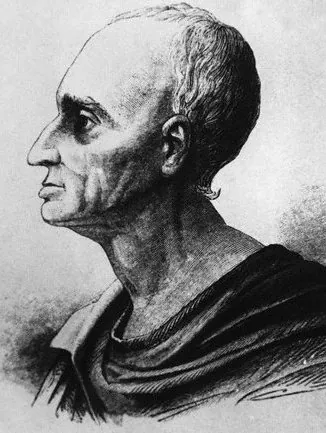
Andreas Sigismund Marggraf
German chemist, pioneer of analytical chemistry and discoverer of sugar in beet · 1709–1782
- Born
- March 3, 1709
- Died
- August 7, 1782
- Country
- Kingdom of Prussia
- Section
- Chemistry
Biography
Andreas Sigismund Marggraf (Berlin, 1709 - Berlin, 1782) was a German chemist who worked in Berlin, then the capital of the Margraviate of Brandenburg, a significant principality within the Holy Roman Empire. He is regarded as one of the pioneers of analytical chemistry, the branch that determines which substances make up a sample and in what proportions. He lived during the Enlightenment, when chemistry was moving away from alchemy and towards experiment. His importance lies in giving chemistry reliable procedures and in obtaining sugar from beet, a finding that laid the groundwork for the European sugar industry.
He was born in Berlin into a family connected with pharmacy. His father, Henning Christian Marggraf (1680-1754), was a pharmacist who owned a shop in the city and taught at the Collegium Medico-Chirurgicum, the local school of medicine and surgery. Andreas grew up close to the pharmaceutical trade and to medicine. He began studying at the medical school in 1725 and worked with Caspar Neumann in Berlin. He broadened his training by visiting pharmacies in other cities, including Frankfurt am Main and Strasbourg, and by attending lectures at the University of Halle. He worked in his father's pharmacy and focused his efforts on chemistry.
His laboratory work bore fruit in several areas. Marggraf introduced new methods into experimental chemistry, relying mainly on precipitation, in which adding one substance to a solution produces a solid that reveals the presence of another. A well-known example is the use of Prussian blue to detect iron. In inorganic chemistry he improved the production of phosphorus from urine and found alkali metal salts in plant ash, identifying them by the flame test, in which the colour a salt gives off when burned reveals it. According to the sources, before his work of 1762 alchemists did not systematically distinguish potassium salts from sodium salts.
His best-known finding concerned sugar in beet. In 1747 he announced that this root contained sugar and devised a method using alcohol to extract it. Until then sugar had come almost entirely from sugarcane, so the result opened the way for the European sugar industry. Marggraf recognised its economic importance but did not pursue it. It was his student Franz Achard who completed the work and developed an economical method for producing pure sugar from beet. Other students of his included Johann Gottlob Lehmann, Franz Carl Achard and, probably, Valentin Rose the Elder and Martin Heinrich Klaproth.
Marggraf also worked on zinc. In 1746 he isolated it by heating a mixture of calamine, a zinc ore, and charcoal in a closed vessel without copper. The method was not entirely new: William Champion had developed and patented it in England around 1738-1740, and Anton von Swab had done so in Sweden around 1742. Marggraf, however, described the process in great detail and established its basic theory, which is why he is often credited with the isolation. The method became commercially practical around 1752.
In his professional life Marggraf helped reorganise the Berlin Society of Sciences, which became part of the Prussian Academy of Sciences, and in 1760 he was appointed director of its physics section. In 1774 he suffered a stroke, but he continued working in the Academy's laboratories until his retirement in 1781. He died in Berlin in August 1782.
His legacy is twofold. On one hand, he laid the foundations of analytical chemistry with repeatable procedures. On the other, his extraction of sugar from beet transformed the sugar economy of Europe and, in time, of the world, although the practical credit fell to his student.
Main contributions
- 1746Isolation of zinc by heating calamine and charcoal in a closed vessel, with a very detailed description of the process.
- 1747Announcement of sugar in beet and an alcohol-based method to extract it.
- 1747First isolation of glucose from raisins.
- 1762Identification of alkali metal salts in plant ash by the flame test.
- Use of the Prussian blue reaction to detect iron through precipitation.
- Improvement of phosphorus production from urine.
Teachers and students
Trivia and anecdotes
A shared discovery
Champion and Swab had developed and patented the same zinc process before Marggraf. His credit rests on the detailed description he left, not on being first.
A discovery he did not pursue
Marggraf recognised the economic value of his sugar extraction but did not take it further. It was his student Franz Achard who turned it into an industrial method.
Their contemporaries
While Andreas Sigismund Marggraf was alive (1709–1782)…
Alive at the same time
Discovered or invented in those years
- 1712Steam engineAn engine that turns the heat energy of water vapour into mechanical motion, using a piston that moves back and forth inside a cylinder.
- 1755MagnesiumMagnesium is a light, shiny gray-white metal with atomic number 12 and symbol Mg, found in many minerals, seawater and living organisms.
- 1766HydrogenThe lightest and most abundant chemical element in the universe, atomic number 1, which under normal conditions is a colourless, odourless and highly flammable gas.
- 1772NitrogenChemical element with atomic number 7, a colourless, odourless gas that makes up about 78% of Earth's air and is an essential part of proteins and nucleic acids.
- 1774OxygenA colorless, odorless gas, symbol O and atomic number 8, that forms the dioxygen in air and is essential for respiration in most living things.
- 1781UranusThe seventh planet from the Sun, an ice giant discovered by William Herschel in 1781, the first planet found with a telescope.
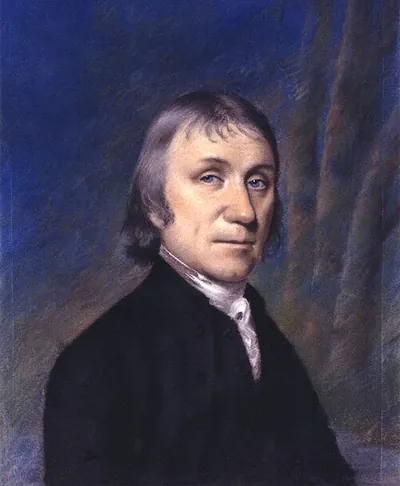 Joseph Priestley1733–1804 · Chemistry
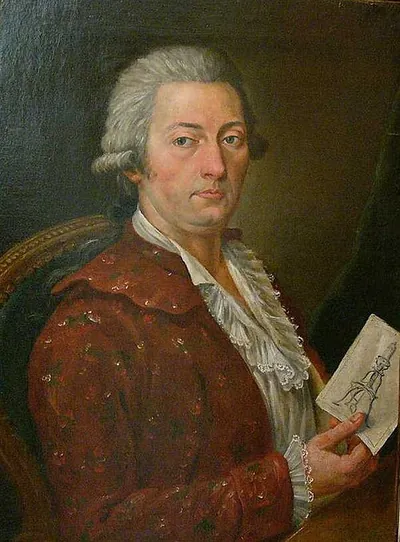 Carl Wilhelm Scheele1742–1786 · Chemistry
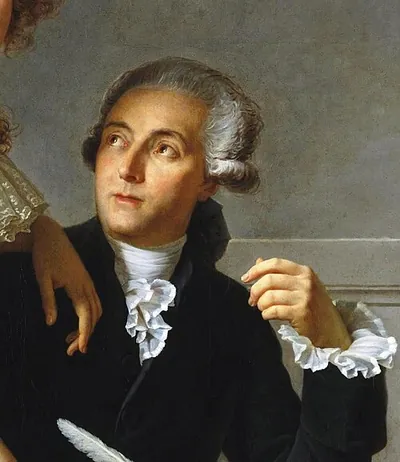 Antoine Lavoisier1743–1794 · Chemistry
 John Dalton1766–1844 · Chemistry
 Amedeo Avogadro1776–1856 · Chemistry
 Humphry Davy1778–1829 · Chemistry
