
Antoine François, comte de Fourcroy
French chemist, collaborator of Lavoisier and co-author of modern chemical nomenclature, who also became a politician and education administrator during the Revolution and the Napoleonic era · 1755–1809
- Born
- June 15, 1755
- Died
- December 16, 1809
- Country
- Kingdom of France
- Section
- Chemistry
Biography
Antoine-François de Fourcroy (Paris, 1755-1809) was a French chemist, a contemporary and collaborator of Antoine Lavoisier, and a prominent politician during the French Revolution and Napoleon's regime. He matters because he helped spread Lavoisier's new chemistry, co-created a system for naming substances, and shaped the reform of medical and scientific education in France.
He was the son of an apothecary working in the household of the Duke of Orléans. On the advice of the anatomist Félix Vicq d'Azyr he turned to medicine, though a lack of money made the path hard, and he only obtained his doctorate in 1780. His interest in chemistry was awakened by Jean-Baptiste Bucquet, a professor at the Paris Medical School, who died soon afterwards. In 1783 he began teaching chemistry at the Alfort veterinary school, and in 1784 Pierre-Joseph Macquer handed him the chemistry lectureship at the Jardin du Roi college, where his lessons became very popular.
Fourcroy was among the first to embrace Lavoisier's ideas about combustion and the composition of matter, and he made them widely known through a large body of writing. From 1784 he worked with Louis Nicolas Vauquelin, who became his assistant, studying the chemical makeup of plants and animals for medical purposes. Together they produced many papers, and Fourcroy founded a journal to publicise their findings. In 1785 he also co-wrote with Étienne Louis Geoffroy a catalogue of insects found around Paris. In 1791 he published a series of memoirs on the chemistry of the brain. He described its fatty substances, now called lipids, and rediscovered phosphorus in the organ, a finding first reported by Johann Thomas Hensing in 1719.
In 1787 Fourcroy co-signed, with Lavoisier, Guyton de Morveau and Berthollet, the Méthode de nomenclature chimique. Its proposal was to name substances by their composition rather than by older, confusing traditions, and the system became the basis of today's chemical nomenclature. In education, he proposed clinical laboratories in 1791, where doctors could link what they saw in patients with what autopsies revealed, and he succeeded in setting up a teaching laboratory at the Ecole de Santé in Paris. The 1794 law, drafted with the physician Francois Chaussier, unified medical training under one model that combined medicine and surgery.
During the Revolution, Fourcroy held several posts in the National Convention and sat on the Committee of Public Instruction and the Committee of Public Safety, where he served for about ten months. His role in the repression in the Vendée is a much-debated question. He was consulted about using gases to asphyxiate insurgents, and tests were carried out on animals, but the plan was never widely applied because of technical difficulties and the danger to the revolutionary troops themselves. Some historians read these experiments as evidence of a plan to exterminate, while others question how far Fourcroy was personally involved. He was also accused of contributing to Lavoisier's death, a charge that Baron Cuvier rejected in his eulogy. The Encyclopaedia Britannica, for its part, judged that although no active participation can be proved, he can hardly be cleared of opportunistic indifference.
Under Napoleon, Fourcroy became director general of instruction and, in 1802, minister responsible for public education, a post he held until his death. He died in Paris on 16 December 1809, the very day he was made a count of the Empire. His legacy lies in spreading the idea of a «chemical revolution» and in the distinction he drew between chemistry, which relied on experimental analysis, and natural history, which mainly described and classified. Today he is remembered above all for the chemical nomenclature he helped create and for his influence on the training of scientists and doctors in France.
Main contributions
- 1785Entomologia Parisiensis, written with Étienne Louis Geoffroy: a catalogue of insects from around Paris and a major contribution to entomology.
- 1787Méthode de nomenclature chimique, written with Lavoisier, Guyton de Morveau and Berthollet: a system that names substances by their composition.
- 1791Memoirs on the chemistry of the brain: he described its fats and rediscovered phosphorus in it.
- 1791Proposal for clinical laboratories, linking observations of patients with findings from autopsies.
- 1792The Philosophy of Chemistry: a popular work on the principles of chemistry in his time.
- 1794Law on medical education, drafted with Chaussier: it unified medical training and combined medicine and surgery.
- 1801A General System of Chemical Knowledge, in eleven volumes (1801-1802): a broad synthesis of the chemical knowledge of his time.
Teachers and students
Trivia and anecdotes
A cape in Australia bears his name
Cape Fourcroy, at the western tip of Bathurst Island in the Northern Territory of Australia, is believed to be named after him. It was named during Baudin's expedition, which carried one of his books on board.
A 2014 documentary role
In 2014 PBS broadcast a three-part series on the search for the chemical elements, in which the actor Yan Tual plays Fourcroy assisting Lavoisier.
An unusual date
He died on the very day he was created a count of the French Empire, 16 December 1809.
Their contemporaries
While Antoine François, comte de Fourcroy was alive (1755–1809)…
Alive at the same time
Discovered or invented in those years
- 1766HydrogenThe lightest and most abundant chemical element in the universe, atomic number 1, which under normal conditions is a colourless, odourless and highly flammable gas.
- 1772NitrogenChemical element with atomic number 7, a colourless, odourless gas that makes up about 78% of Earth's air and is an essential part of proteins and nucleic acids.
- 1774OxygenA colorless, odorless gas, symbol O and atomic number 8, that forms the dioxygen in air and is essential for respiration in most living things.
- 1781UranusThe seventh planet from the Sun, an ice giant discovered by William Herschel in 1781, the first planet found with a telescope.
- 1789UraniumA radioactive metal with atomic number 92, used as fuel in nuclear power plants and in nuclear weapons, and in various military and civilian applications.
- 1803AtomThe basic unit of a chemical element: a nucleus of protons and usually neutrons surrounded by a cloud of electrons.
 John Dalton1766–1844 · Chemistry
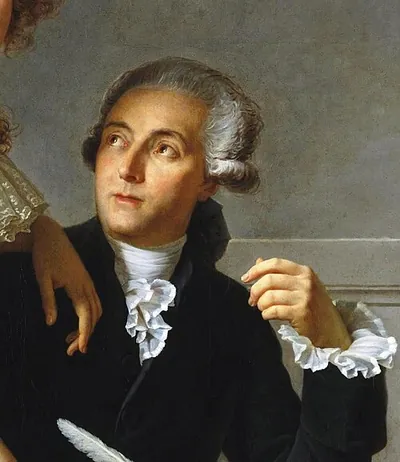 Antoine Lavoisier1743–1794 · Chemistry
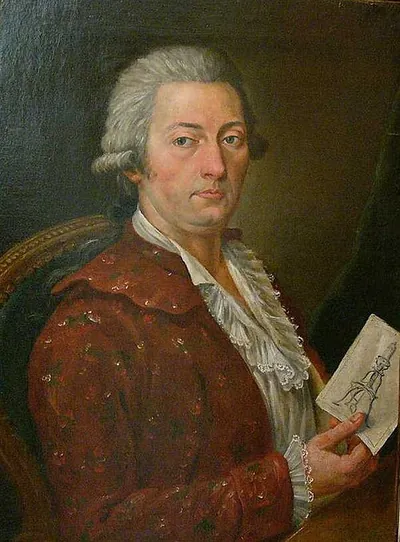 Carl Wilhelm Scheele1742–1786 · Chemistry
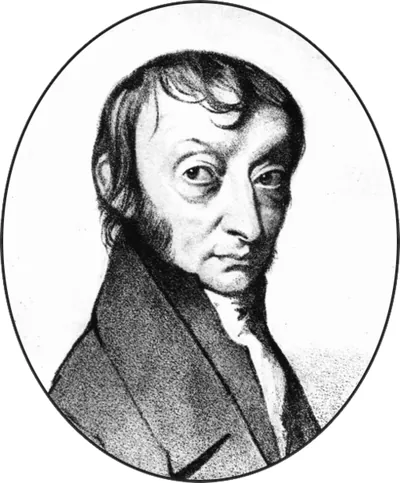 Amedeo Avogadro1776–1856 · Chemistry
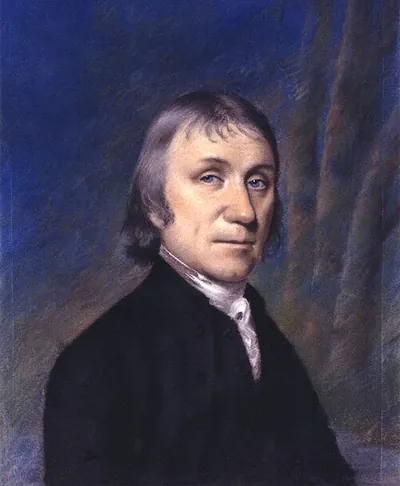 Joseph Priestley1733–1804 · Chemistry
 Humphry Davy1778–1829 · Chemistry