
Caterina Scarpellini
Italian astronomer and meteorologist who discovered a comet and set up a meteorological station in Rome · 1808–1873
- Born
- October 29, 1808
- Died
- November 28, 1873
- Country
- Kingdom of Italy
- Section
- Astronomy and space
Biography
Caterina Scarpellini (Foligno, 1808 – Rome, 1873) was an Italian astronomer and meteorologist who worked in Rome in the mid-nineteenth century, when women had very few opportunities to take part in scientific research. She is remembered mainly for discovering a comet and for founding a lasting weather observation station in the Italian capital, as well as for a long record of scientific publication.
She was born on 29 October 1808 in Foligno, in the province of Perugia, into a family that was prominent in the town. Her uncle and godfather, the Abbé Feliciano Scarpellini (1762-1840), was an astronomer and her main role model. Pope Pius VI had appointed Feliciano professor of sacred physics at the Roman College of the Campidoglio in 1816, and he directed the institution's observatory. Caterina moved to Rome at eighteen and worked as her uncle's assistant, learning the instruments and the daily routine of sky observation from him.
Her activity was wide-ranging. She became a corresponding member of the Accademia dei Georgofili in Florence, but she was refused membership of the Accademia dei Lincei, the old scientific academy her uncle had helped revive in 1801. According to the available accounts, she was excluded because she was a woman and also because of her political and philosophical views. From 1847 she edited the scientific bulletin Correspondenza Scientifica in Rome. Between 1853 and 1873 she published more than fifty notes and reports, based on her regular observations and on subjects such as electricity, magnetism and geology.
On 1 April 1854 she discovered a comet. In 1856, together with her husband, the engineer Erasmo Fabri, she set up a meteorological station in Rome that recorded weather conditions systematically. In 1872 the Italian government honoured her work with a silver medal. She died on 28 November 1873, aged 65, after a stroke.
Her memory lives on in Rome: a statue of her was erected in the Campo Verano in 1874, and one of the craters of Venus bears her name.
Main contributions
- 1847Editorship of the scientific bulletin Correspondenza Scientifica, published in Rome.
- 1854Discovery of a comet, observed on 1 April, a body that follows an orbit around the Sun.
- 1856Founding of a meteorological station in Rome that recorded atmospheric conditions on a regular basis.
- 1872Silver medal awarded by the Italian government for her scientific work.
- 1873More than fifty scientific notes and reports published between 1853 and 1873 on astronomy, electricity, magnetism and geology.
Trivia and anecdotes
A closed academy
Despite her uncle's standing, she could not join the Accademia dei Lincei, partly because she was a woman and partly because of her political and philosophical views.
A crater on Venus
One of the craters on Venus is named after her in her honour.
Their contemporaries
While Caterina Scarpellini was alive (1808–1873)…
Alive at the same time
Discovered or invented in those years
- 1821ElectricityThe set of physical phenomena linked to the presence and movement of electric charge, and one of the most versatile forms of energy in modern life.
- 1839PhotographyA technique for creating lasting images by recording light, either on a light-sensitive material or with an electronic sensor.
- 1846NeptuneThe eighth and most distant planet of the Solar System, an ice giant found through mathematical prediction before any direct sighting.
- 1859EvolutionThe process by which the heritable traits of living populations change over generations, explaining the diversity of life from common ancestors.
- 1869Periodic tableAn arrangement of the chemical elements into rows (periods) and columns (groups), ordered by atomic number, that reveals recurring chemical behaviour and lets scientists predict properties.
- 1869Deoxyribonucleic acidA double-stranded molecule that carries the genetic instructions of nearly all living things and many viruses.
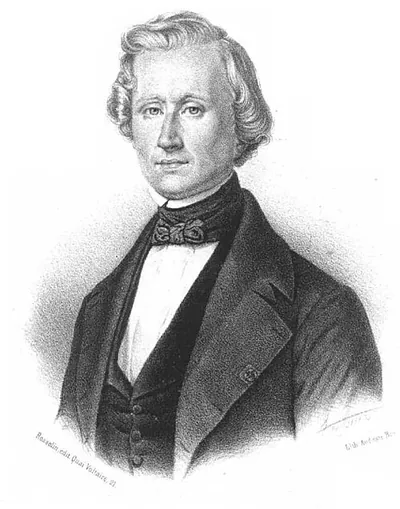 Urbain Le Verrier1811–1877 · Astronomy and space
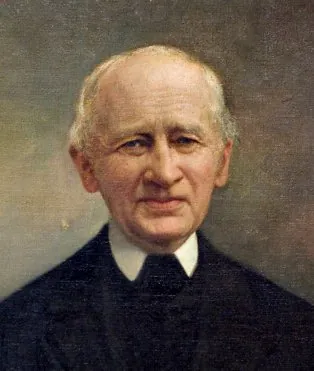 Johann Gottfried Galle1812–1910 · Astronomy and space
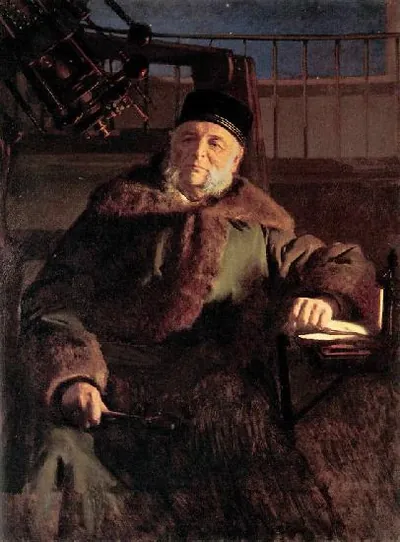 Otto Wilhelm von Struve1819–1905 · Astronomy and space
 John Frederick William Herschel1792–1871 · Astronomy and space
 Annie Jump Cannon1863–1941 · Astronomy and space
 Henrietta Swan Leavitt1868–1921 · Astronomy and space
