Daniel C. Drucker
American civil and mechanical engineer, expert in the theory of plasticity · 1918–2001
- Born
- June 3, 1918
- Died
- September 1, 2001
- Country
- United States
- Section
- Engineering and construction
Biography
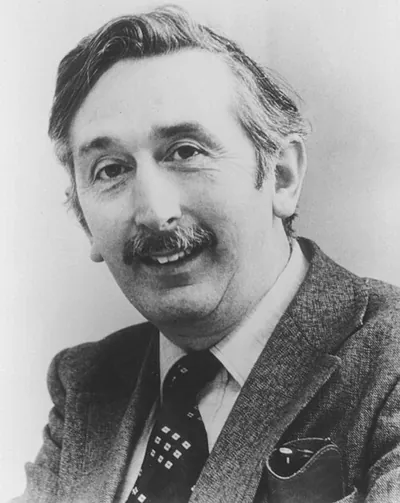
Daniel Charles Drucker (New York, 1918 – 2001) was an American civil and mechanical engineer, professor and one of the leading figures in the theory of plasticity, the branch of mechanics that studies how materials deform permanently when they bear loads. He worked in the second half of the twentieth century, when structural and machine engineering needed reliable models to design bridges, buildings and industrial parts. His work matters because his ideas still help predict when a material will yield or break.
He was born in New York City. His father, Moses Abraham Drucker, was a civil engineer, and Daniel wanted to follow in his footsteps. He studied at Columbia University, where he earned a bachelor's degree in civil engineering in 1938, and in 1940 he completed a doctorate in mechanical engineering under Raymond D. Mindlin, a researcher known for his work on elasticity, the way solid bodies return to their shape after being loaded.
Between 1940 and 1943 he taught at Cornell University and then joined the Armour Research Foundation. After his service in the U.S. Army Air Corps he spent a short time back at the Illinois Institute of Technology. In 1946 he began teaching at Brown University, where he stayed until 1968, when he moved to the University of Illinois as Dean of Engineering. In 1984 he went to the University of Florida as a graduate research professor, a post he held until retiring in 1994.
His most cited contribution concerns the stability of materials in the plastic range. The so-called Drucker stability postulates set out conditions a material should meet to behave predictably as it deforms. Alongside them sits the Drucker-Prager yield criterion, a formula that indicates when a material starts to deform permanently. It is especially useful for soils and some polymers, whose strength also depends on the pressure they are under.
His papers show a steady wish to test theories against reality. One of them deals directly with fitting mathematical theories of plasticity to experimental results, and others review what was known about the relation between stress and strain in the plastic range. Among his books are Introduction to Mechanics of Deformable Solids, an introductory text, and Mechanics of Material Behavior, published in 1983, which gathers his view of how materials respond to loading.
His service extended to professional societies. He presided over the Society for Experimental Stress Analysis, now the Society for Experimental Mechanics, in 1960-1961, over the American Society of Mechanical Engineers in 1973-1974, and over the American Academy of Mechanics in 1981-1982. He received the Murray Lecture and Award in 1967, the Frocht Award in 1971, the ASME Timoshenko Medal in 1983 and the ASME Robert Henry Thurston Lecture Award in 1986. In 1988 he was awarded the National Medal of Science. He was a member of the National Academy of Engineering and of the American Academy of Arts and Sciences.
His legacy lives on in the Daniel C. Drucker Medal, which the ASME named after him in 1998, and he was its first recipient. The award is given each year to researchers who have made notable contributions to solid mechanics. Drucker died of leukemia on September 1, 2001. His stability postulates and yield criterion still appear in design handbooks and in the teaching of materials mechanics.
Main contributions
- 1967Macroscopic fundamentals in brittle fracture: a study of the large-scale principles behind the breaking of brittle materials.
- 1983Mechanics of Material Behavior: a book collecting his view of how materials respond to loads.
- 1998Daniel C. Drucker Medal of the ASME: an annual prize in solid mechanics named after him, of which he was the first recipient.
- Drucker stability postulates: conditions a material should meet to deform predictably in the plastic range.
- Drucker-Prager yield criterion: a formula that indicates when a material, such as soil or a polymer, starts to deform permanently.
Teachers and students
Studied under:
Taught:
Trivia and anecdotes
An award in his name
The ASME created a medal in his name in 1998, and he was the first to receive it. In 1999 it went to Ascher H. Shapiro.
An engineer like his father
His father was a civil engineer, and Daniel wanted to follow him, eventually leading an engineering faculty as dean.
Their contemporaries
While Daniel C. Drucker was alive (1918–2001)…
Alive at the same time
Discovered or invented in those years
- 1925TelevisionA system that sends moving pictures and sound over distance and shows them on a receiver, the television set.
- 1925Quantum mechanicsPhysical theory describing how matter and light behave at atomic and subatomic scales, where energy is exchanged in minimal packets and results are expressed as probabilities.
- 1931Big BangA cosmological model describing how the universe expanded from an early state of extreme density and temperature, about 13.8 billion years ago.
- 1945ComputerA programmable machine that takes in data, processes it by following stored instructions, and produces results, able to switch tasks simply by running different software.
- 1969InternetA global network of interconnected computer networks that communicate using the TCP/IP protocol suite.
- 1989World Wide WebA system of linked documents and resources, connected by hyperlinks and accessed over the Internet with web browsers.
 Borys Paton1918–2020 · Engineering and construction
 Godfrey Hounsfield1919–2004 · Engineering and construction
 Fazlur Khan1929–1982 · Engineering and construction
 Rudolf E. Kálmán1930–2016 · Engineering and construction