
Emmanuelle Charpentier
French microbiologist and biochemist, co-winner of the 2020 Nobel Prize in Chemistry for developing a method of genome editing with CRISPR-Cas9 · 1968
- Born
- December 11, 1968
- Country
- France
- Section
- Biology
- Awards
- Nobel Prize in Chemistry
Biography
Emmanuelle Charpentier (born 11 December 1968 in Juvisy-sur-Orge, France) is a French microbiologist, biochemist and geneticist who has directed the Max Planck Institute for Infection Biology in Berlin since 2015. She shared the 2020 Nobel Prize in Chemistry with the American biochemist Jennifer Doudna. Their work turned a defence system found in bacteria into a tool that can alter the DNA of almost any living organism, a discovery that has changed biomedical and agricultural research within a few years.
Her paternal grandfather, whose surname was Sinanian, was an Armenian who escaped to France during the Armenian Genocide and met his wife in Marseille. Charpentier studied biochemistry, microbiology and genetics at the Pierre and Marie Curie University in Paris, which later became part of Sorbonne University. From 1992 to 1995 she was a graduate student at the Institut Pasteur, where she earned a research doctorate. Her doctoral work examined the molecular mechanisms that allow bacteria to resist antibiotics, the drugs designed to kill them or stop their growth. That training in how microbes work would shape the rest of her career.
From 1993 to 1995 she worked as a teaching assistant at Pierre and Marie Curie University, and from 1995 to 1996 as a postdoctoral fellow at the Institut Pasteur. She then moved to New York. At Rockefeller University, in 1996 and 1997, she worked in the laboratory of the microbiologist Elaine Tuomanen, whose group studied how the bacterium Streptococcus pneumoniae uses mobile genetic elements, short stretches of DNA that can move around a genome, to change its own makeup. Charpentier also helped show how this bacterium develops resistance to vancomycin, a powerful antibiotic kept for severe cases. From 1997 to 1999 she was an assistant research scientist at the New York University Medical Center, in the group of Pamela Cowin, who studied skin cells. There Charpentier published work on how hair growth is regulated in mice. Between 1999 and 2002 she was a research associate at St. Jude Children's Research Hospital in Memphis and at the Skirball Institute of Biomolecular Medicine in New York.
After five years in the United States she returned to Europe. From 2002 to 2004 she led a laboratory and served as a guest professor at the Institute of Microbiology and Genetics of the University of Vienna. In 2004 she reported finding an RNA molecule that regulates the production of virulence factors, the substances that make a microbe better at causing disease, in the bacterium Streptococcus pyogenes. From 2006 to 2009 she ran another laboratory, at the Max F. Perutz Laboratories, also in Vienna. She then moved to Sweden, where she became a group leader and associate professor at the Laboratory for Molecular Infection Medicine Sweden (MIMS) at Umeå University. In 2013 she went to Germany, to the Helmholtz Centre for Infection Research in Braunschweig and to Hannover Medical School, and in 2014 she became an Alexander von Humboldt Professor. In 2015 she accepted an offer from the Max Planck Society to direct the Max Planck Institute for Infection Biology in Berlin, while keeping her visiting professorship at Umeå. In 2018 she founded and became director of the Max Planck Unit for the Science of Pathogens.
Charpentier is best known for her work on CRISPR-Cas9, a defence system that some bacteria use to recognise and cut the DNA of the viruses that attack them. CRISPR refers to repeated sequences in the bacterial genome, and Cas9 is an enzyme that cuts DNA. Charpentier studied how this system works at the molecular level and uncovered a new mechanism for the maturation of a non-coding RNA, meaning an RNA molecule that carries no instructions for making proteins. She showed that a small RNA called tracrRNA is essential for the maturation of crRNA, the piece that guides the enzyme to its target. Without that step, the system cannot function.
In 2011 she met Jennifer Doudna at a research conference in San Juan, Puerto Rico, and the two began to collaborate. Together they showed that the Cas9 enzyme could be directed to any chosen DNA sequence and cut it, which makes it possible to insert, delete or alter fragments of a genome. To do this they combined Cas9 with synthetic guide RNA molecules, which are easy to produce in a laboratory. The synthetic guide is effectively a fusion of crRNA and tracrRNA, and its existence showed that the technique could be applied with relative ease. Researchers around the world have used it successfully in plants, animals and laboratory cell lines.
The partnership has also been mired in controversy. Since early 2015, Charpentier and Doudna have been in a patent dispute with the biochemist Feng Zhang. The disagreement is in essence a contest between the institutions where the researchers work: the Massachusetts Institute of Technology, where Zhang is based, and the University of California, Berkeley, where Doudna works, each of which sees a great deal of prestige and money at stake.
In 2013 she co-founded, together with Shaun Foy and Rodger Novak, the companies CRISPR Therapeutics and ERS Genomics, which aim to bring the technique into medicine and biotechnology. Her awards are numerous. They include the Fernström Prize for young and promising scientists in 2011, the Princess of Asturias Award for Technical and Scientific Research in 2015, shared with Doudna, and the Wolf Prize in Medicine in 2020. In 2015 she was named among Time magazine's 100 most influential people in the world, again alongside Doudna. In 2020 she received the Nobel Prize in Chemistry «for the development of a method for genome editing», shared with Doudna; the two were the first pair of women to win a science Nobel exclusively. In August 2021 Pope Francis appointed her a member of the Pontifical Academy of Sciences. In Spain she has received honorary doctorates from Pompeu Fabra University in 2024 and from the universities of Salamanca and Oviedo in 2025.
Her legacy is twofold. On one hand, CRISPR has changed the way geneticists work, because it lets scientists edit genes to find out what role they play in health and disease. On the other, it opens the door to gene therapies that are hoped to be safer and more effective than the first generation of such treatments, although much remains to be done before that can be confirmed. Her story has also reached a wider audience: in 2019 she appeared as a character in STEM FEMMES, a play by the Philadelphia theatre company Applied Mechanics, and in 2021 the biographer Walter Isaacson told the story of her collaboration with Doudna in the book The Code Breaker.
Quotes
“Yes, and I think in, you know, I’m a microbiologist and I have always been interested in infectious diseases and my field of research is not really well recognised at the fundamental level, and so it’s good to see that there is still a lot to be … to learn.”
Main contributions
- 2004Discovery of an RNA molecule that regulates the production of virulence factors, the substances that make the bacterium Streptococcus pyogenes more capable of causing disease.
- 2013Co-founding of the companies CRISPR Therapeutics and ERS Genomics, with Shaun Foy and Rodger Novak, to bring the technique into medicine.
- 2020Nobel Prize in Chemistry, shared with Jennifer Doudna, for developing a method of genome editing.
- Discovery of a new mechanism for the maturation of a non-coding RNA, tracrRNA, which is indispensable for the CRISPR-Cas9 system to work.
- Development, together with Jennifer Doudna, of a method that directs the Cas9 enzyme to any chosen DNA sequence and cuts it, using synthetic guide RNAs.
Trivia and anecdotes
A Nobel for two women
Charpentier and Doudna were the first women to win a science Nobel Prize exclusively, a milestone of the 2020 award.
Armenian roots
Her paternal grandfather, surnamed Sinanian, was an Armenian who fled to France during the Armenian Genocide and met his wife in Marseille.
Theatre and literature
In 2019 she was a character in the play STEM FEMMES by the Philadelphia company Applied Mechanics, and in 2021 Walter Isaacson recounted her collaboration with Doudna in The Code Breaker.
Their contemporaries
While Emmanuelle Charpentier was alive (1968–)…
Alive at the same time
Discovered or invented in those years
- 1969InternetA global network of interconnected computer networks that communicate using the TCP/IP protocol suite.
- 1971EmailA network service that lets users send and receive digital messages through addressed mailboxes, much like postal mail but electronic.
- 1973Mobile phoneA handheld wireless phone that lets people make and receive calls while moving across a cellular network area.
- 1975Global warmingThe long-term rise in Earth's average surface temperature, driven mainly by greenhouse gases released through human activity.
- 1989World Wide WebA system of linked documents and resources, connected by hyperlinks and accessed over the Internet with web browsers.
- 1990Web browserA program that lets people access the web by fetching a page's files from a server and displaying them on screen as an interactive page.
 Jennifer Doudna1964 · Biology
 Shinya Yamanaka1962 · Biology
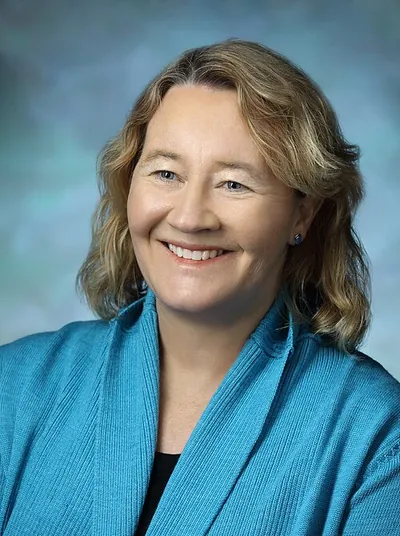 Carol Greider1961 · Biology
 Svante Pääbo1955 · Biology
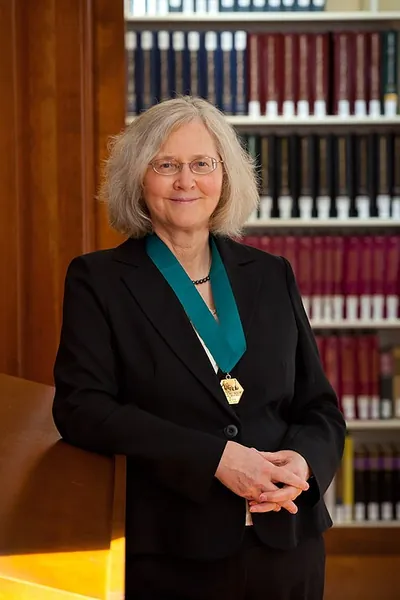 Elizabeth Blackburn1948 · Biology
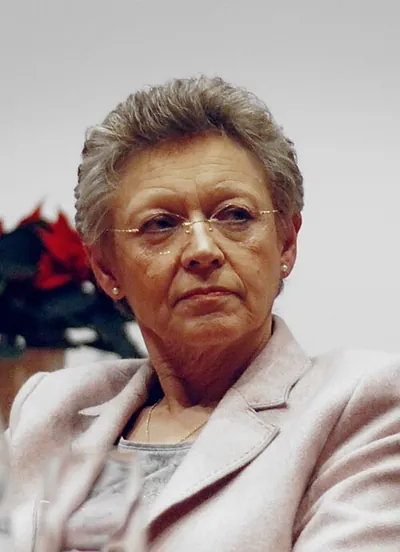 Françoise Barré-Sinoussi1947 · Biology
