
George Paget Thomson
British physicist, 1937 Nobel laureate for showing that electrons also behave as waves · 1892–1975
- Born
- May 3, 1892
- Died
- September 10, 1975
- Country
- United Kingdom, United Kingdom of Great Britain and Ireland
- Section
- Physics
- Awards
- Nobel Prize in Physics
Biography
George Paget Thomson (Cambridge, 1892 – Cambridge, 1975) was a British experimental physicist who shared the 1937 Nobel Prize in Physics with the American Clinton Davisson. The two men showed that electrons, long regarded as particles, are also diffracted like waves when they pass through crystals. Thomson's experiments gave concrete support to an idea put forward by Louis de Broglie, and they became one of the foundations of quantum physics. His career also ran from basic research into the military uses of nuclear energy, which makes him a significant figure in twentieth-century British science.
He was born on 3 May 1892 in Cambridge, the son of the physicist J. J. Thomson and Rose Elizabeth Paget, daughter of George Edward Paget. His father had won the Nobel Prize in 1906 for his work on the conduction of electricity through gases, and is usually credited with discovering the electron. George attended The Perse School and then read mathematics and physics at Trinity College, Cambridge, graduating in 1913. The following year he began research at the Cavendish Laboratory under his father, but the outbreak of the First World War cut that work short. He was commissioned into the Queen's Royal West Surrey Regiment and, after a brief spell in France, moved in 1915 to the Royal Flying Corps to study aerodynamics, the way air acts on moving objects. He worked at the Royal Aircraft Establishment in Farnborough and elsewhere, and resigned his commission as a captain in 1920.
In 1919 he became a Fellow and lecturer at Corpus Christi College, Cambridge. In 1922 he was appointed Professor of Natural Philosophy, the older name for physics, at the University of Aberdeen in Scotland, and it was there that he carried out the work that made his name. His father had shown that the electron behaves as a particle. George asked whether it could also behave as a wave. He fired beams of electrons through extremely thin metal foils, only a few tens of nanometres thick, made of materials whose crystal structure was known, such as aluminium, gold and platinum. After passing through the foil, the electrons produced ring-like and spotted patterns, similar to the pattern light makes when it passes through a fine grating. The dimensions of these patterns agreed, to within 5 per cent, with the values predicted by Louis de Broglie's wave theory. The result strengthened the principle of wave-particle duality, the idea that matter and light can show both particle and wave properties.
Clinton Davisson had reached a similar result independently, and the two shared the 1937 prize. In 1929 Thomson was a non-resident lecturer at Cornell University in Ithaca, New York. In 1930 he became Professor of Physics at Imperial College London, where he stayed until 1952. His work in London gradually turned towards nuclear physics, the study of the nucleus of the atom and of the energy released when it changes. In the late 1930s and during the Second World War he concentrated on the practical military applications of that energy. In 1940 and 1941 he chaired the MAUD Committee, set up in Britain to assess whether an atomic bomb was feasible; its report concluded that it was. Earlier, between 1937 and 1941, he had advised the Air Ministry on aeronautical matters, and between 1943 and 1944 he gave advice on science more broadly.
His private life also shaped his career. In 1924 he married Kathleen Buchanan Smith, daughter of George Adam Smith, Principal of the University of Aberdeen. They had two sons and two daughters. Kathleen died in 1941, in the middle of the war. One of their sons, John Thomson, became a senior diplomat, serving as High Commissioner to India and as Permanent Representative to the United Nations. Thomson received several honours in his lifetime. The Royal Society awarded him the Hughes Medal in 1939 for his discoveries on the diffraction of electrons by matter, and he was knighted in 1943. In 1946 he advised the British delegation to the United Nations Security Council and the Atomic Energy Commission.
From 1952 to 1962 he was Master of Corpus Christi College, Cambridge, and in 1964 the college named the George Thomson Building, a modernist structure on its Leckhampton campus, after him. As President of the British Association for the Advancement of Science he delivered the address Two Aspects of Science in 1959 and 1960. He died in Cambridge on 10 September 1975, aged 83, and is buried in the churchyard of Grantchester, just outside the city.
His legacy lies in two areas. The first is the experimental confirmation that matter has wave properties, a central piece of quantum mechanics that now underpins techniques such as electron microscopy. The second is his part in public debate about science and nuclear energy, where he argued that scientific knowledge should be applied to society with care and judgement.
Main contributions
- 1915Aerodynamics research at the Royal Aircraft Establishment during the First World War, on how air acts on moving bodies.
- 1937Electron diffraction through crystals: experimental proof that electrons behave as waves, which earned him the Nobel Prize shared with Davisson.
- 1941Chairmanship of the MAUD Committee, which concluded that an atomic bomb was technically feasible.
Teachers and students
Studied under:
Taught:
Trivia and anecdotes
Father and son, two Nobel Prizes
It is often said that the father won for showing the electron is a particle and the son for showing it is a wave. This is a popular shorthand rather than a full account.
A building in his name
In 1964 Corpus Christi College, Cambridge, named a building on its Leckhampton campus after him, honouring his time as Master.
Their contemporaries
While George Paget Thomson was alive (1892–1975)…
Alive at the same time
Discovered or invented in those years
- 1903AirplaneA fixed-wing aircraft, heavier than air, powered by engines or rockets, that stays aloft because its wings generate lift.
- 1925TelevisionA system that sends moving pictures and sound over distance and shows them on a receiver, the television set.
- 1925Quantum mechanicsPhysical theory describing how matter and light behave at atomic and subatomic scales, where energy is exchanged in minimal packets and results are expressed as probabilities.
- 1931Big BangA cosmological model describing how the universe expanded from an early state of extreme density and temperature, about 13.8 billion years ago.
- 1945ComputerA programmable machine that takes in data, processes it by following stored instructions, and produces results, able to switch tasks simply by running different software.
- 1969InternetA global network of interconnected computer networks that communicate using the TCP/IP protocol suite.
 Louis de Broglie1892–1987 · Physics
 James Chadwick1891–1974 · Physics
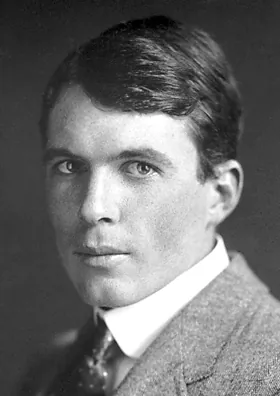 William Lawrence Bragg1890–1971 · Physics
 Pyotr Kapitsa1894–1984 · Physics
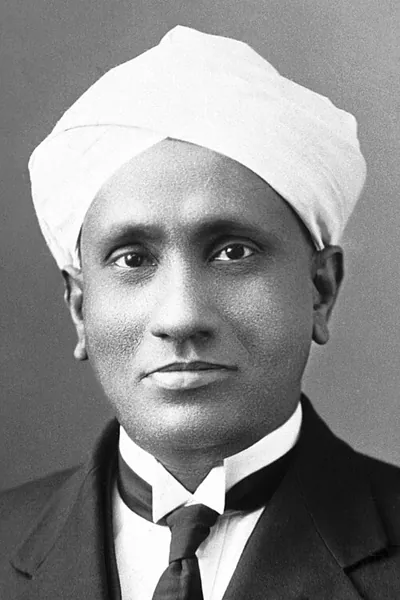 Chandrasekhara Venkata Raman1888–1970 · Physics
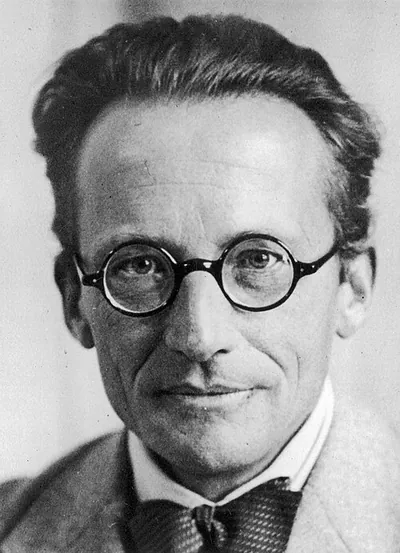 Erwin Schrödinger1887–1961 · Physics
