
James Chadwick
British physicist who discovered the neutron and won the 1935 Nobel Prize in Physics · 1891–1974
- Born
- October 20, 1891
- Died
- July 24, 1974
- Country
- United Kingdom
- Section
- Physics
- Awards
- Nobel Prize in Physics
Extended biography
Early life and education
James Chadwick was born on 20 October 1891 in Bollington, in the English county of Cheshire. He was the first son of John Joseph Chadwick, a cotton spinner, and Anne Mary Knowles, a domestic servant. He was named after his paternal grandfather. In 1895 his parents moved to Manchester in search of work, leaving him in the care of his maternal grandparents.
At Bollington Cross Primary School he won a scholarship to the well-regarded Manchester Grammar School, but his family could not afford the small fees that remained to be paid, so he attended the Central Grammar School for Boys in Manchester instead, where he rejoined his parents. He had two younger brothers, Harry and Hubert; a sister had died in infancy. At the age of sixteen he sat two examinations for university scholarships and won both.
He entered Victoria University of Manchester in 1908. He had meant to study mathematics but enrolled in physics by mistake. He lived at home and walked to the university and back each day. At the end of his first year he was awarded a scholarship to study physics. The department was headed by Ernest Rutherford, a New Zealand-born physicist who had shown that the atom has a small, dense central nucleus, and who is often called the father of nuclear physics.
Rutherford gave Chadwick a laboratory problem: to compare the amount of radioactive energy coming from two different sources, expressing it in terms of the activity of a quantity of radium. The unit that would come to be known as the curie grew out of this kind of measurement. Radioactivity is the spontaneous emission of particles or radiation by unstable atomic nuclei. Rutherford's suggested method did not work, something Chadwick suspected but was too nervous to say. He kept at the problem and eventually devised a valid procedure. That work became his first paper, written with Rutherford and published in 1912. He graduated with first-class honours in 1911 and was awarded a master's degree in 1913.
From Manchester to Berlin and Cambridge
After measuring gamma radiation, Chadwick studied how various gases and liquids absorbed it, and published that work under his own name. In 1913 he received his master's degree and a research post. The same year he won an 1851 Exhibition scholarship, which allowed him to study at a university or research centre in continental Europe. He chose the Physikalisch-Technische Reichsanstalt in Germany, where he worked on beta radiation under Hans Geiger.
Beta radiation consists of fast electrons emitted by radioactive nuclei. Physicists had assumed these electrons left with particular energies, appearing as separate lines, rather like the coloured bands produced when light passes through a prism. Chadwick used a Geiger counter, a recently improved instrument that detects charged particles by the ionisation they cause in a gas. Its greater accuracy over earlier photographic methods let him show that beta radiation did not form discrete lines but a continuous spectrum, with peaks in certain regions. A often-repeated story says that Albert Einstein, visiting the laboratory, remarked that he could explain one of these two things but not both at once. The continuous spectrum remained puzzling for years.
The First World War broke out while Chadwick was still in Germany, and he spent the next four years interned at the Ruhleben camp near Berlin, where he had been accused of espionage. There he was allowed to set up a laboratory in the old stables and carry out experiments with improvised materials, working with Charles Drummond Ellis. After the armistice of November 1918 he returned to his parents' home in Manchester, where Rutherford offered him a part-time teaching post that allowed him to continue research.
In 1919 Rutherford became director of the Cavendish Laboratory at Cambridge, and Chadwick joined him a few months later. In 1921 he received his doctorate in philosophy under Rutherford's supervision at Gonville and Caius College. His thesis had two parts. The first examined atomic numbers, which give the positive charge of each element's nucleus. The second looked at the forces acting inside the nucleus.
The discovery of the neutron
By the early twentieth century it was known that the nucleus contained protons, particles with a positive electric charge. But the masses of nuclei did not quite match the count of protons, and some observed properties, such as spin, which is a kind of intrinsic rotation of a particle, were hard to explain. Rutherford and Chadwick had suspected for years that the nucleus also contained a neutral particle, but none had been detected.
In 1930 Walther Bothe and his student Herbert Becker bombarded beryllium with alpha particles, which are helium nuclei carrying a positive charge, and observed a very penetrating radiation. Chadwick asked Hugh Webster, an Australian scholar, to repeat the experiment. To Chadwick the result pointed towards the neutral particle that he and Rutherford had long proposed. In January 1932 Norman Feather drew his attention to another puzzling result. Frédéric and Irène Joliot-Curie had knocked protons out of paraffin wax using polonium and beryllium, and they believed the agent was gamma radiation. Rutherford and Chadwick doubted this, since protons were too heavy to be ejected that way. A neutral particle of roughly proton mass, however, would need only a small amount of energy to produce the same effect.
Chadwick set aside his other duties to focus on proving the neutron existed. He built a simple apparatus: a cylinder holding a polonium source and a beryllium target, whose radiation was aimed at a sheet of paraffin wax. Displaced protons entered a small ionisation chamber, where an oscilloscope could register them. After about two weeks of experiments he sent a short letter to the journal Nature in February 1932, titled «Possible Existence of a Neutron», and in May he published a longer article in the Proceedings of the Royal Society.
The lack of electric charge mattered greatly. Alpha particles are repelled by the positive charge of heavy nuclei. The neutron has no such barrier and can enter the nucleus of almost any element, including uranium. Robert Bacher and Edward Condon saw that if the neutron had a spin of one half, and if the nitrogen nucleus contained seven protons and seven neutrons, several puzzling features of the existing theory would be resolved. In his 1933 Bakerian Lecture, Chadwick estimated the neutron's mass. In 1934, working with Maurice Goldhaber, he measured it more precisely by using gamma rays to break apart deuterons, the nuclei of heavy hydrogen. The result showed that the neutron was too heavy to be a simple proton and electron pair.
The discovery had far-reaching consequences. Enrico Fermi used neutrons to induce nuclear reactions and received the Nobel Prize in 1938. Wolfgang Pauli had proposed in 1930 a different particle, uncharged and with very little mass, to explain the energy that seemed to go missing in beta decay. Fermi named it the neutrino, meaning little neutron in Italian. Its experimental confirmation came in 1956.
Liverpool and the race for a cyclotron
In 1935 Chadwick left Cambridge to take up the Lyon Jones Chair of Physics at the University of Liverpool, in the home town of his wife. He had married Aileen Stewart-Brown, the daughter of a Liverpool stockbroker, in 1925, and they had twin daughters in 1927. The laboratory he inherited was so old-fashioned that it still ran on direct current, but he saw an opportunity in it. The university's prestige rose further when the Nobel Prize in Physics, awarded for the discovery of the neutron, was announced in November 1935.
His move also had a scientific motive. In the early 1930s the Great Depression reduced science budgets in Britain. Meanwhile Ernest Lawrence, in California, had invented the cyclotron, a machine that accelerates charged particles using electric and magnetic fields, and it promised to transform experimental nuclear physics. Chadwick feared that the Cavendish would fall behind unless it acquired one. Rutherford believed good nuclear physics could still be done without large and costly equipment, and he refused. Chadwick was also a critic of what was called Big Science, the costly projects of large scale, and felt that Lawrence's approach put technology ahead of genuine science.
At the Solvay Conference in 1933 Lawrence claimed to have seen a new, unknown particle that, he suggested, might be a source of almost limitless energy. Chadwick replied that the result was more likely caused by contamination of the equipment. When Lawrence rechecked his measurements in Berkeley, he found that Chadwick had been right. Meanwhile, Rutherford and Mark Oliphant at the Cavendish showed that deuterium fuses to form helium-3, which was the effect Lawrence had seen. It was an important finding, but it relied on an expensive, state-of-the-art accelerator, the kind of equipment Rutherford had refused to buy.
At Liverpool, Chadwick set about building his own cyclotron. He began by spending 700 pounds to refurbish the old laboratories, so that some parts could be made in-house. The university provided 2,000 pounds, and the Royal Society gave another 2,000. To build the machine he hired Bernard Kinsey and Harold Walke, two young experts who had worked with Lawrence in California. A local cable maker donated the copper for the coils. The magnet, weighing about 50 tons, was built at Trafford Park by Metropolitan-Vickers, which also made the vacuum chamber, the sealed space where particles travel without colliding with air. The cyclotron was completely installed and running by July 1939.
The total cost, 5,184 pounds, exceeded what the university and the Royal Society had contributed, so Chadwick covered the difference from his Nobel Prize money. At Liverpool the faculties of medicine and science worked closely together, and in 1938 Chadwick was appointed to a commission led by Lord Derby to examine cancer treatment arrangements in the city. He believed that neutrons and radioactive isotopes made with the cyclotron could help study biochemical processes and might one day be useful in the fight against cancer.
War, the atomic bomb and the Manhattan Project
In December 1938 Otto Hahn and Fritz Strassmann bombarded uranium with neutrons and found barium, a much lighter element, among the products. In January 1939 Lise Meitner and her nephew Otto Frisch explained the result: the uranium nucleus splits into two fragments of roughly similar size. They called this process fission. They calculated that each fission would release about 200 million electronvolts, an amount of energy far larger than any chemical reaction. Soon it was shown that fission emits more than one neutron, which made a chain reaction possible. Niels Bohr and John Wheeler proposed that fission was most likely in uranium-235, an isotope, or variant, that makes up only about 0.7 per cent of natural uranium.
When war broke out in September 1939, Chadwick was with his family at a remote lake in northern Sweden. He wanted to return quickly, having no wish to spend another war interned. In Stockholm he found that air traffic to London had been suspended, so the journey home was made on a cargo steamer. In Liverpool he met Joseph Rotblat, a Polish physicist who had run out of funds, and hired him at once as a lecturer despite his limited English. In October 1939 Edward Appleton, of the government's Department of Scientific and Industrial Research, asked Chadwick for his opinion on the feasibility of an atomic bomb. Chadwick answered cautiously. He did not rule it out, but set out the many theoretical and practical difficulties.
In March 1940 Otto Frisch and Rudolf Peierls, at Birmingham, produced what became known as the Frisch-Peierls memorandum. They showed that a sphere of nearly pure uranium-235 could sustain a chain reaction with a far smaller mass than had been assumed, and that the energy released would equal that of many tons of dynamite. A committee known as MAUD was set up to investigate, chaired by George Paget Thomson, and Chadwick was a member. His Liverpool team studied the cross section of uranium-235, a measure of how likely a neutron is to cause fission. By early 1941 experiments had confirmed that the critical mass could be well below earlier estimates. Luftwaffe raids on Liverpool blew out the laboratory windows so often that they were replaced with cardboard.
In July 1941 Chadwick was chosen to write the final draft of the MAUD report. Vannevar Bush presented it to President Franklin D. Roosevelt in October 1941, and it encouraged the American government to commit large sums to the development of the bomb. When George B. Pegram and Harold Urey visited Britain, Chadwick told them he wished the bomb would not work, though he was about 90 per cent certain that it would. Historian Graham Farmelo later wrote that Chadwick did more than any other scientist to persuade Churchill of the bomb's importance. The strain was so great that Chadwick took sleeping pills for much of his remaining life. He later said that a nuclear bomb was not only possible but inevitable, since others would soon think of the same ideas.
In September 1943 the Quebec Agreement brought Britain, the United States and Canada back into joint work on the bomb. Chadwick became technical adviser and head of the British Mission. He toured the American facilities, except the Hanford site where plutonium was produced, and concluded that a separation plant could never have been built in wartime Britain without being spotted. In early 1944 he moved to Los Alamos with his family, under the cover name James Chaffee. He worked with General Leslie R. Groves to place British scientists in as many parts of the project as possible. In July 1945 he watched the Trinity test, the first detonation of an atomic bomb, whose core used a polonium-beryllium neutron initiator, a development of the technique Chadwick had used to discover the neutron.
Later life and international advice
After the war Chadwick joined the Advisory Committee on Atomic Energy and became Britain's scientific adviser to the United Nations Atomic Energy Commission. He argued that Britain needed its own nuclear weapons, a view opposed by Patrick Blackett, but Chadwick's position was the one eventually adopted. He returned to Britain in 1946 to find a country still shaped by rationing. The vice-chancellor of Liverpool, Sir James Mountford, wrote in his diary that he had never seen a man so physically, mentally and spiritually exhausted as Chadwick, who had carried the moral weight of his scientific work in a way few people ever had to.
In 1948 he accepted the post of Master of Gonville and Caius College, Cambridge. The post was prestigious but its powers were unclear, since real authority rested with a council of thirteen fellows. Chadwick increased the number of research fellowships from 31 to 49 and tried to attract talented people, which led to controversial appointments, such as the Chinese biochemist Tien-chin Tsao and the Hungarian-born economist Peter Bauer in 1951. In what became known as the Peasants' Revolt, fellows led by Patrick Hadley voted an old friend of Chadwick's off the council and replaced him with Bauer. Other friends of his were removed in the following years, and he retired in November 1958.
During his time as Master, the college was home to Francis Crick, a doctoral student who took part in the work that revealed the double-helix structure of DNA, alongside James Watson and using data from Rosalind Franklin. Chadwick received many honours in his lifetime, including the Hughes Medal in 1932, the Nobel Prize in 1935, the Copley Medal in 1950 and the Franklin Medal in 1951. He had been knighted in 1945. He belonged to many scientific bodies, but his public role gradually diminished.
From the 1970s his health declined and he seldom left his flat, although he travelled to Liverpool to mark his eightieth birthday. A lifelong atheist, he saw no reason to adopt a religious faith in old age. He died in his sleep on 24 July 1974 in Cambridge, aged 82. His memory is kept alive in several places. His papers are held at the Churchill Archives Centre in Cambridge and are open to the public. The University of Liverpool has the Chadwick Laboratory and, since 1991, the Sir James Chadwick Chair of Experimental Physics, created to mark the centenary of his birth. The University of Manchester has a building named after him, and there is a lunar crater called Chadwick.
Lorna Arnold, the official historian of the United Kingdom Atomic Energy Authority, described him as a physicist, a scientist-diplomat, and a good, wise and humane man. His legacy has two sides: the neutron, which became essential for understanding the nucleus and for the discovery of fission, and his role in shaping British nuclear research and its decisions after the war.
Quotes
“The idea that there might exist small particles with no electrical charge has been put forward several times.”
“He thought that a proton and an electron might unite in a much more intimate way than they do in the hydrogen atom, and so form a particle of no nett charge and with a mass nearly the same as that of the hydrogen atom.”
“it would be much easier to picture how heavy complex nuclei can be gradually built up from the simpler ones.”
Main contributions
- 1914Showed that beta radiation gives a continuous spread of energies rather than sharp lines, using the Geiger counter.
- 1932Discovery of the neutron, a particle with no electric charge found in the atomic nucleus.
- 1934Measurement of the neutron's mass with Maurice Goldhaber, by splitting deuterium with gamma rays.
- 1939Start of the cyclotron at the University of Liverpool, a particle accelerator for nuclear research.
Teachers and students
Studied under:
Taught:
Trivia and anecdotes
Radioactive toothpaste
While interned at Ruhleben, Chadwick set up a small laboratory with improvised materials, including radioactive toothpaste.
A remark by Einstein
According to the account, Albert Einstein told him at Geiger's laboratory that he could explain one or the other of two effects, but not both at once.
A medal at auction
His Nobel medal was sold at auction in 2014 for 329,000 dollars.
Related discoveries and inventions
- 1932NeutronA subatomic particle with no net electric charge, found in the nucleus of almost every atom alongside protons.
Their contemporaries
While James Chadwick was alive (1891–1974)…
Alive at the same time
Discovered or invented in those years
- 1903AirplaneA fixed-wing aircraft, heavier than air, powered by engines or rockets, that stays aloft because its wings generate lift.
- 1925TelevisionA system that sends moving pictures and sound over distance and shows them on a receiver, the television set.
- 1925Quantum mechanicsPhysical theory describing how matter and light behave at atomic and subatomic scales, where energy is exchanged in minimal packets and results are expressed as probabilities.
- 1931Big BangA cosmological model describing how the universe expanded from an early state of extreme density and temperature, about 13.8 billion years ago.
- 1945ComputerA programmable machine that takes in data, processes it by following stored instructions, and produces results, able to switch tasks simply by running different software.
- 1969InternetA global network of interconnected computer networks that communicate using the TCP/IP protocol suite.
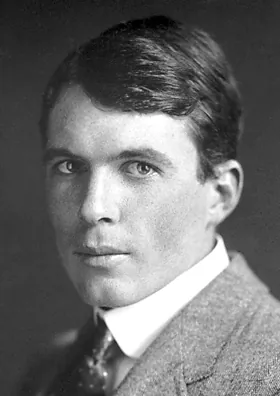 William Lawrence Bragg1890–1971 · Physics
 Louis de Broglie1892–1987 · Physics
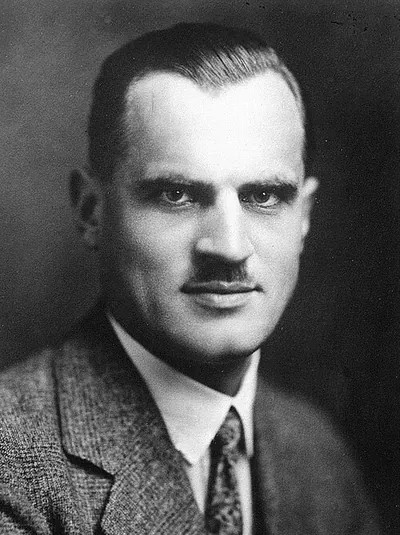 Arthur Holly Compton1892–1962 · Physics
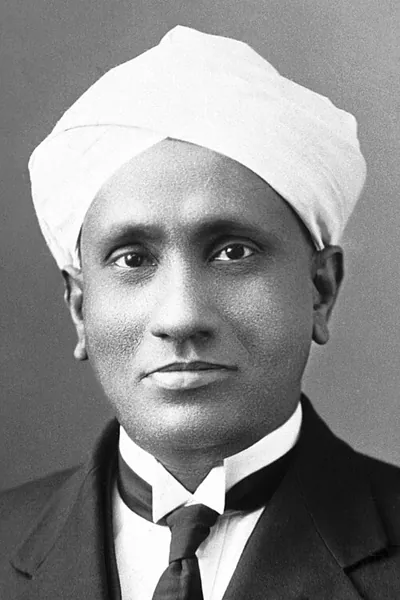 Chandrasekhara Venkata Raman1888–1970 · Physics
 Pyotr Kapitsa1894–1984 · Physics
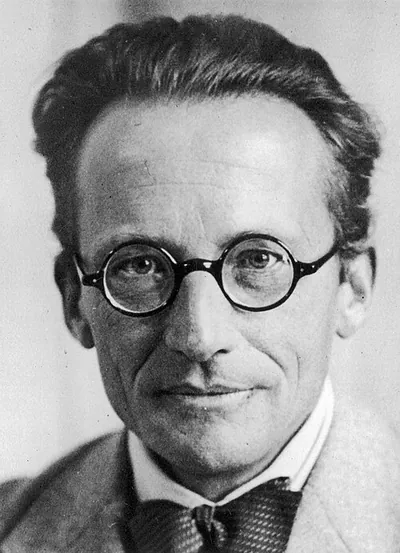 Erwin Schrödinger1887–1961 · Physics
