
Georges J. F. Köhler
German biologist and immunologist, co-developer of the hybridoma technique for producing monoclonal antibodies and 1984 Nobel laureate in Physiology or Medicine · 1946–1995
- Born
- April 17, 1946
- Died
- March 1, 1995
- Country
- Germany
- Section
- Biology
- Awards
- Nobel Prize in Physiology or Medicine
Biography
Georges Jean Franz Köhler (17 April 1946 - 1 March 1995) was a German biologist and immunologist who shared the 1984 Nobel Prize in Physiology or Medicine with César Milstein and Niels Kaj Jerne. Together with Milstein, he developed a method for producing antibodies that all recognize one specific target, a goal that had been very hard to reach before. These so-called monoclonal antibodies became basic tools in biomedical research and, decades later, a major class of medicines.
Köhler was born in Munich, in a Germany still under Allied occupation after the Second World War. His father, Karl, was German, and his mother, Raymonde, came from a French family. At the age of ten he moved with his family to Kehl, a town on the French border, where he completed secondary school. In 1965 he began studying biology at the University of Freiburg, where he worked under Fritz Melchers. His doctoral research dealt with the immune response and antibody production, meaning the way the body makes the proteins that recognize and neutralise foreign substances such as viruses and bacteria. These interests shaped much of his later work, which asked where the enormous variety of antibodies in the body comes from.
In 1968 he married Claudia Reintjes, whom he had met while he was still a student and she worked as an assistant to a doctor. They had three children: Katharina, Lucia and Fabian. During his studies, and to support his family, he worked as a taxi driver at weekends. He finished his studies in 1971 and later completed his doctorate at the Basel Institute for Immunology.
In April 1974 he took up a postdoctoral fellowship at the Laboratory of Molecular Biology in Cambridge, in the group of César Milstein. The fellowship was supported by EMBO, the European Molecular Biology Organization. The team wanted a laboratory tool that could help them study how the immune system produces such a range of antibodies. To do this they needed continuous cultures of cells that secreted antibodies of one single, defined kind. Their answer was to fuse antibody-producing lymphocytes, a type of white blood cell, taken from immunised animals with immortal myeloma cells, which are cancer cells that divide indefinitely in the laboratory. The resulting hybrid cells, later called hybridomas, combined both abilities: they made the wanted antibody and could keep dividing in culture. In 1975 they published their results in Nature.
This approach differed from conventional antisera, which contain a mixture of antibodies made by many different immune cell clones. Monoclonal antibodies, by contrast, allowed researchers to identify, purify and measure one particular molecule with great precision. In April 1976 Köhler returned to Switzerland to the Basel Institute for Immunology, led by Niels Kaj Jerne, and stayed there for roughly a decade. He kept studying antibody diversity and the behaviour of lymphocyte hybrids. In the early 1980s he also turned to transgenic mice, animals whose genetic makeup is altered so that scientists can study immune mechanisms such as self-tolerance, the ability of the immune system not to attack the body's own tissues.
In 1984 Köhler, Milstein and Jerne received the Nobel Prize in Physiology or Medicine. Jerne was honoured for his theories on the specificity, development and control of the immune system, while Köhler and Milstein were recognised for discovering the principle behind producing monoclonal antibodies. In his Nobel lecture, Köhler discussed how these antibodies arise and diversify, and what the hybridoma method meant for science. The same year he became director of the Max Planck Institute of Immunobiology in Freiburg im Breisgau, where he continued research on antibody formation, lymphocyte biology and experimental models of immune regulation. He held a link with the University of Freiburg too, and he remained director until his death.
Köhler died in Freiburg im Breisgau on 1 March 1995, at the age of 48. Contemporary accounts attributed his death to a heart condition. His legacy is twofold. The hybridoma technique made it possible to produce antibodies of defined and reproducible specificity, and monoclonal antibodies are now essential reagents in research and clinical diagnosis, as well as a major family of therapeutic drugs. The method also pushed immunology towards cell-based and molecular approaches, by linking each antibody to a single clone of lymphocytes. The Max Planck Society remembers him as a pioneering immunologist whose work on monoclonal antibodies left a lasting mark on science and medicine.
Main contributions
- 1975Hybridoma technique: fusing B lymphocytes with myeloma cells to obtain cultures that produce a single type of antibody.
- 1975Monoclonal antibodies: antibodies of defined and reproducible specificity, published with Milstein in Nature.
- 1984Nobel Prize in Physiology or Medicine, shared with Milstein and Jerne, for the principle behind producing monoclonal antibodies.
- 1992Nobel lecture on the origin and diversification of monoclonal antibodies, published in the Scandinavian Journal of Immunology.
Teachers and students
Trivia and anecdotes
A taxi driver to support his family
While studying biology and already married, he worked as a taxi driver at weekends to support his family.
Childhood on the border
At the age of ten he moved with his family to Kehl, a town next to France, where he completed secondary school.
Their contemporaries
While Georges J. F. Köhler was alive (1946–1995)…
Alive at the same time
Discovered or invented in those years
- 1947TransistorA semiconductor component that amplifies or switches electrical current between two terminals, depending on a signal applied to a third.
- 1957Artificial satelliteAn artificial satellite is a human-made object placed in orbit around a celestial body, usually Earth, to collect information, relay signals, or carry out a specific task.
- 1969InternetA global network of interconnected computer networks that communicate using the TCP/IP protocol suite.
- 1971EmailA network service that lets users send and receive digital messages through addressed mailboxes, much like postal mail but electronic.
- 1973Mobile phoneA handheld wireless phone that lets people make and receive calls while moving across a cellular network area.
- 1989World Wide WebA system of linked documents and resources, connected by hyperlinks and accessed over the Internet with web browsers.
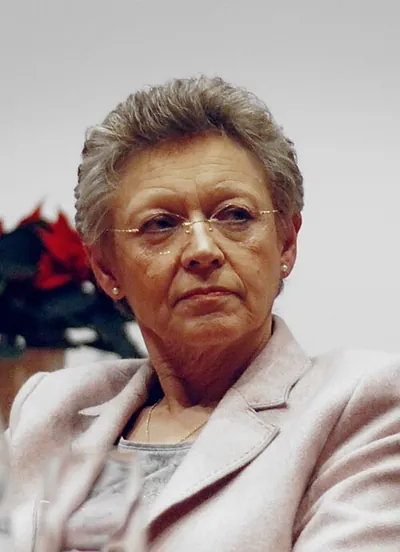 Françoise Barré-Sinoussi1947 · Biology
 Yoshinori Ohsumi1945 · Biology
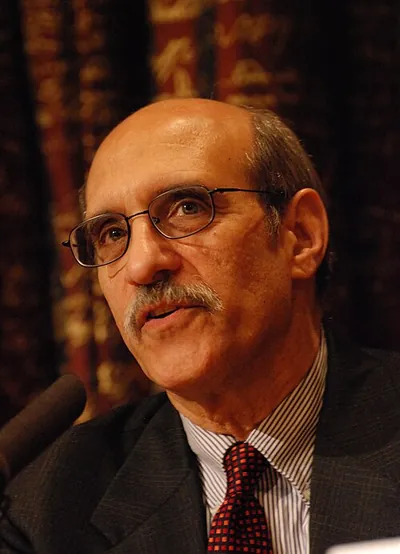 Martin Chalfie1947 · Biology
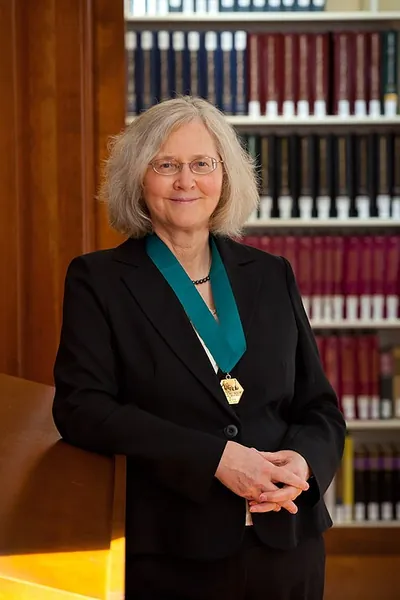 Elizabeth Blackburn1948 · Biology
 Kary Mullis1944–2019 · Biology
 Christiane Nüsslein-Volhard1942 · Biology
