
Heinrich Louis d'Arrest
German astronomer who co-discovered Neptune and found several comets and asteroids · 1822–1875
- Born
- July 13, 1822
- Died
- June 14, 1875
- Country
- Kingdom of Prussia
- Section
- Astronomy and space
Biography
Heinrich Louis d'Arrest (Berlin, 1822 – Copenhagen, 1875) was a Prussian astronomer who worked in Germany and Denmark during the first half of the nineteenth century, a period when observatories were beginning to pair ever larger telescopes with careful measurements. He is remembered mainly for his part in the discovery of Neptune, for several comets that bear his name, and for his catalogues of nebulae and galaxies.
His ancestors were French Huguenots, Protestants who fled to Germany in 1685 after the Edict of Nantes was revoked. D'Arrest studied mathematics at the University of Berlin, where his interest turned to observing the sky. His first discovery came in 1844, when he independently found the second comet of Mauvais on 9 July, two days after it had first been seen in Paris. A comet is an icy body that releases gas and dust as it nears the Sun, producing a visible tail. He found another comet on 28 December of the same year.
In 1845 he became an assistant to Johann Franz Encke at the Berlin Observatory. On 23 September 1846, working with the observatory's director, Johann Gottfried Galle, he searched a patch of sky that Urbain Le Verrier had indicated. Le Verrier believed an unknown planet there could explain irregularities in the orbit of Uranus. The best-known account credits d'Arrest with the idea of comparing a newly drawn star chart with the actual sky, since a planet, unlike a fixed star, shifts its position. Neptune turned up that very night. Galle was the first to see it through the telescope, which is why he is usually recognised as the discoverer, although d'Arrest's role remains part of the story.
In 1848 he moved to the university observatory in Leipzig, housed in the former Pleißenburg fortress, and began cataloguing nebulae systematically. In 1850 he received an honorary doctorate from the university's Faculty of Philosophy, and in 1851 he obtained his habilitation, the qualification that allowed him to teach at university level. On 28 June 1851 he discovered the periodic comet 6P/d'Arrest, which returns to the Sun every few years. That year he also published a treatise on the minor planets, as asteroids were then called. In spring 1852 he was appointed professor of astronomy, and he oversaw the construction of a new observatory in Leipzig.
On 4 November 1851 he married Auguste Emilie Möbius in Leipzig. She was the daughter of the astronomer and mathematician August Ferdinand Möbius, who had been his supervisor, although some references give 1857 as the wedding year. The couple had a daughter, Doris Sophie, born in 1853, and a son, Louis, born in 1855.
In September 1857 he moved to Copenhagen as professor of astronomy. With the 11-inch (27.5 cm) refractor at the Danish observatory he continued observing nebulae and discovered hundreds of galaxies, star clusters and gaseous nebulae. A refractor is a telescope that forms its image with lenses. His observations were published in 1867 as Siderum Nebulosorum Observationes Havnienses. In 1860 he joined a Danish expedition to Spain to observe the solar eclipse of 18 July. On 21 October 1862 he discovered the asteroid Freia, roughly 200 km across. Between 1861 and 1867 he systematically analysed his many observations of the Coma cluster, work that Max Wolf extended about thirty years later using photographs from the Heidelberg observatory.
In his last years he suffered from severe hypochondria. He died of heart failure in Copenhagen at the age of 52. In 1875 he received the Gold Medal of the Royal Astronomical Society, and he was a member of the academies of sciences in Denmark, Sweden, St Petersburg and Munich, as well as a Knight of the Danish Order of the Dannebrog.
His name lives on in the sky: the lunar crater D'Arrest, a crater on Phobos and the asteroid 9133 d'Arrest all honour him.
Main contributions
- 1844Independent discovery of the second comet of Mauvais, an icy body that grows a tail as it nears the Sun.
- 1846Part in the discovery of Neptune, located by Galle using Le Verrier's prediction and d'Arrest's suggestion to compare sky charts.
- 1851Discovery of the periodic comet 6P/d'Arrest, which returns to the Sun every few years.
- 1862Discovery of the asteroid Freia, roughly 200 km across.
- 1864Unsuccessful search for moons of Mars, in which he set an upper limit of 70 arcminutes for where a moon should be sought.
- 1867Publication of his observations of nebulae and galaxies in Siderum Nebulosorum Observationes Havnienses.
Teachers and students
Trivia and anecdotes
Neptune and shared credit
The idea of comparing sky charts is credited to d'Arrest, but Galle was the first to see Neptune through the telescope, so he is usually named as the discoverer.
Father-in-law and supervisor
He married the daughter of August Ferdinand Möbius, who had earlier been his supervisor, so the link was both personal and academic.
A study finished decades later
His observations of the Coma cluster were extended about thirty years later by Max Wolf, who used photographs taken at the Heidelberg observatory.
Their contemporaries
While Heinrich Louis d'Arrest was alive (1822–1875)…
Alive at the same time
Discovered or invented in those years
- 1839PhotographyA technique for creating lasting images by recording light, either on a light-sensitive material or with an electronic sensor.
- 1846NeptuneThe eighth and most distant planet of the Solar System, an ice giant found through mathematical prediction before any direct sighting.
- 1859EvolutionThe process by which the heritable traits of living populations change over generations, explaining the diversity of life from common ancestors.
- 1869Periodic tableAn arrangement of the chemical elements into rows (periods) and columns (groups), ordered by atomic number, that reveals recurring chemical behaviour and lets scientists predict properties.
- 1869Deoxyribonucleic acidA double-stranded molecule that carries the genetic instructions of nearly all living things and many viruses.
- 1869Chemical elementA type of matter made of atoms that all share the same number of protons in their nucleus, which sets it apart from every other element.
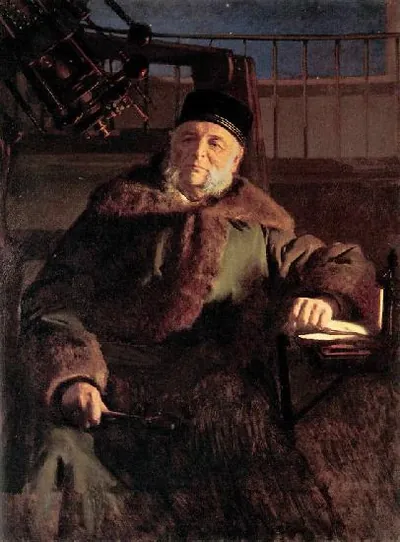 Otto Wilhelm von Struve1819–1905 · Astronomy and space
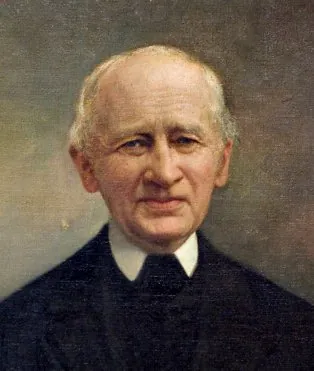 Johann Gottfried Galle1812–1910 · Astronomy and space
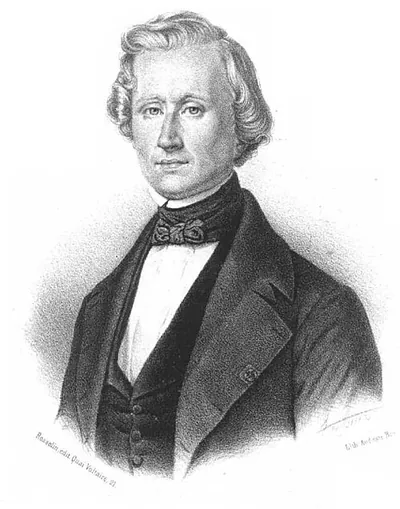 Urbain Le Verrier1811–1877 · Astronomy and space
 John Frederick William Herschel1792–1871 · Astronomy and space
 Annie Jump Cannon1863–1941 · Astronomy and space
 Henrietta Swan Leavitt1868–1921 · Astronomy and space
