
Yulii Khariton
Russian physicist, key figure in the Soviet nuclear weapons programme · 1904–1996
- Born
- February 27, 1904
- Died
- December 18, 1996
- Country
- Russia, Soviet Union, Russian Empire
- Section
- Physics
- Awards
- Abel Prize
Biography
Yuli Borisovich Khariton (St Petersburg, 1904 - Sarov, 1996) was a Russian physicist who led the main Soviet nuclear weapons design centre for decades. His work was decisive in giving the Soviet Union its own atomic bomb in the late 1940s, and he is regarded as one of the most influential figures in the country's nuclear history.
He was born into a middle-class Russian Jewish family. His father, Boris Khariton, was a political journalist and editor linked to the newspaper Rech, the organ of the Constitutional Democratic Party. After the revolution, the father opposed the Bolsheviks and was expelled in 1922 with other intellectuals on the so-called philosophers' ships; later, when Latvia was annexed by the Soviet Union, he was arrested and died in a forced labour camp. His mother, a theatre actress, left Russia in 1910 for medical treatment and never returned. The young Yuli was looked after by an Estonian governess hired by his father, who taught him German.
In 1920 he enrolled at the Leningrad Polytechnic Institute to study mechanical engineering, but soon switched to physics. There his teachers included Abram Ioffe, Nikolai Semyonov and Alexander Friedmann. Semyonov, who applied physical methods to chemistry, encouraged him to study the light given off by phosphorus when it combines with oxygen. In 1926 he travelled to England on a fellowship arranged through Semyonov and worked at the Cavendish Laboratory in Cambridge with Ernest Rutherford and James Chadwick, earning his doctorate in 1928. After a short spell in Germany, where he was repelled by Nazi propaganda, he returned to the Soviet Union.
In 1931 he joined the Institute of Chemical Physics, where he eventually headed the explosives laboratory until 1946. Working with Yakov Zeldovich, he studied chain reactions, the self-sustaining processes in which each reaction triggers the next. In the late 1930s the two men calculated the conditions for a uranium chain reaction and the critical mass, the smallest amount of material able to sustain one. During the war he applied his knowledge of explosions to conventional weapons. In 1943 Igor Kurchatov asked him to join the Soviet atomic project. In May 1945, as part of a team sent to Berlin, he located around 100 tonnes of uranium oxide, which was taken to Moscow; according to the sources, this shortened the time needed to produce plutonium in the country.
After the bombings of Hiroshima and Nagasaki he became scientific director of KB-11, known as Arzamas-16 and based in the closed city of Sarov, where Soviet weapons were designed. In 1949 he reported to a special committee on the first Soviet device, the RDS-1, tested later that year. Politically cautious, he backed his colleagues and their technical proposals, such as the two-stage design, while absorbing criticism from political leaders. Andrei Sakharov, who worked with him, described him as zealous and utterly devoted to his work. He remained at the head of the centre for around four decades, until his retirement in 1992.
His legacy lies in both science and Cold War history. He received several Stalin Prizes, three Hero of Socialist Labour awards and numerous Soviet orders. The Sarov institute, now the All-Russian Scientific Research Institute of Experimental Physics, keeps his memory alive, and in 2004 Russia issued a stamp to mark the centenary of his birth.
Main contributions
- 1926Work at the Cavendish Laboratory on the sensitivity of the eye to faint flashes of light and to alpha radiation.
- 1939With Zeldovich, calculation of the conditions for a uranium chain reaction and the critical mass needed to sustain it.
- 1946Scientific direction of KB-11 (Arzamas-16), the secret nuclear weapons design centre at Sarov.
- 1949Report on the RDS-1, the first Soviet atomic bomb, tested that same year.
Teachers and students
Studied under:
Taught:
Trivia and anecdotes
A private railway carriage
According to the sources, he was considered too important to fly and had his own private railway carriage.
A postage stamp
In 2004 Russia issued a stamp to mark the centenary of his birth.
Related discoveries and inventions
- 1953Joe 4The first Soviet test of a boosted fission weapon, a design that combined fission and fusion, detonated in 1953.
Their contemporaries
While Yulii Khariton was alive (1904–1996)…
Alive at the same time
Discovered or invented in those years
- 1916Black holeA region of space where gravity is so strong that nothing, not even light, can escape once it crosses a certain boundary.
- 1925TelevisionA system that sends moving pictures and sound over distance and shows them on a receiver, the television set.
- 1925Quantum mechanicsPhysical theory describing how matter and light behave at atomic and subatomic scales, where energy is exchanged in minimal packets and results are expressed as probabilities.
- 1931Big BangA cosmological model describing how the universe expanded from an early state of extreme density and temperature, about 13.8 billion years ago.
- 1945ComputerA programmable machine that takes in data, processes it by following stored instructions, and produces results, able to switch tasks simply by running different software.
- 1969InternetA global network of interconnected computer networks that communicate using the TCP/IP protocol suite.
 J. Robert Oppenheimer1904–1967 · Physics
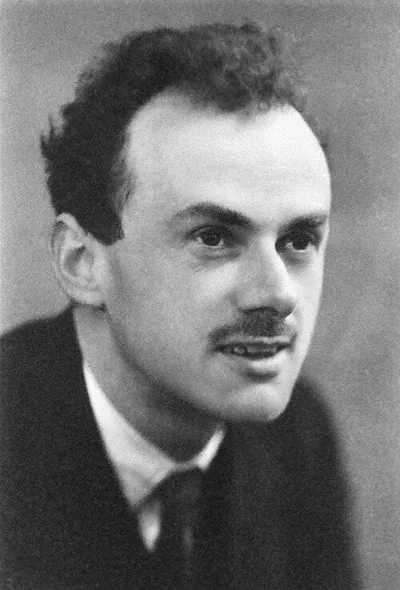 Paul Dirac1902–1984 · Physics
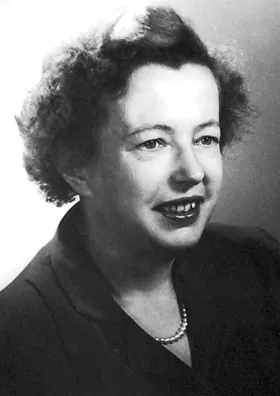 Maria Göppert Mayer1906–1972 · Physics
 Eugene Paul Wigner1902–1995 · Physics
 Hans Bethe1906–2005 · Physics
 Enrico Fermi1901–1954 · Physics
