
Joseph Black
Scottish physician, physicist and chemist, a pioneer in the study of heat and carbon dioxide · 1728–1799
- Born
- April 16, 1728
- Died
- December 6, 1799
- Country
- Kingdom of Great Britain
- Section
- Chemistry
Biography
Joseph Black (Bordeaux, 1728 – Edinburgh, 1799) was a Scottish physician, physicist and chemist who lived at the height of the Scottish Enlightenment. His work on heat and gases secured him a lasting place in the history of chemistry and thermodynamics, the branch of physics that studies heat and its relation to work. He mattered above all because he separated ideas that had been confused, such as temperature and heat, and because his findings later helped improve the steam engine.
Black was born in Bordeaux on 16 April 1728, the sixth of twelve children. His father, John Black, came from Belfast in Ireland and worked as a factor in the wine trade. His mother, Margaret Gordon, belonged to an Aberdeenshire family with its own connections to that business. Black was taught at home until the age of twelve, when he went to a grammar school in Belfast. In 1746, at eighteen, he entered the University of Glasgow to study medicine. After four years there he spent another four at the University of Edinburgh, continuing his medical training. His doctoral thesis dealt with using magnesium carbonate, a salt, to treat kidney stones. The chemistry of his day still rested on a handful of basic principles of matter, among them water, salt, earth, fire and metal. Black later added air to that list, after his experiments showed that air contained a distinct gas.
Around 1750, while still a student, he developed an analytical balance of unusual precision. It used a light beam resting on a wedge-shaped support, with a pan hanging from each end. It was far more accurate than any other balance of the period and soon became a standard instrument in chemistry laboratories. At about the same time he turned to a gas released when limestone was heated or treated with acids. He called it "fixed air." He noticed that it was denser than ordinary air and that it would not sustain a flame or animal life. To show this, he placed a mouse and a lit candle in a container filled with the gas. The candle went out and the mouse died. In 1756 he found that carbonates became more alkaline when they lost the gas, and that they regained their former character when it was added back. He also showed that the gas was produced by animal breathing and by microbial fermentation. He was the first to isolate it in pure form. His work helped show that air was not a simple substance, and it weakened the old phlogiston theory, which had proposed an invisible fiery principle that no longer fitted the observations.
In 1757 he was appointed Regius Professor of the Practice of Medicine at Glasgow. Around that time he began an extensive study of heat. In 1760 he noticed that when two substances of equal mass but different temperatures were mixed, their temperatures changed by different amounts, yet the heat gained by the cooler one equalled the heat lost by the warmer one. He illustrated this with an experiment that Daniel Gabriel Fahrenheit had carried out for the Dutch physician Herman Boerhaave, and he devised a similar example using water at 100 degrees Fahrenheit and mercury at 150. From this he concluded that heat and temperature are different things, and that each substance needs its own amount of heat to raise its temperature by a given amount. Today we call this specific heat. The following year, in 1761, he found something that did not fit the usual picture. Adding heat to ice at its melting point did not raise the temperature of the mixture; instead, it produced more water. Boiling water behaved in a similar way, producing more steam rather than a higher temperature. Black concluded that the heat was absorbed into the change of state without the thermometer registering it, and he called it latent heat. This idea is usually regarded as the starting point of thermodynamics, and it is the contribution on which his scientific reputation largely rests.
His links with engineering were unusually direct. Around 1757, while both were in Glasgow, he met James Watt, who was then repairing scientific instruments. Black gave Watt financial help and advice during his early work on the steam engine, which at that time followed Thomas Newcomen's design and used fuel inefficiently. Black's knowledge of the latent heat of water was useful to Watt as he tried to improve how these engines performed. Black was also a central figure in the social life of the Scottish Enlightenment. With Adam Smith and James Hutton he founded the Oyster Club, whose members met weekly to talk and dine. He was a friend of the philosopher David Hume and took part only occasionally in the Lunar Society.
In 1766 he succeeded his former teacher and friend William Cullen as Professor of Medicine and Chemistry at Edinburgh. There he largely stopped research and concentrated on teaching. His lectures became famous for their clarity and for carefully prepared experiments that were striking to watch. Attending them became something of a fashion in the city, and many students came back for two or three courses. Some were only fourteen years old. Hundreds took notes that they later carried to their own work across Britain, its colonies and Europe. In 1783 he helped found the Royal Society of Edinburgh. From 1788 to 1790 he was president of the Royal College of Physicians of Edinburgh, and he served as principal physician to King George III in Scotland. From 1793 his health declined and he gradually withdrew from teaching. In 1795 Charles Hope was appointed to assist him in his chair, and in 1797 he gave his last lecture.
Black never married. His household included his niece Katherine Burnett, who in 1767 married Adam Ferguson, his first cousin and close friend. He died at home on Nicolson Street, in the south of Edinburgh, on 6 December 1799, and was buried in Greyfriars Kirkyard. His legacy survives in several forms. The lunar crater Black was named after him in 1976, and the asteroid (5883) Josephblack also commemorates him. The chemistry buildings at Edinburgh and Glasgow bear his name. His most lasting achievement was to distinguish heat from temperature and to explain latent heat, two basic ideas that are still part of physics today.
Main contributions
- 1750Analytical balance: a highly precise instrument, with a light beam on a wedge-shaped support, that became standard in chemistry laboratories.
- 1754Carbon dioxide: a gas he named "fixed air", which he showed could not sustain animal life or combustion and which was released when limestone was heated.
- 1756Carbonates: he showed that they lose alkalinity when they release the gas and regain it when the gas is added back, supporting the gas as a distinct chemical component.
- 1760Specific heat: the concept describing how much heat each substance needs to raise its temperature, which separated heat from temperature.
- 1761Latent heat: energy absorbed during a change of state, such as the melting of ice or the boiling of water, without any rise in temperature; it marks the beginning of thermodynamics.
Teachers and students
Studied under:
Taught:
Trivia and anecdotes
A lunar crater
The lunar crater Black was named after him in 1976.
Fashionable lectures
His Edinburgh lectures were so popular that attending them became a fashionable pastime, and many students took the course more than once.
Equipment found in 2011
In 2011, an archaeological dig at the University of Edinburgh uncovered scientific equipment believed to have belonged to Black.
Related discoveries and inventions
- 1755MagnesiumMagnesium is a light, shiny gray-white metal with atomic number 12 and symbol Mg, found in many minerals, seawater and living organisms.
Their contemporaries
While Joseph Black was alive (1728–1799)…
Alive at the same time
Discovered or invented in those years
- 1766HydrogenThe lightest and most abundant chemical element in the universe, atomic number 1, which under normal conditions is a colourless, odourless and highly flammable gas.
- 1772NitrogenChemical element with atomic number 7, a colourless, odourless gas that makes up about 78% of Earth's air and is an essential part of proteins and nucleic acids.
- 1774OxygenA colorless, odorless gas, symbol O and atomic number 8, that forms the dioxygen in air and is essential for respiration in most living things.
- 1781UranusThe seventh planet from the Sun, an ice giant discovered by William Herschel in 1781, the first planet found with a telescope.
- 1789UraniumA radioactive metal with atomic number 92, used as fuel in nuclear power plants and in nuclear weapons, and in various military and civilian applications.
- 1789CarbonA chemical element with symbol C and atomic number 6, the basis of organic chemistry and a component of all known life, found in materials as different as diamond and pencil lead.
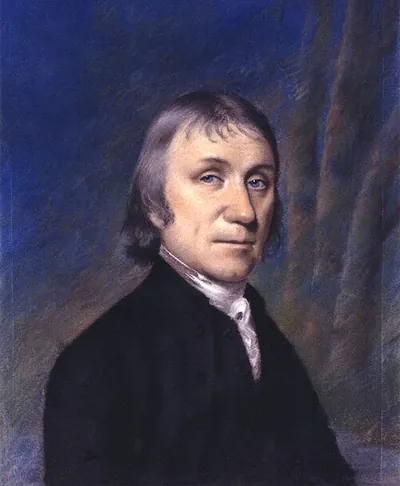 Joseph Priestley1733–1804 · Chemistry
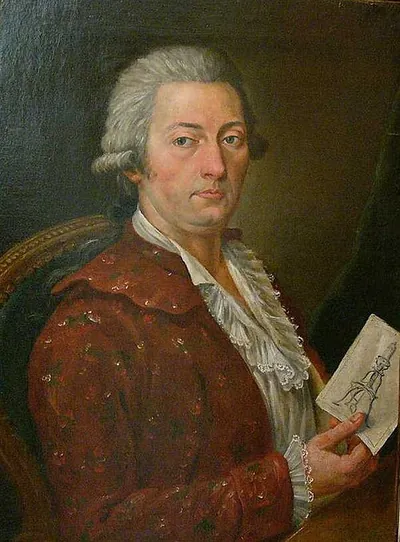 Carl Wilhelm Scheele1742–1786 · Chemistry
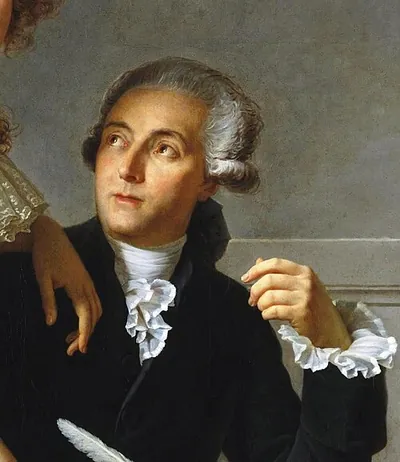 Antoine Lavoisier1743–1794 · Chemistry
 John Dalton1766–1844 · Chemistry
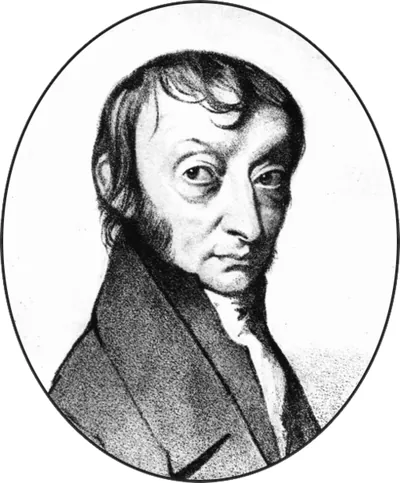 Amedeo Avogadro1776–1856 · Chemistry
 Humphry Davy1778–1829 · Chemistry
