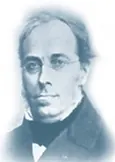
Jules Dupuit
French civil engineer, mathematician and economist, forerunner of marginalism · 1804–1866
- Born
- May 18, 1804
- Died
- September 5, 1866
- Country
- France
- Section
- Engineering and construction
Biography
Arsène Jules Étienne Juvenal Dupuit, known as Jules Dupuit, was a nineteenth-century French civil engineer, mathematician and economist. He matters because, starting from practical problems in public works, he developed ideas about utility and demand that anticipated marginalism, the school that explains prices through what each person is willing to pay for one more unit of a good.
He was born on 18 May 1804 in Fossano, then under Napoleonic rule through the Cisalpine Republic. At the age of ten he moved with his family to Versailles, where he studied and won a physics prize on graduating. He then entered the École Polytechnique to train as a civil engineer. He took on gradually greater responsibility in several regional state posts and in 1843 received the Légion d'honneur for his work on the French road network. Shortly afterwards he settled in Paris, where in 1848 he studied flood management and supervised the construction of the city's sewer system. He died in Paris in 1866.
His interest in economics grew out of technical problems he faced at work, and he taught himself the subject. The question that occupied him was how to set the best toll for a bridge. In 1844 he published De la mesure de l'utilité des travaux publics, a work that went almost unnoticed when it appeared. In it he introduced a curve showing how marginal utility, the satisfaction gained from one extra unit of a good, falls as the quantity consumed rises. A lower toll brings more users onto the bridge; a higher one leaves fewer people willing to pay. Dupuit read the same curve as a demand curve, something that had been drawn before but never properly demonstrated.
For Dupuit utility was subjective and varied from person to person. He distinguished absolute utility, what a consumer would pay for one unit, from relative utility, the gap between that figure and the actual price. The gap gave him a measure of the benefit society gained from a public work. His famous example of a footbridge, free to cross, showed that in principle the value of a free good could be calculated. He admitted that his calculations depended on data that statistics of the time could not supply.
Dupuit combined three elements: economic questions of interest, observed facts and statistics on public works income and costs, and mathematical analysis. From this came two general laws. The first says that as the price falls, the quantity demanded rises. The second holds that the same price cut attracts more new buyers the lower the starting price. Dupuit never separated utility from demand, and that gap made his work less appealing to some later neoclassical economists. Yet his idea of measuring satisfaction by the money someone would pay for a good anticipated what Marshall would call consumer surplus.
Dupuit also wrote on free trade, monopolies and price discrimination, though his economic reputation rests mainly on articles in specialist journals. His planned book on applied political economy of public works was never finished. His legacy lies in the French school of engineer-economists and in the use of demand curves. He is also remembered in hydrogeology for his assumption about groundwater flow, which treats flow as horizontal and the water as hydrostatic, and which is still used as a simplification for analytical solutions.
Main contributions
- 1844Diminishing marginal utility curve and demand curve: the satisfaction from an extra unit falls as consumption rises, and the curve can be read as demand.
- 1844Relative utility: the difference between what a consumer would pay for a good and its price, used as a measure of social benefit.
- 1844Calculation of the optimal toll for a footbridge, with the numerical example illustrating how to measure the utility of a free good.
- 1849Law of consumption (On the influence of tolls on the utility of communication routes): consumption rises as price falls.
- 1861Commercial Freedom, a short essay defending free trade.
- 1866Dupuit assumption for groundwater flow, horizontal and hydrostatic, still used in hydrogeology as a simplification.
Trivia and anecdotes
A book that went almost unnoticed
His 1844 work drew little attention at the time. Its influence came later, when other economists revived his ideas.
A self-taught economist
He never received formal training in economics. His knowledge of the subject grew out of the problems he solved as an engineer.
Their contemporaries
While Jules Dupuit was alive (1804–1866)…
Alive at the same time
Discovered or invented in those years
- 1811MoleculeAn electrically neutral group of at least two atoms held together by chemical bonds in a defined arrangement.
- 1821ElectricityThe set of physical phenomena linked to the presence and movement of electric charge, and one of the most versatile forms of energy in modern life.
- 1838ProteinLarge biomolecules made of chains of amino acids that carry out structural, catalytic, transport, defensive and regulatory functions in living things.
- 1839PhotographyA technique for creating lasting images by recording light, either on a light-sensitive material or with an electronic sensor.
- 1846NeptuneThe eighth and most distant planet of the Solar System, an ice giant found through mathematical prediction before any direct sighting.
- 1859EvolutionThe process by which the heritable traits of living populations change over generations, explaining the diversity of life from common ancestors.
 Joseph Paxton1803–1865 · Engineering and construction
 Henry Darcy1803–1858 · Engineering and construction
 Isambard Kingdom Brunel1806–1859 · Engineering and construction
 John Augustus Roebling1806–1869 · Engineering and construction
 Cyrus McCormick1809–1884 · Engineering and construction
 Henry Bessemer1813–1898 · Engineering and construction
