
Karl Stetter
German microbiologist specialised in extremophiles and astrobiology · 1941
- Born
- July 16, 1941
- Country
- Germany
- Section
- Biology
Biography
Karl Otto Stetter (born 1941) is a German microbiologist known for his study of organisms that thrive at extreme temperatures. Working mainly from the late twentieth century into the early twenty-first, he helped show that life can survive in places once thought too hostile for it, and his work is widely cited in astrobiology, the field that studies the origin and limits of life in the universe.
Stetter was born in Munich on 16 July 1941 and studied biology at the Technical University of Munich. His doctoral dissertation dealt with lactobacilli, bacteria used in dairy products and other fermented foods. That early training in familiar microorganisms was the starting point for a career that moved steadily toward the more unusual end of microbiology.
From 1980 to 2002 he was professor and head of the microbiology department at the University of Regensburg, where he also led its Archaea centre. Archaea form one of the three major domains of life, alongside bacteria and eukaryotes, and for a long time they received little attention. Much of Stetter's research involved searching for, isolating and characterising these organisms, especially hyperthermophiles, which grow best between 80 and 113 degrees Celsius. They are called extremophiles because they live in conditions that would kill most known forms of life.
His method combined sampling in little-explored places, such as deep-sea hydrothermal vents, with careful culturing in the laboratory. In 1981 he found Pyrococcus furiosus on the Italian island of Vulcano. An enzyme derived from this organism, Pfu DNA polymerase, became a useful tool in molecular biology, because it keeps working at high temperatures where ordinary enzymes would break down. Stetter also identified other species of Aquifex, bacteria that live in hot environments.
In 1992, together with Robert Huber, he discovered a new thermophilic bacterium near the Kolbeinsey Ridge, an underwater mountain range formed where tectonic plates pull apart. They named it Aquifex pyrophilus. His best-known finding came in 2002, when he identified Nanoarchaeum equitans in a hydrothermal vent off the coast of Iceland. At the time it had the smallest known genome of any organism, meaning the fewest genetic instructions. The results appeared in the journal Nature that May.
Stetter belonged to many scientific bodies in Germany, the United States and the Netherlands, including the Leopoldina, the Bavarian Academy of Sciences, the American Society for Microbiology and the Royal Netherlands Academy of Arts and Sciences, which elected him in 1999. In 2003 he received the Leeuwenhoek Medal from that academy, a prize awarded every ten years to the scientist judged to have made the most outstanding contribution to microbiology.
His legacy lies in widening the map of where life may exist. By showing that organisms can flourish at temperatures above the boiling point of water, his research fed a question that astrobiology now asks: whether life could survive in comparable conditions on other bodies in the solar system or beyond.
Main contributions
- 1981Discovery of Pyrococcus furiosus on the Italian island of Vulcano, the source of the Pfu DNA polymerase enzyme used in laboratories.
- 1992Aquifex pyrophilus, a thermophilic bacterium discovered with Robert Huber near the Kolbeinsey Ridge.
- 2002Nanoarchaeum equitans, an archaeon with the smallest genome known at the time, found in a hydrothermal vent off Iceland.
- Identification of other Aquifex species, such as Aquifex aeolicus, bacteria that live in hot environments.
Trivia and anecdotes
An enzyme named after an island
The Pfu DNA polymerase comes from an organism found on Vulcano, an Italian island that gave its name to one of the extreme microbes Stetter studied. Its usefulness comes from its ability to withstand temperatures that would disable other enzymes.
A medal awarded once a decade
The Leeuwenhoek Medal is not given every year but once every ten years, which makes it a rare honour in microbiology.
Their contemporaries
While Karl Stetter was alive (1941–)…
Alive at the same time
Discovered or invented in those years
- 1945ComputerA programmable machine that takes in data, processes it by following stored instructions, and produces results, able to switch tasks simply by running different software.
- 1957Artificial satelliteAn artificial satellite is a human-made object placed in orbit around a celestial body, usually Earth, to collect information, relay signals, or carry out a specific task.
- 1969InternetA global network of interconnected computer networks that communicate using the TCP/IP protocol suite.
- 1971EmailA network service that lets users send and receive digital messages through addressed mailboxes, much like postal mail but electronic.
- 1973Mobile phoneA handheld wireless phone that lets people make and receive calls while moving across a cellular network area.
- 1989World Wide WebA system of linked documents and resources, connected by hyperlinks and accessed over the Internet with web browsers.
 Stephen Jay Gould1941–2002 · Biology
 Christiane Nüsslein-Volhard1942 · Biology
 Ada Yonath1939–2026 · Biology
 Kary Mullis1944–2019 · Biology
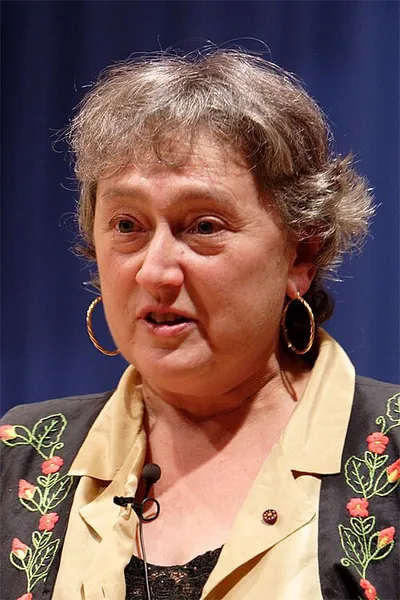 Lynn Margulis1938–2011 · Biology
 Yoshinori Ohsumi1945 · Biology
