
Luitzen Egbertus Jan Brouwer
Dutch mathematician and philosopher, founder of intuitionism · 1881–1966
- Born
- February 27, 1881
- Died
- December 2, 1966
- Country
- Kingdom of the Netherlands
- Section
- Mathematics
Biography
Luitzen Egbertus Jan Brouwer, usually cited as L. E. J. Brouwer and known to his friends as Bertus, was a Dutch mathematician and philosopher who lived from 1881 to 1966. He worked in topology, set theory, measure theory and complex analysis, and is regarded as one of the great mathematicians of the twentieth century. His name is above all linked to intuitionism, a school of thought holding that mathematics is a mental construction rather than a body of objective truths that exist independently of us. He matters because he changed what it means to actually prove something.
Brouwer was born to Dutch Protestant parents. Early in his career he proved a number of theorems in topology, the branch of mathematics that studies the properties of shapes that survive stretching and bending without tearing. His most famous result was the invariance of dimension, which shows that a continuous deformation cannot change the dimension of a space. He also proved the fixed point theorem, which says that certain continuous transformations leave at least one point where it was, and the simplicial approximation theorem, a foundation of algebraic topology. That result explains how general continuous maps can be handled by breaking shapes into small pieces and working with simple combinatorial rules.
In 1912, at the age of 31, he was elected a member of the Royal Netherlands Academy of Arts and Sciences. That same year he received a regular academic appointment at the University of Amsterdam, which gave him a stable professional base. He had already been an invited speaker at the International Congress of Mathematicians in Rome in 1908, and returned as one in Cambridge in 1912. He was later elected to the American Philosophical Society in 1943, and he was also a member of the Royal Society.
His philosophical outlook grew from roots quite separate from pure mathematics. In 1905, at 24, he set out his view of life in a short tract, Life, Art and Mysticism, which the mathematician Martin Davis described as drenched in romantic pessimism. Arthur Schopenhauer had a formative influence on him, not least because he argued that all concepts ultimately rest on sensory intuitions. Brouwer was also a member of the Significs Group, a circle around Victoria, Lady Welby, which helped shape the early history of semiotics, the study of symbols and how they carry meaning.
When his thesis advisor refused to accept his second chapter, judging it steeped in a pessimism and a mystical attitude to life that had nothing to do with the foundations of mathematics, Brouwer did not give up. He set out on what some historians describe as a crusade to rebuild mathematical practice from the ground up, in line with his philosophical convictions. While finishing his thesis in 1907, he made a deliberate choice to keep his most contentious ideas under wraps and to concentrate on showing his mathematical skill. In 1908 he published a paper with the title The Untrustworthiness of the Principles of Logic, questioning the belief that the rules of classical logic, which had come down to us largely from Aristotle, hold absolute validity regardless of the subject matter they are applied to.
Intuitionism was presented as a challenge to the formalism of David Hilbert and his collaborators, who included Paul Bernays, Wilhelm Ackermann and John von Neumann. Put simply, formalism sought to ground mathematics in systems of symbols and rules for manipulating them, whereas intuitionism held that a mathematical object exists only if it can be constructed in the mind. A frequently cited consequence is that its supporters do not generally accept the law of excluded middle, which says every statement is either true or false. This is often oversimplified, since that law can still be proved as a theorem in some special cases.
Hilbert had admired the young Brouwer and helped him obtain his Amsterdam post, but over time he became his chief opponent. During the 1920s the dispute turned public and personal, mainly over the editorial policy of the journal Mathematische Annalen, on which both men worked as editors. Brouwer was eventually removed from the journal and was left relatively isolated. Abraham Fraenkel argued that his dismissal was linked to a turn in Brouwer's views towards German Aryan supremacy. However, there is no evidence that he had any involvement with the German Nazi party or with the National Socialist Movement in the Netherlands, and his contemporaries did not regard him as holding nationalist opinions, so this claim is a disputed interpretation rather than an established fact.
In his last years Brouwer felt increasingly isolated. The mathematician Bartel Leendert van der Waerden, who attended his lectures in that period, noted that he taught only the foundations of his intuitionism and never topology, because he no longer believed his topological results were correct from that standpoint. Davis observes that these years were shadowed by financial worries that had no real basis and by a paranoid fear of bankruptcy, persecution and illness. Brouwer died in 1966, at the age of 85, after being struck by a vehicle while crossing the street in front of his house.
Intuitionism never became the dominant philosophy of mathematics, but it left a lasting mark on constructive logic. His ideas were taken up by his student Arend Heyting, who built a formal logic in line with them, and by Hermann Weyl, a former student of Hilbert. His work in topology, although he himself came to doubt parts of it, remains part of the foundations of that field. Today he is remembered as one of the most original mathematicians of his century, and the lunar crater Brouwer bears his name, shared with that of the Dutch astronomer Dirk Brouwer.
Main contributions
- 1905Life, Art and Mysticism, a short tract in which he set out his philosophy of life.
- 1908A paper questioning whether the rules of classical logic hold absolute validity regardless of the subject matter they are applied to.
- 1910Fixed point theorem, which guarantees that certain continuous transformations leave at least one point where it was.
- Invariance of dimension: a space's dimension does not change under continuous deformations.
- Simplicial approximation theorem, a foundation of algebraic topology for handling general continuous maps.
Teachers and students
Studied under:
Taught:
Trivia and anecdotes
A shared crater
The lunar crater Brouwer bears his name, shared with that of the Dutch astronomer Dirk Brouwer.
An unexpected death
He died in 1966, aged 85, struck by a vehicle while crossing the street in front of his house.
Ideas kept under wraps
While finishing his thesis he chose to keep his most controversial ideas to himself and first show his mathematical skill.
Their contemporaries
While Luitzen Egbertus Jan Brouwer was alive (1881–1966)…
Alive at the same time
Discovered or invented in those years
- 1884CarA road vehicle with four wheels and its own engine, mainly built to carry people.
- 1903AirplaneA fixed-wing aircraft, heavier than air, powered by engines or rockets, that stays aloft because its wings generate lift.
- 1925TelevisionA system that sends moving pictures and sound over distance and shows them on a receiver, the television set.
- 1925Quantum mechanicsPhysical theory describing how matter and light behave at atomic and subatomic scales, where energy is exchanged in minimal packets and results are expressed as probabilities.
- 1931Big BangA cosmological model describing how the universe expanded from an early state of extreme density and temperature, about 13.8 billion years ago.
- 1945ComputerA programmable machine that takes in data, processes it by following stored instructions, and produces results, able to switch tasks simply by running different software.
 Emmy Noether1882–1935 · Mathematics
 G.H. Hardy1877–1947 · Mathematics
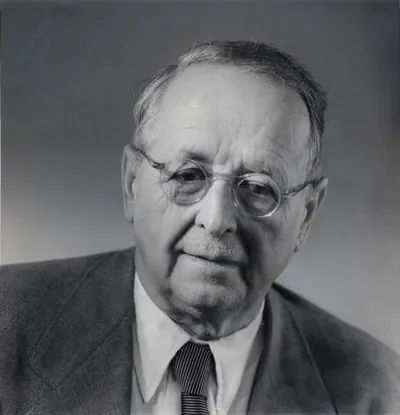 Hermann Weyl1885–1955 · Mathematics
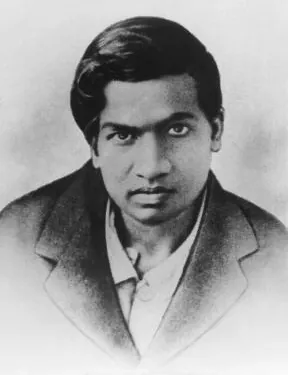 Srinivasa Ramanujan1887–1920 · Mathematics
 Henri Lebesgue1875–1941 · Mathematics
 Bertrand Russell1872–1970 · Mathematics