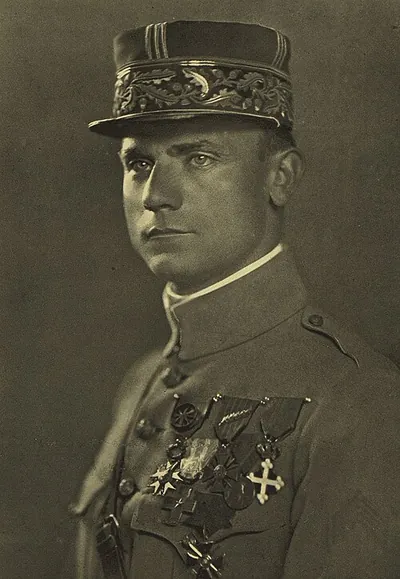
Milan Rastislav Štefánik
Slovak soldier, politician, diplomat and astronomer who served as a French Army general and helped secure Czechoslovakia's independence · 1880–1919
- Born
- July 21, 1880
- Died
- May 4, 1919
- Country
- France, Czechoslovakia
- Section
- Astronomy and space
Biography
Milan Rastislav Štefánik (born in Košariská in 1880, died in Ivanka pri Dunaji in 1919) was a Slovak soldier, politician, diplomat and astronomer. During the First World War he served as a general in the French Army while working alongside Tomáš Garrigue Masaryk and Edvard Beneš to win recognition from the Allied powers for an independent Czechoslovak state. He matters because he connected two worlds rarely linked: the study of the sky and the diplomacy of a conflict that reshaped Europe.
He was born in 1880 in Košariská, then part of the Kingdom of Hungary, into a large family. His father was a Lutheran pastor. He attended schools in Bratislava, Sopron and Szarvas before starting construction engineering studies in Prague in 1898. Two years later he moved to Charles University, where he took lectures in astronomy, physics, optics, mathematics and philosophy. The philosophy course was taught by Masaryk, who would later become Czechoslovakia's first president, and from him Štefánik took the idea that Czechs and Slovaks should work together. In Prague he also joined Detvan, a Slovak student association, and much of his studies was paid for by Czech organisations, since his family could not afford them. He earned his doctorate in 1904 with a thesis on a supernova that appeared in the constellation Cassiopeia in 1572.
That same year he travelled to Paris with a letter of recommendation from a Czech professor. With little money and no French, he nevertheless found work at the renowned Meudon Observatory, led by Pierre Janssen, one of the founders of astrophysics, who had recognised his talent. Astrophysics studies the makeup of stars and planets from the light they emit, and Štefánik specialised in spectral analysis of the Sun, particularly the corona, the faint outer layer of its atmosphere that becomes visible during total eclipses. In 1905 he climbed Mont Blanc several times to observe the Moon and Mars, and he joined a French expedition to a solar eclipse at Alcossebre, in Spain. This work earned him a reputation in French scientific circles. When Janssen died at the end of 1907, he lost his post, but from 1908 the French government gave him astronomical and meteorological assignments, mostly eclipse observations, together with political missions in many countries, including the United States, Brazil, Ecuador, Panama, Australia, New Zealand, Tahiti and Tonga. In Tahiti he built an observatory and a network of weather stations. Some accounts claim that part of his Pacific travels also involved spying on German positions, but this is an unconfirmed rumour.
In 1912 he led a mission to Brazil to observe an eclipse. He brought a Mailhat telescope with an eight-metre focal length, which he gave to the team of the Brazilian National Observatory. That year he also obtained French citizenship. He designed a device for colour photography and cinematography, patented in 1911, though it never became a commercial success. His acquaintances included the physicist Henri Poincaré, the engineer Gustave Eiffel and the American astronomer and admiral Simon Newcomb.
When the First World War broke out, Štefánik believed that the defeat of Austria-Hungary and Germany could open a path to independence for Slovaks and Czechs. He joined the French army and trained as a pilot. He flew on the Serbian front, where he is credited with one of the earliest air evacuations of a patient, after falling seriously ill. At the end of 1915 he returned to Paris, where he met Beneš and reconnected with Masaryk. In 1916 the three men founded the Czechoslovak National Council, which acted as a government-in-exile of the resistance. Štefánik opened doors in Allied governments, including that of French prime minister Aristide Briand. He also promoted the Czechoslovak Legions, units fighting against the Central Powers, and in 1917 he travelled to Russia and then to the United States. His diplomacy helped persuade the Entente to treat the Council as a de facto government in the summer and autumn of 1918.
In May 1918 he went to Siberia to try to rally the legions after Bolshevik Russia had left the war. In January 1919, once the fighting had ended, he moved to France and Italy to organise the withdrawal of Czechoslovak troops from Siberia. He died in May 1919 in an air accident near Bratislava while returning home. His legacy lives on in the republic he helped create, which honours him with monuments, and in Bratislava's airport, which bears his name. His personal motto, Veriť, milovať, pracovať (To believe, to love, to work), sums up a life spent between the sky, science and politics.
Main contributions
- 1904Doctoral thesis on the supernova that appeared in Cassiopeia in 1572, the subject of his astronomy degree.
- 1905Observations of the Moon and Mars from Mont Blanc and participation in the French expedition to the solar eclipse at Alcossebre.
- 1911Patent for a device for colour photography and cinematography, an attempt to capture colour images with the technology of his day.
- 1912Mission to observe an eclipse in Brazil, where he contributed a Mailhat telescope to the Brazilian National Observatory.
- 1916Founding of the Czechoslovak National Council with Masaryk and Beneš, the body coordinating resistance against the Habsburgs.
- 1918Journey to Siberia to try to regroup the Czechoslovak Legions after Russia left the war.
Trivia and anecdotes
An air evacuation
He is credited with one of the earliest air evacuations of a patient, on the Serbian front, though the account is passed down as tradition and should be treated with caution.
A motto in three verbs
His personal motto, Veriť, milovať, pracovať, means to believe, to love and to work, and sums up how he saw life.
Busts at distant observatories
A bust of him stands at the Astronomical Observatory of Quito, and the Brazilian city of Passa Quatro has another in his honour.
Their contemporaries
While Milan Rastislav Štefánik was alive (1880–1919)…
Alive at the same time
Discovered or invented in those years
- 1884CarA road vehicle with four wheels and its own engine, mainly built to carry people.
- 1885BicycleA two-wheeled vehicle, with the wheels in line, that a person drives with pedals using leg power, and that stays upright through its own motion.
- 1897ElectronA negatively charged subatomic particle found in every atom, and key to electricity and chemical bonding.
- 1900GeneticsIt is the branch of biology that studies how hereditary traits pass from one generation to the next, through genes carried in DNA.
- 1903AirplaneA fixed-wing aircraft, heavier than air, powered by engines or rockets, that stays aloft because its wings generate lift.
- 1916Black holeA region of space where gravity is so strong that nothing, not even light, can escape once it crosses a certain boundary.
 Milutin Milanković1879–1958 · Astronomy and space
 Arthur Eddington1882–1944 · Astronomy and space
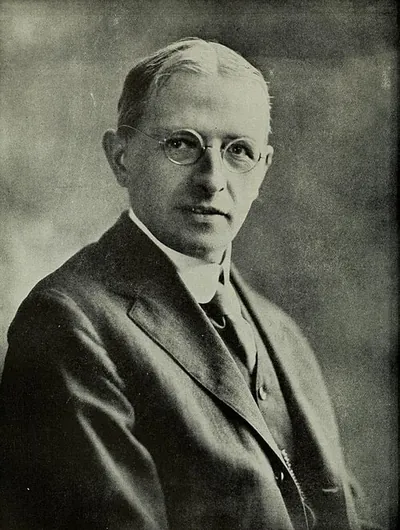 Henry Norris Russell1877–1957 · Astronomy and space
 Karl Schwarzschild1873–1916 · Astronomy and space
 Ejnar Hertzsprung1873–1967 · Astronomy and space
 Edwin Hubble1889–1953 · Astronomy and space
