
Paul Drude
German physicist specialising in optics, known for the Drude model of electrons in metals · 1863–1906
- Born
- July 12, 1863
- Died
- July 5, 1906
- Country
- Duchy of Brunswick
- Section
- Physics
Biography
Paul Drude (1863-1906) was a German physicist who made his name in optics and in the theory of metals. He worked at a time when James Clerk Maxwell's ideas about electromagnetism were spreading through Germany, and his work helped bridge classical and modern physics. His name remains attached to the model that bears it.
He was born on 12 July 1863 in Braunschweig, and was the younger brother of the botanist Carl Georg Oscar Drude. He first studied mathematics at the University of Göttingen, but soon switched to physics. He earned his doctorate in 1887 under Woldemar Voigt, with a thesis on the reflection and diffraction of light in crystals. Diffraction is the way light spreads out when it meets an obstacle or a narrow opening.
His early work involved measuring the optical constants of various solids with a precision that had not been reached before. From there he sought links between a substance's optical and electrical properties and its internal structure. This led to a central idea: metals contain electrons that move freely between the atoms. With this picture he gave a simple account of how metals conduct electricity and how they behave thermally and optically, although quantum mechanics later required important corrections.
In 1894 he became professor extraordinarius at the University of Leipzig. That same year he married Emilie Regelsberger, the daughter of a lawyer from Göttingen, and they had four children. Also in 1894 he introduced the symbol c for the speed of light in a perfect vacuum, a notation that has remained in use.
Toward the end of his time in Leipzig he was asked to write a textbook on optics. The result, Lehrbuch der Optik, published in 1900, brought together optics and Maxwell's electromagnetic theory, subjects that had been taught separately. Drude described this as an epoch-making advance for natural science. The same year he became editor of Annalen der Physik, the most respected physics journal of the day, which gave him considerable influence over German scientific publishing.
From 1900 to 1905 he was full professor at the University of Giessen. In 1905 he took charge of the Physics Institute at the University of Berlin, and in 1906, at the height of his career and aged 43, he was elected a member of the Prussian Academy of Sciences. A few days after his inaugural lecture he took his own life, for reasons that have never been explained. He left his wife and four children.
His work made Drude a leading figure in electrodynamics in Germany. His contributions to the theory of metals are seen as a turning point between classical and modern physics, and his career mirrors the institutional modernisation of German science at the time. In 1992 the Paul Drude Institute for Solid State Electronics was founded in Berlin in his memory, and a lunar crater bears his name.
Main contributions
- 1887Doctoral thesis on the reflection and diffraction of light in crystals, supervised by Woldemar Voigt.
- 1894Introduction of the symbol c for the speed of light in a vacuum.
- 1900Lehrbuch der Optik, a textbook that integrates optics with Maxwell's electromagnetic theory.
- 1900The Drude model, which describes the free electrons in a metal to explain its thermal, electrical and optical properties.
Teachers and students
Studied under:
Taught:
Trivia and anecdotes
An unexplained end
A few days after his inaugural lecture in Berlin, Drude took his own life. The reasons never became clear.
A lunar crater
The Drude crater on the Moon is named after the physicist.
Their contemporaries
While Paul Drude was alive (1863–1906)…
Alive at the same time
Discovered or invented in those years
- 1869Periodic tableAn arrangement of the chemical elements into rows (periods) and columns (groups), ordered by atomic number, that reveals recurring chemical behaviour and lets scientists predict properties.
- 1869Deoxyribonucleic acidA double-stranded molecule that carries the genetic instructions of nearly all living things and many viruses.
- 1876TelephoneA device that carries the human voice over distance by turning sound into electrical signals and back into sound at the other end of the line.
- 1884CarA road vehicle with four wheels and its own engine, mainly built to carry people.
- 1897ElectronA negatively charged subatomic particle found in every atom, and key to electricity and chemical bonding.
- 1903AirplaneA fixed-wing aircraft, heavier than air, powered by engines or rockets, that stays aloft because its wings generate lift.
 Pierre Curie1859–1906 · Physics
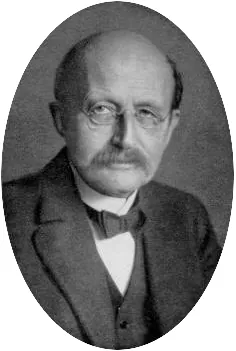 Max Planck1858–1947 · Physics
 Robert Andrews Millikan1868–1953 · Physics
 Charles Thomson Rees Wilson1869–1959 · Physics
 Joseph John Thomson1856–1940 · Physics
 Ernest Rutherford1871–1937 · Physics
