
Robert Andrews Millikan
American experimental physicist, Nobel Prize in Physics in 1923 for measuring the electron's charge and for the photoelectric effect · 1868–1953
- Born
- March 22, 1868
- Died
- December 19, 1953
- Country
- United States
- Section
- Physics
- Awards
- Nobel Prize in Physics
Extended biography
Early years and training
Robert Andrews Millikan was born on March 22, 1868, in Morrison, Illinois, the second son of a Protestant minister. His household was devoted to study and discipline, and those values shaped his early life. He attended high school in Maquoketa, Iowa, and then entered Oberlin College, where he first concentrated on classical languages and mathematics.
His own account of how he came to physics has a memorable twist. At the end of his second year, a Greek professor asked him to teach elementary physics in the college's preparatory department. Millikan replied that he knew no physics at all, and the professor answered that anyone who did well in Greek could teach it. Millikan bought a textbook, spent much of the summer of 1889 trying to master it, and later said that his enthusiasm for the subject carried over to his students. This is his personal recollection, and it is best read as such.
He graduated from Oberlin in 1891 and, after two years of teaching physics, earned a master's degree there in 1893. In 1895 he received his doctorate from Columbia University with a thesis on the polarization of light emitted by hot surfaces. He was the first person to earn a doctorate in physics in that department. The same year he spent a year in Germany, at the universities of Berlin and Göttingen, which gave him exposure to the European scientific world.
Chicago and a love of teaching
In 1896 he returned to the United States as an assistant at the University of Chicago. He became a professor there in 1910 and stayed until 1921. Teaching shaped his career as much as research did. Together with co-authors, he wrote a popular and influential series of physics textbooks that in many respects were ahead of their time.
These books stood out because they presented the subject the way physicists actually thought about it, rather than as a collection of formulas. Many of their problems asked conceptual questions that required reasoning about a phenomenon, rather than simply inserting numbers into an equation. This preference for understanding over mere calculation was a constant in his work.
In his personal life, he married Greta Irvin Blanchard in 1902, and the couple had three sons: Clark Blanchard, Glenn Allen, and Max Franklin. It was in Chicago that he began the experiments that would lead him to measure one of the most basic constants in physics.
Measuring the charge of the electron
By the late nineteenth century it was known that there were charged particles much smaller than atoms, but nobody had measured exactly how much charge they carried. J. J. Thomson had determined the ratio of charge to mass for the electron, meaning how much charge there was per unit of mass. If either of the two quantities could be found separately, the other could be calculated easily. That was the problem Millikan set out to solve.
From 1909 he designed an experiment using tiny droplets of liquid suspended in air between two metal electrodes. An electric field pushed charged droplets upward while gravity pulled them down. By adjusting the field, he could hold a droplet still and, from that balance, calculate its charge. A first attempt with water droplets proved unreliable, because they evaporated too quickly. The breakthrough came in 1910, when he switched to oil droplets, which were far more stable.
The work was carried out with his graduate student Harvey Fletcher, and the two collaborated on measuring the charge and, from it, the mass of the electron and Avogadro's number. According to the known accounts, Millikan was listed as sole author of the paper on the electron's charge, while Fletcher received sole authorship of a related result that he could use as his doctoral thesis. Fletcher did not welcome the arrangement but accepted it, since Millikan was his mentor. The two remained on good terms for decades, and the arrangement only became public after both had died.
The result was the first precise value of the elementary charge, the charge carried by a single electron. His data showed that the charges on the droplets were whole-number multiples of one fixed amount, which demonstrated that electric charge is quantized, arriving in discrete packets rather than as a continuous fluid. The value he published was somewhat lower than the modern one, probably because he used an inaccurate figure for the viscosity of air, a quantity that entered his calculations.
Dispute with Ehrenhaft and selected data
The 1910 results led to a dispute with the Austrian physicist Felix Ehrenhaft, who tried to reproduce the experiment and obtained contradictory results. The argument dragged on for years, until Millikan published his definitive data in 1913, after refining his apparatus. By then the question of the nature of charge had become central to physics.
The charge of the electron was not an isolated issue. At the time it was still debated whether subatomic particles really existed. In 1897 J. J. Thomson had identified negatively charged "corpuscles" in cathode rays, with a charge-to-mass ratio about 1840 times that of a hydrogen ion. George FitzGerald and Walter Kaufmann reported similar findings. Even so, much of what was known about electricity and magnetism could be explained by treating charge as a continuous quantity, and not everyone accepted the idea of indivisible particles.
The later controversy concerns how Millikan selected his data. The historian of science Allan Franklin examined the droplets Millikan left out of his 1913 paper and concluded that nearly all exclusions had sound experimental reasons. He added that including all of them would not have changed the final result much. Others, such as David Goodstein, argue that a sentence describing which data were used was clarified by the text that followed it. Gerald Holton, meanwhile, praised the candour with which Millikan described his method in 1909, including personal judgments on the reliability of each of the 38 droplet observations. Debate about his intentions continues, but there is much less disagreement about the order of magnitude of his result.
The photoelectric effect and the nature of light
In 1905 Albert Einstein proposed that light could behave like a stream of energy packets, not only as a continuous wave. To explain the photoelectric effect, the emission of electrons from a metal struck by light, Einstein wrote an equation linking the energy of the emitted electrons to the frequency of the light. Millikan, who had believed for half a century that light was a wave, was convinced the idea must be mistaken.
For nearly a decade he designed experiments to test it. He had to build what he called a "machine shop in vacuo", because he needed an exceptionally clean metal surface to serve as the photoelectrode. The apparatus measured the energy of electrons ejected when light fell on the plate. To his surprise, the results matched Einstein's equation in every detail. His measurements also gave him an unusually precise value of Planck's constant.
Millikan nonetheless rejected Einstein's interpretation. As late as 1916 he wrote that the equation represented the observed behaviour very accurately but could not, in his judgment, rest on a satisfactory theoretical foundation. In his 1950 autobiography he acknowledged that his work scarcely allowed any interpretation other than the one Einstein had suggested. He had also called the idea of photons a bold hypothesis, if not a foolish one. His resistance had a personal root as well: his thesis supervisor, Michelson, believed for his whole life in an ether that carried light waves, which reinforced the wave picture in the circles where Millikan had been trained.
His position was in a sense paradoxical. His data helped establish Einstein's equation, yet he remained conservative about the new physics. A 1927 version of his textbook still presented the ether as real and handled relativity with caution. Even in his Nobel lecture of 1923 he stated that the concept of localized light quanta, from which Einstein had derived his equation, should still be regarded as far from established.
Caltech, cosmic rays and other duties
In 1917 the astronomer George Ellery Hale persuaded Millikan to spend several months each year at Throop College of Technology, a small institution in Pasadena that Hale wanted to turn into a major research centre. In 1920 the college was renamed the California Institute of Technology, and the following year Millikan left Chicago to direct the Norman Bridge Laboratory of Physics. He held that post until retiring in 1945, and he also chaired the Executive Council, the governing body of the institute at the time. In that role he helped transform the school into one of the leading research institutions in the United States.
At Caltech he devoted most of his research to cosmic rays, a name he coined. He built on the work of Victor Hess, who had detected radiation arriving from outer space. Millikan argued that the radiation was extraterrestrial and that it consisted of high-energy photons. This led him in the 1930s into a debate with Arthur Compton, who held that cosmic rays were charged particles. In time Compton's view prevailed, because the radiation was deflected by Earth's magnetic field, which only happens to charged particles.
Millikan also took on administrative and public roles. From 1921 to 1953 he served on the board of trustees of Science Service, now known as Society for Science & the Public. Earlier in his career he had studied the radioactivity of uranium minerals and electrical discharge through gases, and he later investigated ultraviolet radiation.
Wartime work, public causes and controversies
During the First World War he served as vice chairman of the National Research Council in the United States and helped develop anti-submarine and meteorological devices. That period also produced a controversy. An investigation by Inspector General William T. Wood concluded that Millikan had tried to take another inventor's design for a centrifugal gun in order to profit personally, and recommended ending his army commission. A later inquiry led by Frank McIntyre cleared him.
After the war he contributed to the League of Nations' Committee on Intellectual Cooperation, alongside other prominent researchers. Following the Long Beach earthquake of 1933, he chaired a joint technical committee on earthquake protection, which proposed stricter building codes to reduce loss of life and property in future quakes. In 1938 he also wrote a short passage for the Westinghouse Time Capsules, contrasting representative government with despotism and expressing the hope for a warless future.
The most contested part of his views concerns eugenics. He was one of the initial trustees of the Human Betterment Foundation and praised San Marino, California, for its population composition. In 1936 he advised the president of Duke University, in a racially segregated southern United States, against hiring a female physicist and suggested that young men would be a better choice. His religious convictions were also visible: he described himself as a Christian and supported a form of theistic evolution, a view he developed in lectures at Yale published as Evolution in Science and Religion. He sat on the organising committee of the 1932 Los Angeles Olympics and was an enthusiastic tennis player.
Final years and legacy
Millikan retired from Caltech in 1945 but stayed active in public and scientific life. He died on December 19, 1953, in San Marino, California, at the age of 85. His wife, Greta, had died three months earlier. He was buried in the Court of Honor at Forest Lawn Memorial Park Cemetery in Glendale, California.
His scientific legacy has two main strands. The measurement of the electron's charge became one of the foundations of atomic physics and gave precise form to a fundamental constant. His photoelectric experiments, although he did not share Einstein's interpretation, provided a detailed confirmation of Einstein's equation and helped establish the quantum nature of light. His cosmic ray work opened a field that kept growing long after his time.
His reputation has also been reassessed. Several institutions that bore his name have changed it after examining his views on eugenics. In 2021 the Caltech board of trustees authorised removing his name from campus buildings, including the library, which became Caltech Hall, along with the names of five other figures linked to the same foundation. The mathematician Thomas C. Hales opposed the decision, arguing that Millikan's beliefs fell within the accepted scientific norms of his day. Other changes followed: the American Association of Physics Teachers award that carried his name was renamed for Lillian C. McDermott. A lunar crater still bears his name, and the United States Postal Service honoured him with a stamp in 1982.
Quotes
“In fact, no more beautiful simplification has ever occurred in the history of science than the whole series of discoveries culminating around 1914 which finally led to the almost universal acceptance of the theory that the material world contains only two fundamental entities, namely positive electrons and negative electrons, exactly with the same charge but with wide differences in mass. The positive electron, now usually called the proton, is 1850 times heavier than the negative electron, now commonly called simply the electron.”
“The fact that Science walks forward on two feet, namely theory and experiment, is nowhere better illustrated than in the two fields for slight contributions to which you have done me the great honour of awarding the the Nobel Prize in Physics for the year 1923. Sometimes it is one foot that is put forward first, sometimes the other, but continuous progress is only made by the use of both—by theorizing and then testing, or by finding new relations in the process of experimenting and then bringing the theoretical foot up and pushing it on beyond, and so on in unending alterations.”
“Willard Gibbs did for statistical mechanics and for thermodynamics what Laplace did for celestial mechanics and Maxwell did for electrodynamics, namely, made his field a well-nigh finished theoretical structure”
Main contributions
- 1913Determination of the elementary charge of the electron using the oil drop experiment, with a value close to the modern one.
- 1914Experimental verification of Einstein's photoelectric equation and a precise measurement of Planck's constant.
- 1921Direction of the Norman Bridge Laboratory of Physics at Caltech, which helped turn the institute into a leading research centre.
- Demonstration that the radiation detected by Victor Hess came from outer space, which he named cosmic rays; the exact date is not specified.
Teachers and students
Studied under:
Taught:
Trivia and anecdotes
A Greek lesson
His Greek professor asked him to teach physics even though he knew none of it. By his own account, that first course was one of his best teaching efforts.
A message for the future
In 1938 he wrote a short passage for the Westinghouse time capsules, defending representative government and scientific progress against despotism.
A convert to the apparatus
The engineer Charles Steinmetz of General Electric believed charge was a continuous variable, but changed his mind after working with Millikan's apparatus.
Their contemporaries
While Robert Andrews Millikan was alive (1868–1953)…
Alive at the same time
Discovered or invented in those years
- 1869Periodic tableAn arrangement of the chemical elements into rows (periods) and columns (groups), ordered by atomic number, that reveals recurring chemical behaviour and lets scientists predict properties.
- 1876TelephoneA device that carries the human voice over distance by turning sound into electrical signals and back into sound at the other end of the line.
- 1884CarA road vehicle with four wheels and its own engine, mainly built to carry people.
- 1903AirplaneA fixed-wing aircraft, heavier than air, powered by engines or rockets, that stays aloft because its wings generate lift.
- 1925TelevisionA system that sends moving pictures and sound over distance and shows them on a receiver, the television set.
- 1945ComputerA programmable machine that takes in data, processes it by following stored instructions, and produces results, able to switch tasks simply by running different software.
 Charles Thomson Rees Wilson1869–1959 · Physics
 Ernest Rutherford1871–1937 · Physics
 Pierre Curie1859–1906 · Physics
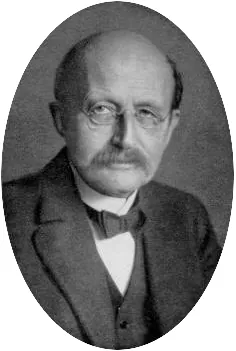 Max Planck1858–1947 · Physics
 Lise Meitner1878–1968 · Physics
 Albert Einstein1879–1955 · Physics
