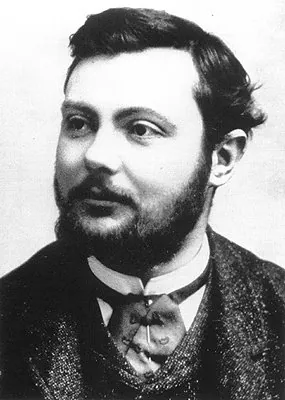
Paul Héroult
French engineer and inventor who developed the electrolytic process for aluminium and the electric arc furnace for steel · 1863–1914
- Born
- April 10, 1863
- Died
- May 9, 1914
- Country
- France
- Section
- Chemistry
Biography
Paul Héroult (1863-1914) was a French engineer and inventor whose work changed two basic industries of his time: the production of aluminium and the making of steel. He lived in France during the Third Republic, when electricity was beginning to move out of laboratories and into factories. His importance lies in the fact that his methods, still in use today, made it practical to use electric current to produce metals on a large scale.
He was born on 10 April 1863 and spent much of his life in Thury-Harcourt, in Normandy. According to the account most often repeated, at the age of fifteen he read Henri Sainte-Claire Deville's treatise on aluminium, a metal that then cost as much as silver and was mostly reserved for luxury items and jewellery. The sources available do not describe his formal education or name his teachers, so his training cannot be traced in detail.
His goal was to make aluminium cheaper. To do this he turned to electrolysis, a method that passes an electric current through a liquid to separate its components. In 1886 he achieved a process that worked on a practical scale. That same year, in the United States, Charles Martin Hall discovered the same method independently, which is why the process is known as the Hall-Héroult process. Such coincidences are not unusual in the history of science, where several researchers arrive at the same solution at almost the same time by separate routes.
His second major contribution was the electric arc furnace for making steel. This furnace produces an intense electric spark between carbon electrodes, and its heat melts the metal charge. The idea had earlier roots: Humphry Davy had discovered the carbon arc in 1800, and Carl Wilhelm Siemens patented and tested furnaces of this kind in 1878. Commercial use, however, needed more available electricity and better electrodes. In 1900 Héroult produced the first electric arc furnace for steel that succeeded commercially, and it gradually replaced the large traditional furnaces.
In 1905 he was invited to the United States as a technical adviser to several companies, including the United States Steel Corporation and the Halcomb Steel Company. Halcomb installed the first Héroult furnace in the country. His work was not limited to metallurgy: he is also credited with a self-supporting conduit, still used to carry water down from mountain heights to hydroelectric plants, crossing rivers without the need for costly bridges. The sources do not give a date for this invention.
Héroult died on 9 May 1914, at the age of 51. His legacy is visible in how many metals are made today. Aluminium, once close to a luxury material, is now produced on a large scale thanks to an electrolytic process that carries his name alongside Hall's, and the electric arc furnace remains a common tool in steelmaking. His work helped spread the use of electricity in industry during the twentieth century.
Main contributions
- 1886Electrolytic process for obtaining aluminium, which separates the metal using an electric current and is known today as the Hall-Héroult process.
- 1900First electric arc furnace to succeed commercially for making steel, which generates heat through a spark between carbon electrodes.
- Self-supporting conduit for carrying water from mountain areas to hydroelectric plants without building costly bridges.
Trivia and anecdotes
A process with two names
The same method was discovered in 1886 by Héroult in France and by Charles Martin Hall in the United States, which is why it carries both surnames.
A luxury metal
When Héroult was a teenager, aluminium cost as much as silver, and making it cheaper became the driving goal of his research.
A furnace in the United States
The Halcomb Steel Company installed the first Héroult furnace in the country after its inventor's technical visit in 1905.
Their contemporaries
While Paul Héroult was alive (1863–1914)…
Alive at the same time
Discovered or invented in those years
- 1869Periodic tableAn arrangement of the chemical elements into rows (periods) and columns (groups), ordered by atomic number, that reveals recurring chemical behaviour and lets scientists predict properties.
- 1869Deoxyribonucleic acidA double-stranded molecule that carries the genetic instructions of nearly all living things and many viruses.
- 1876TelephoneA device that carries the human voice over distance by turning sound into electrical signals and back into sound at the other end of the line.
- 1884CarA road vehicle with four wheels and its own engine, mainly built to carry people.
- 1897ElectronA negatively charged subatomic particle found in every atom, and key to electricity and chemical bonding.
- 1903AirplaneA fixed-wing aircraft, heavier than air, powered by engines or rockets, that stays aloft because its wings generate lift.
 Walther Hermann Nernst1864–1941 · Chemistry
 Alfred Werner1866–1919 · Chemistry
 Marie Curie1867–1934 · Chemistry
 Svante August Arrhenius1859–1927 · Chemistry
 Fritz Haber1868–1934 · Chemistry
 Wilhelm Ostwald1853–1932 · Chemistry
