
Robert Ridgway
American ornithologist and naturalist, first full-time curator of birds at the Smithsonian · 1850–1929
- Born
- July 2, 1850
- Died
- March 25, 1929
- Country
- United States
- Section
- Biology
Biography
Robert Ridgway (Mount Carmel, Illinois, 1850 – Washington, 1929) was an American naturalist and ornithologist who spent most of his working life classifying the birds of North America. He lived in the second half of the nineteenth century, when westward expansion and growing museum collections made it possible to describe a fauna that had been poorly known. He matters because he brought order to the names of North American birds and gave ornithologists a shared vocabulary for describing their colours.
He was born on 2 July 1850 in Mount Carmel, Illinois, the eldest of ten children. He attended the common schools of his town and showed an early fondness for natural history, which his parents and relatives encouraged through shooting and drawing from life. At the age of thirteen, in 1864, he wrote to the Commissioner of Patents asking for help identifying a bird he had seen, enclosing a full-size colour drawing of what turned out to be a pair of purple finches. The letter reached Spencer Fullerton Baird of the Smithsonian Institution, who praised the boy's artistry but urged him to use scientific names. Baird became his mentor, and their correspondence led to Ridgway's appointment in spring 1867 as naturalist on Clarence King's Survey of the 40th Parallel. Having studied only to secondary level, he first trained in Washington, where he learned to prepare study skins, before joining the expedition.
The survey travelled through Nevada, Utah Territory and Idaho Territory, starting from Sacramento. Over nearly two years Ridgway collected 1,522 bird-related specimens, including 753 nests and eggs and 769 skins, and recorded 262 species. He had drafted most of his part of King's report by 1872, but the ornithology section was not published until 1877. Back in Washington he worked informally at the Smithsonian until 1880, when he became curator of birds, a post he held until he died. From there he set about untangling the relationships among North American species, using a collection of roughly fifty thousand skins. With Baird and Thomas M. Brewer he co-wrote the History of North American Birds, and in 1883 he helped found the American Ornithologists' Union, serving as an officer and as editor of its journal.
His best-known contribution is his system of colour names. In 1886 he published A Nomenclature of Colors for Naturalists, and in 1912 Color Standards and Color Nomenclature, a larger work financed with money from his friend José Zeledón of Costa Rica. Ornithologists still cite both books. He also took part in standardising bird names: with the AOU's committee he produced the 1886 Code of Nomenclature and Check-List of North American Birds, which set the order of presentation and several naming rules later adopted in the 1905 international code. Ridgway strongly backed trinomial names, the three-part scientific names that identify subspecies, though his views grew more moderate later. His crowning work was The Birds of North and Middle America, eight volumes published between 1901 and 1919.
Friends and colleagues described him as painfully shy, and he avoided publicity, yet his eloquence made him the Smithsonian's usual spokesman. In 1875 he married Julia Evelyn Parker, and their son Audubon Whelock Ridgway died of pneumonia in 1901 while working at the Field Museum in Chicago. In 1899 he joined E. H. Harriman's expedition to the Alaskan coast, where he worked alongside John Muir and other naturalists. His legacy lives on in the colour vocabulary of birds and in the naming conventions that still shape how species are described.
Main contributions
- 1875History of North American Birds: a work co-written with Baird and Brewer on North American birds, published between 1875 and 1884.
- 1877Ornithology section of Clarence King's report on the 40th Parallel Survey, based on his fieldwork from 1867 to 1869.
- 1886A Nomenclature of Colors for Naturalists: a system of colour names for describing birds, one of the first and most influential.
- 1886Code of Nomenclature and Check-List of North American Birds: naming rules and species checklist drawn up by the AOU committee.
- 1901The Birds of North and Middle America: an eight-volume work, published up to 1919, covering the classification of the continent's birds.
- 1912Color Standards and Color Nomenclature: a larger work on colour naming, with reference samples.
Trivia and anecdotes
A drawing at thirteen
At thirteen, Ridgway sent an authority a full-size drawing of a bird he had seen, and that drawing brought him to Baird's attention.
An honorary degree
Although he had no university education, Indiana University gave him an honorary master's degree in science in 1884, in thanks for supplying bird specimens after its museum burned down.
Their contemporaries
While Robert Ridgway was alive (1850–1929)…
Alive at the same time
Discovered or invented in those years
- 1859EvolutionThe process by which the heritable traits of living populations change over generations, explaining the diversity of life from common ancestors.
- 1869Periodic tableAn arrangement of the chemical elements into rows (periods) and columns (groups), ordered by atomic number, that reveals recurring chemical behaviour and lets scientists predict properties.
- 1876TelephoneA device that carries the human voice over distance by turning sound into electrical signals and back into sound at the other end of the line.
- 1884CarA road vehicle with four wheels and its own engine, mainly built to carry people.
- 1903AirplaneA fixed-wing aircraft, heavier than air, powered by engines or rockets, that stays aloft because its wings generate lift.
- 1925TelevisionA system that sends moving pictures and sound over distance and shows them on a receiver, the television set.
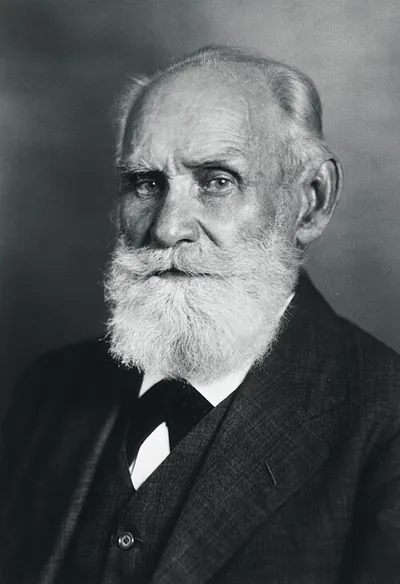 Ivan Pavlov1849–1936 · Biology
 Santiago Ramón y Cajal1852–1934 · Biology
 Élie Metchnikoff1845–1916 · Biology
 Robert Koch1843–1910 · Biology
 Camillo Golgi1843–1926 · Biology
 Thomas Hunt Morgan1866–1945 · Biology
