
Thomas Hunt Morgan
American biologist and geneticist, 1933 Nobel laureate for linking genes to chromosomes · 1866–1945
- Born
- September 25, 1866
- Died
- December 4, 1945
- Country
- United States
- Section
- Biology
- Awards
- Nobel Prize in Physiology or Medicine
Biography
Thomas Hunt Morgan (Lexington, Kentucky, 1866 – Pasadena, California, 1945) was an American biologist who changed how heredity is understood. He worked across embryology, evolution and genetics, and his name is closely tied to the fruit fly, a small insect that became the most widely used laboratory animal for studying genes. In 1933 he received the Nobel Prize in Physiology or Medicine for showing that genes are carried on chromosomes. His importance lies in turning genetics into an experimental science.
Morgan was born into a Southern family of plantation and slave owners on his father's side. He was a nephew of the Confederate general John Hunt Morgan and, through his mother, a great-grandson of Francis Scott Key, who wrote the lyrics of the American national anthem. After the Civil War the family fell on hard times, and his father struggled to find steady work. Morgan studied at the State College of Kentucky, today the University of Kentucky, where he developed a love of natural history and spent summers working with the U.S. Geological Survey. He graduated first in his class in 1886.
He then began graduate work in zoology at the newly founded Johns Hopkins University, under the morphologist William Keith Brooks. His thesis examined the embryonic development of sea spiders, in order to determine how they were related to other arthropods. He concluded that, in their embryology, they resembled spiders more than crustaceans. He received his doctorate in 1890 and a research fellowship that took him to Jamaica, the Bahamas and Europe.
That same year he took a post at Bryn Mawr College. There he moved away from purely descriptive anatomy toward experimental embryology, which sought physical and chemical explanations for how organisms develop. In 1894 he worked at the zoological station in Naples with the German biologist Hans Driesch. Morgan joined a debate about how an embryo forms. Some researchers believed hereditary material was divided among cells in a fixed way; he argued that environmental and cellular interactions played a real part. His studies of regeneration, published in a 1901 book, belong to the same line of work.
In 1904 he moved to Columbia University, where he stayed for twenty-four years. There his attention turned increasingly to heredity and evolution. Morgan accepted that species had evolved, but doubted that natural selection was the main driver, partly because the data on continuous variation did not show clear heritable change. He also rejected the inheritance of acquired characteristics. At first he viewed Gregor Mendel's work, rediscovered in 1900, with suspicion. The idea of mutation proposed by Hugo de Vries led him to look for experimental evidence.
Around 1908 he began studying Drosophila melanogaster, following the lead of C. W. Woodworth and William E. Castle. For a long time his breeding experiments produced no useful heritable mutations, but around 1910 a white-eyed male appeared among red-eyed flies. When he crossed it with a red-eyed female, all the offspring had red eyes. When he bred those offspring together, white eyes reappeared, but only in males. To explain this, he proposed that the responsible gene lay on the X chromosome, which gave rise to the idea of sex-linked inheritance. He named the gene white, following the custom of naming genes after the effect of their mutant form.
With his team he counted and studied thousands of flies and found that some traits tended to be inherited together. This led to the idea of genetic linkage and to the proposal of crossing over, an exchange of segments between paired chromosomes during the formation of reproductive cells, which Frans Alfons Janssens had described earlier. The frequency of this exchange allowed scientists to estimate how far apart genes sat on a chromosome. In 1913 his student Alfred Sturtevant produced the first genetic map. In 1915 Morgan, Sturtevant, Calvin Bridges and Hermann Joseph Muller published The Mechanism of Mendelian Heredity, which became a foundational textbook of the new genetics.
In 1928 he moved to the California Institute of Technology to head its biology division. He served as president of the National Academy of Sciences from 1927 to 1931. In 1933 he received the Nobel Prize, but he gave the money to Bridges, Sturtevant and his own children, acknowledging that the work had been a group effort. He retired in 1942 and died in 1945 after a severe heart attack that was followed by a ruptured artery. He had suffered for years from a chronic duodenal ulcer.
His legacy is broad. Several of his students, including George Wells Beadle, Edward B. Lewis and Hermann Joseph Muller, went on to win Nobel Prizes. The Genetics Society of America awards a medal in his name each year, and the unit used to measure recombination frequency in genetic mapping is called the centimorgan in his honour. Although he began his career sceptical of Darwin, the genetics he helped build gave natural selection a hereditary foundation, which made his work central to the modern evolutionary synthesis.
Main contributions
- 1910Identification of the white gene: a white-eye mutation inherited in a sex-linked way, showing that some genes sit on the X chromosome.
- 1911Paper in Science summarising that some traits are sex-linked and that other genes probably sit on specific chromosomes.
- 1913First genetic map, drawn up by Alfred Sturtevant from the recombination frequency between linked genes.
- 1915The Mechanism of Mendelian Heredity, the book that laid out the chromosomal theory of inheritance.
- 1916A Critique of the Theory of Evolution, in which he examined natural selection from the viewpoint of the new genetics and argued that beneficial mutations drive evolution.
Teachers and students
Studied under:
Taught:
Trivia and anecdotes
A room full of flies
His Columbia group was known as the Fly Room, where thousands of specimens were bred. Much of his key work was done there.
A shared prize
He gave his Nobel money to Bridges, Sturtevant and his own children, acknowledging that the work had been a team effort.
A unit named after him
According to some accounts, the British geneticist J. B. S. Haldane proposed that the unit of genetic linkage be called the morgan. Today the centimorgan is used.
Their contemporaries
While Thomas Hunt Morgan was alive (1866–1945)…
Alive at the same time
Discovered or invented in those years
- 1869Periodic tableAn arrangement of the chemical elements into rows (periods) and columns (groups), ordered by atomic number, that reveals recurring chemical behaviour and lets scientists predict properties.
- 1876TelephoneA device that carries the human voice over distance by turning sound into electrical signals and back into sound at the other end of the line.
- 1884CarA road vehicle with four wheels and its own engine, mainly built to carry people.
- 1903AirplaneA fixed-wing aircraft, heavier than air, powered by engines or rockets, that stays aloft because its wings generate lift.
- 1925TelevisionA system that sends moving pictures and sound over distance and shows them on a receiver, the television set.
- 1945ComputerA programmable machine that takes in data, processes it by following stored instructions, and produces results, able to switch tasks simply by running different software.
 Hans Spemann1869–1941 · Biology
 Santiago Ramón y Cajal1852–1934 · Biology
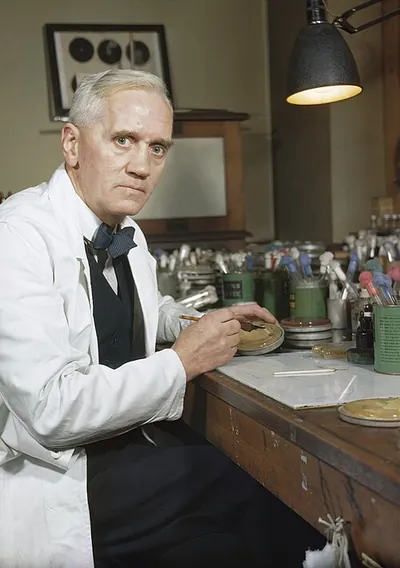 Alexander Fleming1881–1955 · Biology
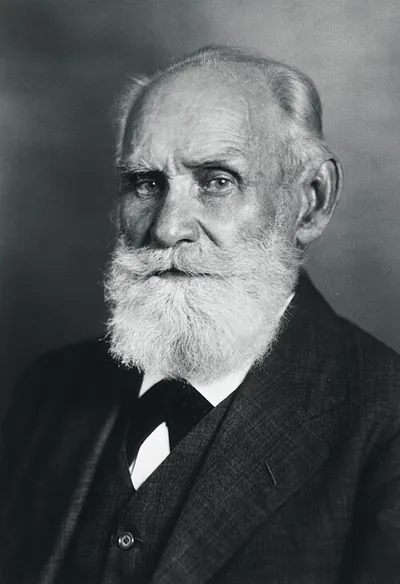 Ivan Pavlov1849–1936 · Biology
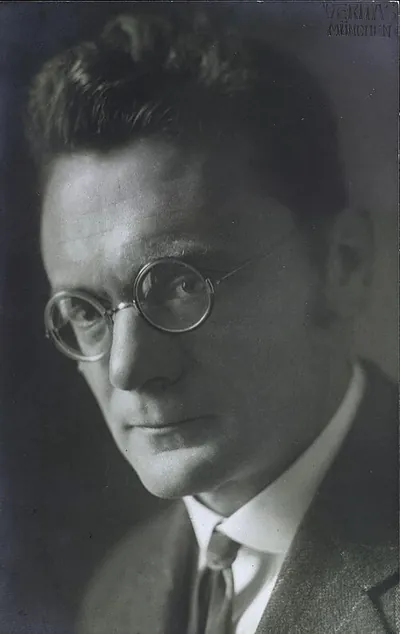 Karl von Frisch1886–1982 · Biology
 Élie Metchnikoff1845–1916 · Biology
