
Tsuneko Okazaki
Japanese biologist and pioneer of molecular biology, co-discoverer of Okazaki fragments · 1933–2026
- Born
- June 7, 1933
- Died
- September 22, 2026
- Country
- Japan
- Section
- Biology
Biography
Tsuneko Okazaki (Nagoya, 1933 - 2026) was a Japanese biologist who, together with her husband Reiji Okazaki, discovered the fragments that bear their name, short pieces of DNA that help explain how genetic material is copied before a cell divides. Her work took place in the second half of the twentieth century, when molecular biology was beginning to reveal how heredity works, and she is counted among the pioneers of that field in Japan.
She was born on 7 June 1933 in Aichi Prefecture, whose capital is Nagoya. She was in sixth grade when the Second World War ended in 1945. Japan's new constitution gave women the right to study in the same faculties as men, and Okazaki was part of the first generation to take up that right. She studied biology at the School of Science of Nagoya University and earned her doctorate there in 1956. That same year she met Reiji Okazaki, whom she married soon afterwards, and the two soon combined their research and their laboratories.
Their early work focused on DNA synthesis, the process by which a cell makes new copies of its genetic material, and on the particular nucleotides, the chemical building blocks of DNA, found in frog eggs and sea urchins. This line of study led them to identify thymidine-diphosphate rhamnose, a nucleotide linked to a sugar, and that discovery opened the way for them to work in the United States. They spent time at the University of Washington, in the laboratory of J. L. Strominger, and at Stanford University, in the laboratory of Arthur Kornberg, where far more resources were available to continue their experiments.
After years of research split between the United States and Japan, they published their findings on Okazaki fragments in 1968 in the Proceedings of the National Academy of Sciences of the United States. To understand the result, it helps to know that the two strands of the DNA double helix are copied at the same time, but one of them can only be copied in short stretches that are joined afterwards. Those stretches are the Okazaki fragments, and their existence helped explain how a complete copy is made even though the copying machinery moves in only one direction.
Family life was demanding. Their first child was born in 1963, after the couple's return from the United States, and their second in 1973. Japan offered few nursery places at the time, and Okazaki, who worked full time, struggled to find help with her children. She joined a citizens' campaign calling for more support for child care.
Reiji Okazaki died in 1975 of leukaemia, which is attributed to exposure to the atomic bomb dropped on Hiroshima. Tsuneko carried on the work they had begun together. Her next goal was to establish the structure of the RNA primer associated with the fragments, the short piece of RNA that starts each one.
Her academic career moved forward in parallel. She was an associate professor of molecular biology at the School of Science of Nagoya University from 1967 to 1983, and then a full professor until 1997. In 1997 she moved to the Institute of Comprehensive Medical Science at Fujita Health University, where she was a professor for five years and then a visiting professor until 2008. From 2004 to 2007 she directed the Stockholm office of the Japan Society for the Promotion of Science, and from 2008 to 2015 she was chief executive and director of Chromo Research Inc.
In her later decades of research she took part in studies on gene regulation, that is, on which genes are switched on in each tissue and when. These included hGCMa, a regulator specific to the placenta, the human centromere protein B, which influences the positioning of nucleosomes, the structures around which DNA is wound, the HLA-G gene and a silencer called LINE1 that may limit its expression, and mice with features of Down syndrome, used to understand the link between genotype and phenotype.
She received the L'Oréal-UNESCO Award for Women in Science in 2000, the same year she was awarded the Medal with Purple Ribbon. In 2008 she received the Order of the Sacred Treasure, Gold Rays with Neck Ribbon, and in 2015 she was named a Person of Cultural Merit. In 2021 she received the Order of Culture. That same year, 2015, Nagoya University created the Tsuneko and Reiji Okazaki Award in honour of both of them.
She died on 22 September 2026, at the age of 93. Her legacy lies in the concept of Okazaki fragments, which remains part of the explanation of how DNA is replicated, and in her role as a pioneer of genetic research and of women in science in Japan.
Main contributions
- 1968Okazaki fragments: short pieces of DNA synthesised on one strand during copying of genetic material, later joined together.
- Thymidine-diphosphate rhamnose: a sugar-linked nucleotide identified in their early studies on frog eggs and sea urchins.
- Structure of the RNA primer associated with Okazaki fragments, the RNA piece that starts each fragment.
- hGCMa: a transcription regulator specific to the placenta, possibly involved in expressing several genes in that tissue.
- Studies on HLA-G and the LINE1 silencer, which may explain its limited expression.
Trivia and anecdotes
A pioneering generation
Okazaki belonged to the first generation of Japanese women who could study in the same faculties as men after the war.
Science and motherhood
While working full time in research, she struggled to find childcare and joined a citizens' campaign for more nursery places.
An award in their names
In 2015 Nagoya University created an award in honour of Tsuneko and Reiji Okazaki.
Related discoveries and inventions
- 1966Okazaki fragmentsShort DNA segments made discontinuously on one of the two strands during DNA copying, which are later joined into one continuous strand.
Their contemporaries
While Tsuneko Okazaki was alive (1933–2026)…
Alive at the same time
Discovered or invented in those years
- 1945ComputerA programmable machine that takes in data, processes it by following stored instructions, and produces results, able to switch tasks simply by running different software.
- 1957Artificial satelliteAn artificial satellite is a human-made object placed in orbit around a celestial body, usually Earth, to collect information, relay signals, or carry out a specific task.
- 1969InternetA global network of interconnected computer networks that communicate using the TCP/IP protocol suite.
- 1971EmailA network service that lets users send and receive digital messages through addressed mailboxes, much like postal mail but electronic.
- 1973Mobile phoneA handheld wireless phone that lets people make and receive calls while moving across a cellular network area.
- 1989World Wide WebA system of linked documents and resources, connected by hyperlinks and accessed over the Internet with web browsers.
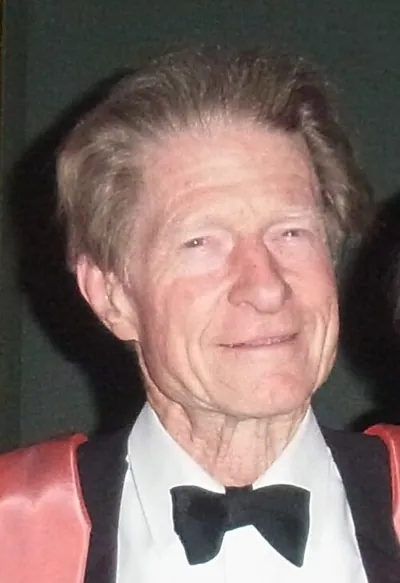 John Gurdon1933–2025 · Biology
 Edward O. Wilson1929–2021 · Biology
 James Watson1928–2025 · Biology
 Carl Woese1928–2012 · Biology
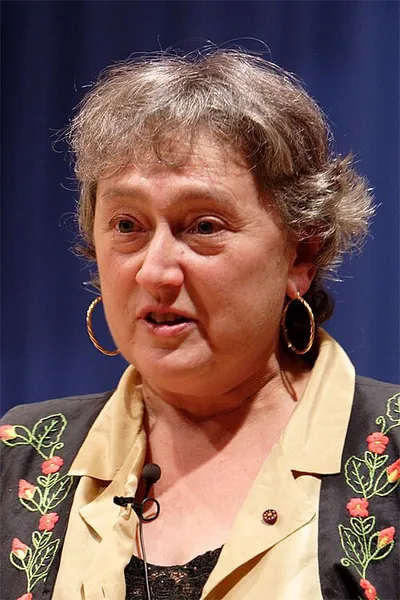 Lynn Margulis1938–2011 · Biology
 Ada Yonath1939–2026 · Biology
