
Albert Hull
American physicist and electrical engineer, inventor of the split-anode magnetron and a pioneer in vacuum tubes and the crystal structure of metals · 1880–1966
- Born
- April 19, 1880
- Died
- January 22, 1966
- Country
- United States
- Section
- Technology and communications
Biography
Albert Wallace Hull was an American physicist and electrical engineer whose career ran from the late nineteenth century to the mid-twentieth. He mattered because he helped improve vacuum tubes, the core components of electronics in his day, and because he invented the magnetron, a device that was of little use in its original form but laid groundwork for the radar systems that followed.
Hull was born on 19 April 1880 in Southington, Connecticut. He studied Greek at Yale University and paid for his studies by tutoring. After graduating he taught languages for a year at The Albany Academy. He then returned to Yale to take a doctorate in physics, a subject he had barely touched, having taken only one physics course and one in chemistry as an undergraduate. He later worked on photoelectricity, the release of electrons from a material struck by light, while teaching physics for five years at the Worcester Polytechnic Institute.
In 1914 he joined the General Electric Research Laboratory in Schenectady, New York, where he stayed until retiring in 1949. In 1916 he began testing whether a magnetic field could control the electron flow inside a thermionic valve, a tube whose electrons are released by heating, instead of using an electric grid. He obtained promising results by applying the field parallel to the tube's axis. The work was part of a company effort to build amplifiers and oscillators that could sidestep the triode patents held by Lee de Forest and Edwin Armstrong. Hull was promoted to assistant director of the laboratory in 1928.
Hull was also drawn to the internal structure of metals, which he studied with X-ray crystallography, a method that infers how atoms are arranged from the way they scatter X-rays. His interest followed a talk by William Bragg at General Electric in 1915. In 1917 he devised a way to determine crystal structures from powdered samples. Peter Debye and Paul Scherrer had used the same approach a year earlier, but Hull worked it out independently, so many sources credit all three. Around 1921 his research led to the magnetron, with a central cathode, a surrounding cylindrical anode and a magnetic field from an external coil. It worked as an amplifier in radio receivers but could not produce high power. John Randall and Harry Boot, during the Second World War, improved the concept into the cavity magnetron, which generated high power at microwave frequencies and proved vital for radar.
During the 1920s Hull also contributed to gas-filled tubes. He found that to stop the cathodes from disintegrating quickly, the voltage had to be kept below a critical value, which limited the speed of the ions in the gas. This led to thyratrons and phanotrons and helped open the field of industrial electronics. Hull wrote or co-wrote 72 technical publications and held 94 patents. He served as president of the American Physical Society in 1942. After retiring he continued as a consultant and sat on an advisory committee of the Army Ballistic Research Laboratory. He died in Schenectady on 22 January 1966, aged 85.
His legacy lies mainly in vacuum tubes and industrial electronics, and in the path that led to the modern magnetron.
Main contributions
- 1914Dynatron: a three-electrode vacuum tube that, through secondary electron emission, behaves as a negative resistance and can generate oscillations or amplify signals.
- 1917Powder diffraction method for determining the internal structure of crystals.
- 1920Discovery of how to protect thermionic cathodes in gas-filled tubes, the basis of thyratrons and phanotrons.
- 1921Split-anode magnetron: the first magnetron, with a central cathode and cylindrical anode, used as a low-frequency amplifier or oscillator.
Trivia and anecdotes
An unusual path
Hull earned a physics doctorate although he had taken very few science courses, having majored in Greek.
A device with a different future
Hull expected his magnetron to be more useful for power conversion than for communications, but it was seldom used.
Their contemporaries
While Albert Hull was alive (1880–1966)…
Alive at the same time
Discovered or invented in those years
- 1884CarA road vehicle with four wheels and its own engine, mainly built to carry people.
- 1903AirplaneA fixed-wing aircraft, heavier than air, powered by engines or rockets, that stays aloft because its wings generate lift.
- 1925TelevisionA system that sends moving pictures and sound over distance and shows them on a receiver, the television set.
- 1925Quantum mechanicsPhysical theory describing how matter and light behave at atomic and subatomic scales, where energy is exchanged in minimal packets and results are expressed as probabilities.
- 1931Big BangA cosmological model describing how the universe expanded from an early state of extreme density and temperature, about 13.8 billion years ago.
- 1945ComputerA programmable machine that takes in data, processes it by following stored instructions, and produces results, able to switch tasks simply by running different software.
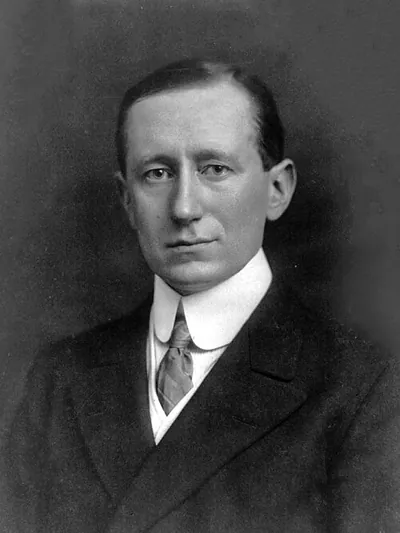 Guglielmo Marconi1874–1937 · Technology and communications
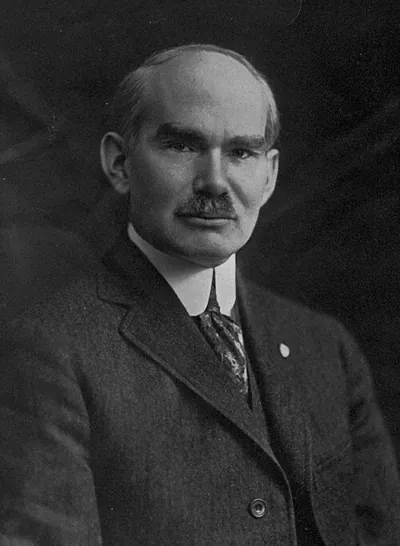 Lee de Forest1873–1961 · Technology and communications
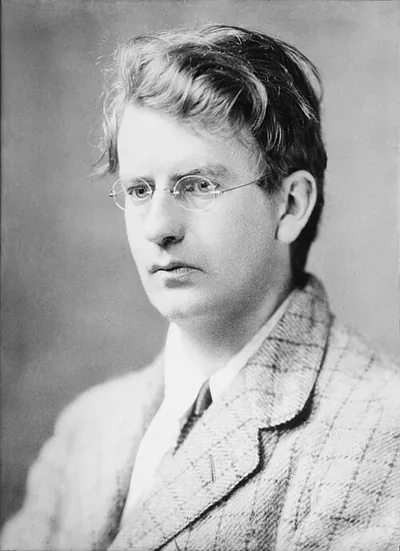 John Logie Baird1888–1946 · Technology and communications
 Vladimir K. Zworykin1888–1982 · Technology and communications
 Edwin Howard Armstrong1890–1954 · Technology and communications
