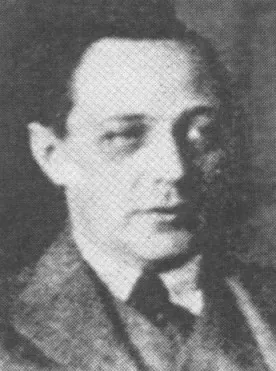
Alfréd Haar
Hungarian mathematician, namesake of the Haar measure, Haar wavelet and Haar transform · 1885–1933
- Born
- October 11, 1885
- Died
- March 16, 1933
- Country
- Hungary
- Section
- Mathematics
Biography
Alfréd Haar (Budapest, 1885 - Szeged, 1933) was a Hungarian mathematician whose work in analysis left names still in use today: the Haar measure, the Haar wavelet and the Haar transform. He worked in the first half of the twentieth century, in a Central European region reshaped by the collapse of Austria-Hungary, and his work matters because it linked abstract theory with tools later used to analyse signals and in group theory.
Haar was born in Budapest on 11 October 1885 into a Hungarian family of Jewish origin. His parents were Ignác Haar and Emma Fuchs. He graduated in 1903 from the Fasori Evangelical Gymnasium, where he had been a pupil of László Rátz, and during his school years he contributed to Középiskolai Matematikai Lapok, a mathematics journal for secondary students, and won the national Eötvös Loránd mathematics competition. He began at the Technical University of Budapest in chemical engineering, but that same year switched to the university in Budapest and, after a year, moved to Göttingen in Germany to study mathematics and science.
In Budapest he had been taught by distinguished figures such as Loránd Eötvös and József Kürschák. In Göttingen his teachers included Constantin Carathéodory, Felix Klein, Ernst Zermelo and, above all, David Hilbert, who supervised his doctorate. Hilbert was one of the leading mathematicians of his era, and his influence shows in Haar's later interest in functional analysis and differential equations.
His thesis, completed in June 1909 and running to about forty-nine pages, studied systems of functions tied to Sturm-Liouville problems, which are differential equations with conditions at the ends of an interval, and to spherical functions. In it he introduced the orthogonal systems that now bear his name. An orthogonal function system is, put simply, a set of functions that are mutually independent, so they can serve as building blocks for others, much as perpendicular axes locate a point on a plane. That same year he qualified as a private lecturer at the university.
In 1912 Franz Joseph University in Kolozsvár, in Transylvania within Austria-Hungary, invited him, together with Gyula Farkas and Frigyes Riesz, to join its faculty. He became professor of a chair called 'Quatitics' and taught there until 1919. Some of his lecture notes from those years later became established textbooks.
After the Treaty of Trianon handed Transylvania to Romania, the university had to relocate to Szeged, the nearest city inside the new Hungarian borders. There Haar and Riesz built a mathematics centre and founded Acta Scientiarum Mathematicarum, the first Hungarian mathematical journal to gain international recognition. One of his doctoral students in Szeged was Béla Szőkefalvi-Nagy. His research covered mathematical analysis and topological groups, including orthogonal function systems, singular integrals, analytic functions, differential equations, set theory, function approximation and the calculus of variations.
Haar died of stomach cancer in Szeged on 16 March 1933. His legacy lives mainly in the concepts named after him: the Haar measure, which allows consistent measurement on certain kinds of groups, the Haar wavelet, the simplest wavelet and the basis of later methods for analysing signals and images, and the Haar transform.
Main contributions
- 1909Haar orthogonal systems: mutually independent functions, set out in his doctoral thesis, used as building blocks to construct other functions.
- 1910First part of his theory of orthogonal function systems, published in Mathematische Annalen from his thesis work.
- 1918Paper on Minkowski geometry and the approximation of continuous functions, published in Mathematische Annalen.
- 1920Co-founding, with Frigyes Riesz, of the journal Acta Scientiarum Mathematicarum in Szeged.
- 1933Haar measure, which allows consistent measurement on certain topological groups; it has carried his name since then.
Teachers and students
Studied under:
Taught:
Trivia and anecdotes
School prize
While still at school he won the national Eötvös Loránd mathematics competition, an early sign of his vocation.
Start in chemical engineering
He first enrolled in chemical engineering at the Technical University of Budapest, but switched to mathematics the same year.
Their contemporaries
While Alfréd Haar was alive (1885–1933)…
Alive at the same time
Discovered or invented in those years
- 1885BicycleA two-wheeled vehicle, with the wheels in line, that a person drives with pedals using leg power, and that stays upright through its own motion.
- 1897ElectronA negatively charged subatomic particle found in every atom, and key to electricity and chemical bonding.
- 1903AirplaneA fixed-wing aircraft, heavier than air, powered by engines or rockets, that stays aloft because its wings generate lift.
- 1925TelevisionA system that sends moving pictures and sound over distance and shows them on a receiver, the television set.
- 1925Quantum mechanicsPhysical theory describing how matter and light behave at atomic and subatomic scales, where energy is exchanged in minimal packets and results are expressed as probabilities.
- 1931Big BangA cosmological model describing how the universe expanded from an early state of extreme density and temperature, about 13.8 billion years ago.
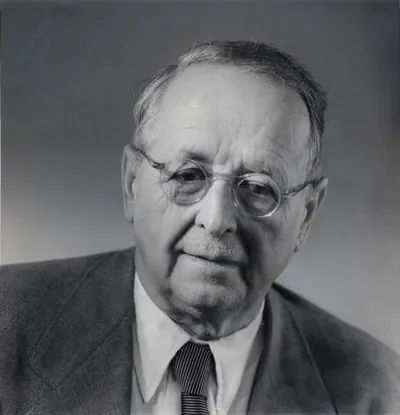 Hermann Weyl1885–1955 · Mathematics
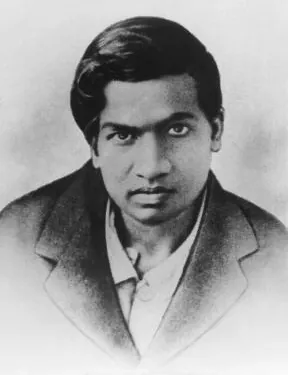 Srinivasa Ramanujan1887–1920 · Mathematics
 Emmy Noether1882–1935 · Mathematics
 Ronald Fisher1890–1962 · Mathematics
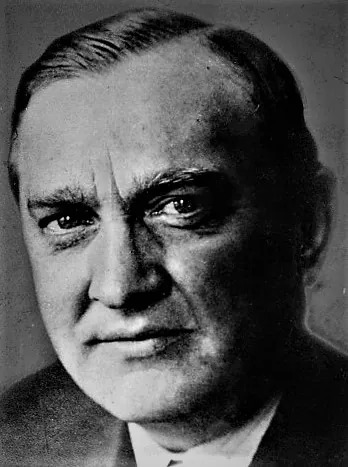 Stefan Banach1892–1945 · Mathematics
 G.H. Hardy1877–1947 · Mathematics
