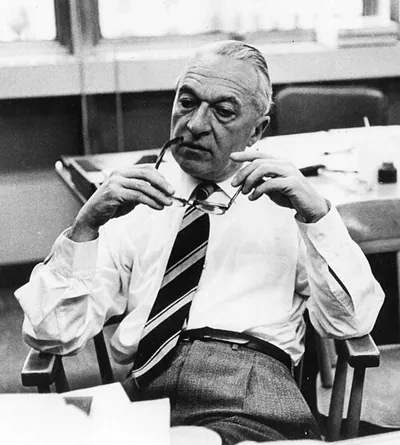
Bruno Rossi
Italian-American experimental physicist and pioneer of cosmic-ray research and X-ray astronomy · 1905–1993
- Born
- April 13, 1905
- Died
- November 21, 1993
- Country
- United States, Italy, Kingdom of Italy
- Section
- Physics
Biography
Bruno Benedetto Rossi (Venice, 13 April 1905 – Cambridge, Massachusetts, 21 November 1993) was an Italian experimental physicist who, forced to leave Europe in 1938 under Italy's racial laws, built most of his career in the United States. He worked in an era when particle physics and the study of cosmic rays, particles that arrive constantly from space and strike the Earth's atmosphere, were beginning to reveal the structure of matter. His importance lies in the electronic circuits and experimental methods he devised, which became standard tools of modern physics, and in his pioneering role in X-ray astronomy during the 1960s.
He was born into a Jewish family in Venice and was the eldest of three sons. His father, Rino Rossi, was an electrical engineer who took part in the electrification of the city. Rossi was taught at home by tutors until he was fourteen and then attended secondary school in Venice. He began university studies at Padua and finished at Bologna, where he took a degree in physics in 1927 under Quirino Majorana, a respected experimentalist and uncle of the physicist Ettore Majorana.
In 1928 he became an assistant to Antonio Garbasso at the Physics Institute of the University of Florence, located at Arcetri on a hill above the city. Garbasso had gathered a remarkable group of physicists, including Enrico Fermi and Franco Rasetti. Rossi's first doctoral student, Giuseppe Occhialini, earned his degree in 1929. Rossi turned to cosmic rays, which Victor Hess had discovered on balloon flights in 1911 and 1912. In 1929 he read a paper by Walther Bothe and Werner Kolhörster reporting charged particles that could pass through a considerable thickness of gold. This was startling, because the most penetrating charged particles then known, electrons from radioactive decay, could barely get through a millimetre of gold. Bothe detected such events with a coincidence method, which records when two or more detectors fire at the same moment, but his setup was cumbersome, relying on visually comparing photographed pulses. Within a few weeks Rossi devised an electronic circuit based on triode vacuum tubes. It was more precise and could register coincidences among any number of detectors. It was also one of the first electronic AND circuits, the basic building block of the digital logic found in modern computers. Working with Occhialini, who helped build tubular Geiger-Müller counters developed by Walther Müller from Hans Geiger's original device, Rossi confirmed and extended Bothe's results. Bothe then invited him to Berlin in the summer of 1930.
In Berlin he studied how charged particles follow curved paths in the Earth's magnetic field, using calculations by Carl Størmer. He concluded that the intensity of cosmic rays arriving from the east might differ from that arriving from the west. From Berlin he sent the first paper proposing that observing this east-west effect could show that cosmic rays are charged particles and reveal the sign of their charge.
In autumn 1931 Fermi and Orso Mario Corbino organised an international conference on nuclear physics in Rome, and Fermi asked Rossi to give an introductory talk on cosmic rays. The audience included Robert Millikan, who had named the radiation and believed it consisted of photons, and Arthur Compton, a Nobel laureate. Millikan was unhappy with the evidence that most cosmic rays are charged particles. Compton, by contrast, was inspired to start his own research on the subject. Soon afterwards Rossi carried out two experiments using three Geiger counters and blocks of lead. The first showed particles able to pass through a great deal of lead. The second, with the counters in a triangle inside a lead box, showed that some cosmic rays produce several secondary particles when they interact with lead. When he plotted the rate of triple coincidences against the thickness of lead, the result was a curve that rose rapidly and then fell slowly, now known as the Rossi curve. He concluded that ground-level cosmic rays have two components: a soft one that produces showers of particles, and a hard one that penetrates thick layers of lead. The physical nature of both remained a puzzle.
In 1932 he won a competition for a professorship of experimental physics at the University of Padua. Shortly afterwards the rector asked him to design the university's new Physics Institute, which opened in 1937 and drew him away from research. Even so, in 1933 he completed, with Sergio De Benedetti, an experiment on the east-west effect at Asmara in Eritrea, then an Italian colony close to the equator. Their cosmic-ray telescope used two Geiger counters working in coincidence. They found that the intensity from the west was clearly larger, which implied an excess of positive primary particles, surprising because most researchers expected negative ones. Shortly afterwards he learned of two similar observations, by Thomas Johnson and by Compton and Luis Alvarez. Rossi was disappointed that others had carried out the test of his idea first, but published his results as soon as he returned. In Eritrea he also discovered extensive air showers. When he spread his counters across a horizontal plane, he recorded more coincidences than could be explained by accidental events, which meant that one particle could trigger a cascade spreading over a wide area.
In 1937 he met Nora Lombroso, daughter of Ugo Lombroso, a physiology professor in Palermo, and granddaughter of the criminologist Cesare Lombroso. They married in April 1938 and set up home in Padua. Rossi avoided politics, but some of his associates opposed the fascist state. He mentored Eugenio Curiel, a communist who joined the resistance in Milan and was murdered in 1945 by soldiers of the Republic of Salò. Ettore Pancini, who graduated under Rossi in 1938, divided his wartime years between research and the resistance. Because both Rossis were Jewish and the anti-Jewish laws stemming from the Manifesto of Race were tightening, Rossi was dismissed from his chair. The couple left Italy in October 1938 and did not intend to return.
In Copenhagen, Niels Bohr helped them by sponsoring a conference in the hope that a physicist there would find Rossi a position. Patrick Blackett then invited him to Manchester, where a major cosmic-ray group was taking shape. There he worked with Ludwig Jánossy on an experiment that checked a prediction by Hans Bethe and Walter Heitler about photons emitted by fast electrons, a theory not yet fully tested. The experiment also introduced anti-coincidence counting, a method that now appears in countless particle detectors. By then the hard component was linked to the mesotron, a particle with a mass between those of the electron and the proton, found by Carl Anderson and Seth Neddermeyer in 1936 and later renamed the muon. Blackett suggested that the mesotron might be unstable, which could explain variations in cosmic-ray intensity with atmospheric temperature. Rossi left Manchester determined to test the decay and measure how long the particle lasts.
As war approached, Blackett and others urged him to leave Britain. Compton invited him to a summer symposium in Chicago, and in June 1939 the Rossis sailed for New York, where Enrico Fermi and Laura Fermi greeted them. They reached the University of Chicago in mid-June. Compton proposed measuring the hard component at high altitude, where its intensity is greater and the air is thinner. They chose Mount Evans in Colorado and carried out their experiments in summer 1940. They compared how much the flow of mesotrons dropped when it crossed air and an equivalent layer of solid carbon. The loss in air was far greater, which they read as evidence that mesotrons decay. Allowing for relativistic time dilation, they estimated a lifetime at rest of about two microseconds. The next year, with David Hall, Rossi refined the figure to (2.4±0.3) microseconds and confirmed experimentally the time dilation predicted by relativity.
In 1940 he joined Cornell University as an associate professor. There he wrote with his first American graduate student, Kenneth Greisen, the article Cosmic-Ray Theory for Reviews of Modern Physics, which specialists came to call The Bible. With Norris Nereson he built an electronic chronometer that measured the time between a mesotron stopping in an absorber and the electron released when it decayed. The device was the first time-to-amplitude converter, another contribution to the electronic methods of experimental physics.
During the war he worked on radar at the MIT Radiation Laboratory and, in the Manhattan Project, led the group at Los Alamos that carried out the RaLa experiments. After the war Jerrold Zacharias recruited him to MIT, where he resumed his cosmic-ray research. In the 1960s he pioneered X-ray astronomy and space plasma physics. His instruments on Explorer 10 detected the magnetopause, the boundary where Earth's magnetic field holds back the solar wind, and his rocket experiments led to the discovery of Scorpius X-1, the first source of X-rays beyond the solar system. He received the Rumford Prize in 1976, the Gold Medal of the Italian Physical Society in 1970, the National Medal of Science in 1983 and the Wolf Prize in Physics in 1987. He died at his home in Cambridge in 1993. His legacy lives on in the Bruno Rossi Prize of the American Astronomical Society and in a professorship at MIT that bears his name.
Main contributions
- 1929Electronic coincidence circuit: recorded simultaneous events in several detectors with great precision, an early form of the digital logic gate.
- 1931The Rossi curve and the two components of cosmic rays: a soft one that produces particle showers and a hard one that penetrates lead.
- 1933East-west effect: the intensity of cosmic rays depends on their direction of arrival, showing that most are positively charged particles.
- 1933Extensive air showers: a single particle can trigger a cascade of particles spread over a large area.
- 1939Anti-coincidence technique: rejects events that do not belong to the phenomenon under study, a method now common in particle detectors.
- 1941Measurement of the mesotron (muon) lifetime at about 2.4 microseconds, confirming relativistic time dilation.
- 1941Time-to-amplitude converter: a circuit that turns a time interval into a pulse of proportional height, the first device of its kind.
- 1960X-ray astronomy: the Explorer 10 satellite and the rockets that discovered Scorpius X-1, the first X-ray source beyond the solar system.
Teachers and students
Studied under:
Taught:
Trivia and anecdotes
A graph that bears his name
The curve Rossi obtained by varying the lead thickness above his counters carries his name and is still cited in textbooks on cosmic rays.
A paper nicknamed The Bible
The review he wrote with Kenneth Greisen on the theory of cosmic rays became known among specialists, half-jokingly, as The Bible.
A borrowed bus
To reach Mount Evans, Rossi and his team loaded their equipment onto an old bus that Compton borrowed from the zoology department.
An uncomfortable lecture
At the 1931 Rome conference, Millikan, who had given cosmic rays their name, was not pleased by Rossi's presentation on their nature.
Related discoveries and inventions
- 1934Air showerA shower of secondary particles produced in the atmosphere when a high-energy cosmic ray strikes air molecules.
Their contemporaries
While Bruno Rossi was alive (1905–1993)…
Alive at the same time
Discovered or invented in those years
- 1916Black holeA region of space where gravity is so strong that nothing, not even light, can escape once it crosses a certain boundary.
- 1925TelevisionA system that sends moving pictures and sound over distance and shows them on a receiver, the television set.
- 1925Quantum mechanicsPhysical theory describing how matter and light behave at atomic and subatomic scales, where energy is exchanged in minimal packets and results are expressed as probabilities.
- 1931Big BangA cosmological model describing how the universe expanded from an early state of extreme density and temperature, about 13.8 billion years ago.
- 1945ComputerA programmable machine that takes in data, processes it by following stored instructions, and produces results, able to switch tasks simply by running different software.
- 1969InternetA global network of interconnected computer networks that communicate using the TCP/IP protocol suite.
 J. Robert Oppenheimer1904–1967 · Physics
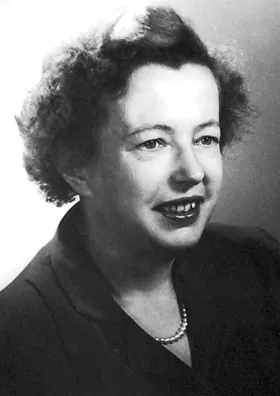 Maria Göppert Mayer1906–1972 · Physics
 Hans Bethe1906–2005 · Physics
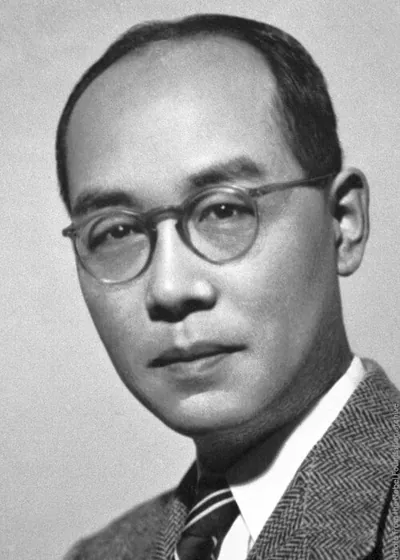 Hideki Yukawa1907–1981 · Physics
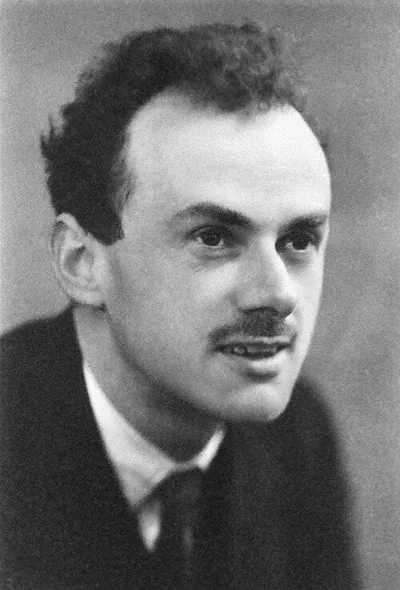 Paul Dirac1902–1984 · Physics
 Lev Landau1908–1968 · Physics
