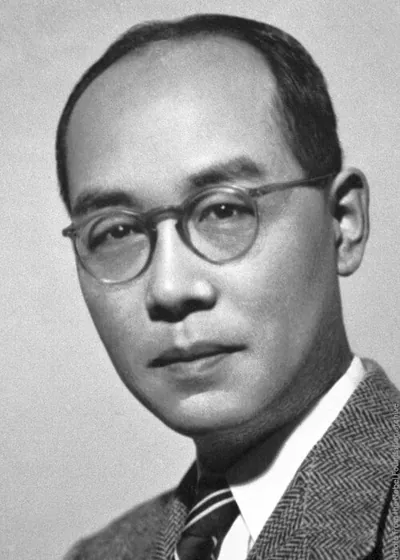
Hideki Yukawa
Japanese theoretical physicist, 1949 Nobel laureate for predicting the existence of mesons · 1907–1981
- Born
- January 23, 1907
- Died
- September 8, 1981
- Country
- Japan, Empire of Japan
- Section
- Physics
- Awards
- Nobel Prize in Physics
Extended biography
Early years and education
Hideki Yukawa was born on 23 January 1907 in Tokyo, but he grew up in Kyoto, where his father, Takuji Ogawa, became a professor of geology at the Kyoto Imperial University. He was the third son in the family, and nothing in his early life suggested that he would become one of Japan's most celebrated physicists. According to the usual account, his father at one point considered sending him to a technical college instead of a university, because he seemed less outstanding than his older brothers. His middle school principal, however, praised his strong ability in mathematics and offered to adopt him so that he could pursue an academic career. His father agreed, and the young man took the family name Yukawa when he was adopted by his future in-laws, a practice that was common in Japan when a household lacked sons to carry on its name.
His early ambitions shifted several times. A high school teacher marked one of his answers as wrong when he had proved a theorem by a route different from the one the teacher expected, and this experience steered him away from pure mathematics. He later considered experimental physics, but he found that he was clumsy at glassblowing, a skill needed to build the apparatus for spectroscopy, the study of the light given off by atoms. Recognising his limits with his hands, he turned toward theoretical physics, where most of the work is done through mathematical reasoning and models.
He graduated from Kyoto Imperial University in 1929. In the years that followed, he worked there as a lecturer, and his interest centred on the theory of elementary particles, the smallest known building blocks of matter.
Developing a theory of the nucleus
Between 1932 and 1939 Yukawa taught at Kyoto, and in 1933 he moved to Osaka Imperial University as a lecturer and assistant professor of physics. To understand his work it helps to know the scientific setting. In the 1930s physics had been transformed by quantum mechanics, the theory that describes how atoms and particles behave at very small scales, where energy and matter do not follow the rules of everyday life. Yukawa became fluent in these tools and applied them to a question that was then a major puzzle: what holds the atomic nucleus together.
The nucleus contains protons, which carry a positive electric charge, and neutrons, which have no charge. Protons repel one another electrically, so there must be a force stronger than electromagnetism that binds them at very short distances. This is called the strong nuclear force. What made it hard to explain was its range. It acts only inside the nucleus and falls away almost completely outside it, which did not fit the forces physicists already knew.
Yukawa's central contribution came from an analogy. Quantum electrodynamics, the theory describing how electric charges interact by exchanging photons, or particles of light, had proved successful. Yukawa proposed that particles in the nucleus attract and repel each other by exchanging a different kind of particle, which came to be called the meson. A key principle is that the range of a force depends on the mass of the particle that carries it: heavier carriers give shorter ranges. From the range of the nuclear force, he estimated that the meson should have a mass lying between that of the electron and that of the proton. He published this theory in 1935, and it offered a coherent explanation of why the nuclear force is strong yet short-ranged.
The meson hypothesis
Yukawa's theory was a theoretical proposal rather than an observation. Its great merit was to suggest a specific particle, with an estimated mass and a defined role, that could in principle be searched for in nature. At the time only a few fundamental particles were known, and physicists were still unsure how the nucleus fitted into the wider picture of matter. The idea attracted attention, although not everyone accepted it at first.
In 1938 Yukawa received his doctorate from Osaka Imperial University, on the strength of his predictions about the existence of mesons and his theoretical work on the nature of nuclear forces. This academic recognition strengthened his standing, and in 1939 he was appointed professor of theoretical physics at Kyoto Imperial University. His later research also turned to the theory of non-local fields, a mathematical approach that tried to describe subatomic particles without assuming that each one occupies a single point in space, a question that remained difficult to settle.
One of his less famous contributions concerned K-capture, in which a nucleus absorbs an electron of low energy from the atom's inner shells. Yukawa worked on the theory of this process after an earlier prediction by G. C. Wick, and the resulting account helped to describe how certain radioactive nuclei change. Although this work does not match the fame of the meson theory, it belongs to the same effort to understand nuclear structure.
Confirmation and the Nobel Prize
Yukawa's hypothesis received its most important support in 1947. That year C. F. Powell, Giuseppe Occhialini and César Lattes identified among cosmic rays a particle, the pion, that matched the one Yukawa had described. Cosmic rays are high-energy particles that arrive from space and collide with the atmosphere, and they contained particles that could not then be produced in laboratories. From this finding, the international scientific community began to take the theory seriously, having previously regarded it as an elegant idea without experimental support.
Yukawa's reputation grew quickly. In 1948 he became a visiting professor at the Institute for Advanced Study in Princeton, and the following year he was also a visiting professor at Columbia University. In 1949 he received the Nobel Prize in Physics for his prediction of the existence of mesons, based on theoretical work on nuclear forces. He was the first Japanese scientist to win a Nobel Prize, an achievement that carried great significance in a country still recovering from the Second World War.
The scope of the theory should be stated carefully, however. Later, further mesons were discovered that did not fit his original model, and particle physics moved toward more elaborate descriptions of the nuclear interaction. Even so, the principle that a force can be carried by the exchange of particles became one of the foundations of modern physics, and the meson framework is still used for approximate calculations in many cases.
Scientific and social commitment
After the Second World War many scientists worried about the military use of nuclear energy, and Yukawa took part in that debate. In 1955 he joined ten other scientists and intellectuals, among them Albert Einstein, in signing the Russell-Einstein Manifesto, which called for reducing the dangers of nuclear weapons and seeking peaceful ways to resolve conflicts between nations. The document reflected the unease of part of the scientific community about the consequences of its own work.
In 1957 Yukawa attended the first Pugwash Conference on Science and World Affairs as Japan's scientific delegate. These meetings brought together scientists from many countries, including those on opposing sides of the Cold War, to discuss arms control and international cooperation. Yukawa also signed an agreement to convene a body that would draft a world constitution, a project that aimed to create a shared political framework for the planet.
His involvement was not limited to these initiatives. In 1946 he had founded the journal Progress of Theoretical Physics, which became an important publication for theoretical physics in Japan. He also wrote textbooks, including Introduction to Quantum Mechanics (1946) and Introduction to the Theory of Elementary Particles (1948), helping to train a new generation of researchers.
Family, final years and death
Yukawa married in 1932. Because his wife's family had no sons, he was adopted by her father, Genyo, in keeping with Japanese custom, and he changed his family name from Ogawa to Yukawa. The couple had two sons, Takaaki and Harumi. Takaaki Yukawa (1934-1971) also became a theoretical physicist and earned a PhD from Trinity College Dublin in 1965 under John Lighton Synge, so that the family produced a second generation of researchers in the same field.
In 1953 Yukawa became director of the newly established Research Institute for Fundamental Physics in Kyoto, which is today known as the Yukawa Institute for Theoretical Physics. He held the post until his retirement in 1970. In his last years his health declined, and he appeared in public in a wheelchair.
Hideki Yukawa died on 8 September 1981, at the age of 74, at his home in Sakyo-ku, Kyoto. He died of pneumonia and heart failure. His tomb is in Higashiyama-ku, also in Kyoto. As a sign of how his name is remembered, the asteroid (6913) Yukawa, discovered on 31 October 1991 by Kin Endate and Kazuo Watanabe, was named in his honour.
Legacy
Yukawa's legacy can be measured on several levels. Scientifically, his proposal that forces are transmitted by the exchange of particles was a fruitful idea that opened a line of research and guided the search for new particles for decades. Although his specific model was superseded, the logic of his reasoning, which links the range of a force to the mass of its carrier particle, is still taught as an example of how theory can anticipate phenomena not yet observed.
Institutionally, his role in founding the Research Institute for Fundamental Physics in Kyoto left a lasting mark. That centre, later renamed the Yukawa Institute for Theoretical Physics, has trained researchers and published work for decades, and its name keeps alive the memory of the person who pushed for its creation.
Socially, his signature of the Russell-Einstein Manifesto and his involvement in the Pugwash meetings show a scientist who believed that physics also carried political responsibilities. For the Japanese public, his 1949 Nobel Prize was a landmark showing that the country's science could compete at the highest international level. His story is that of a physicist who started from a theoretical intuition, saw it confirmed years later, and devoted his life both to research and to reflection on the place of science in the world.
Quotes
“I felt like a traveler who rests himself at a small tea shop at the top of a mountain slope. At that time I was not thinking about whether there were any more mountains ahead... I do not want to write beyond this point, because those days when I studied relentlessly are nostalgic to me; and on the other hand, I am sad when I think how I have become increasingly preoccupied with matters other than study.”
Main contributions
- 1935Theory of mesons: proposes that nuclear forces are carried by the exchange of an intermediate-mass particle, the meson.
- 1946Introduction to Quantum Mechanics and the journal Progress of Theoretical Physics: works through which he promoted the teaching and spread of theoretical physics in Japan.
- 1947Pion confirmation: the particle his theory predicted turns up among cosmic rays, lending credibility to his hypothesis.
- 1949Nobel Prize in Physics for formulating the meson hypothesis, based on his theoretical work on nuclear forces.
- Electron capture: describes the process in which the nucleus absorbs a low energy electron, a phenomenon he developed with his own calculations.
Teachers and students
Taught:
Trivia and anecdotes
An exam mistake
A high school teacher marked one of Yukawa's proofs as wrong because he had reached the result by a route other than the expected one, an episode that helped steer him away from pure mathematics.
Too clumsy for glass
His clumsiness at glassblowing, a requirement in spectroscopy labs, led him to abandon experimental physics in favour of theory.
A change of surname
Under Japanese custom, after his marriage he was adopted by his father-in-law and changed his surname from Ogawa to Yukawa, the name by which he is known today.
Their contemporaries
While Hideki Yukawa was alive (1907–1981)…
Alive at the same time
Discovered or invented in those years
- 1916Black holeA region of space where gravity is so strong that nothing, not even light, can escape once it crosses a certain boundary.
- 1925TelevisionA system that sends moving pictures and sound over distance and shows them on a receiver, the television set.
- 1925Quantum mechanicsPhysical theory describing how matter and light behave at atomic and subatomic scales, where energy is exchanged in minimal packets and results are expressed as probabilities.
- 1931Big BangA cosmological model describing how the universe expanded from an early state of extreme density and temperature, about 13.8 billion years ago.
- 1945ComputerA programmable machine that takes in data, processes it by following stored instructions, and produces results, able to switch tasks simply by running different software.
- 1969InternetA global network of interconnected computer networks that communicate using the TCP/IP protocol suite.
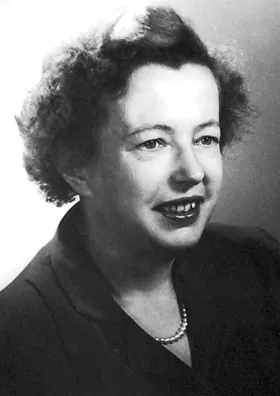 Maria Göppert Mayer1906–1972 · Physics
 Lev Landau1908–1968 · Physics
 Hans Bethe1906–2005 · Physics
 J. Robert Oppenheimer1904–1967 · Physics
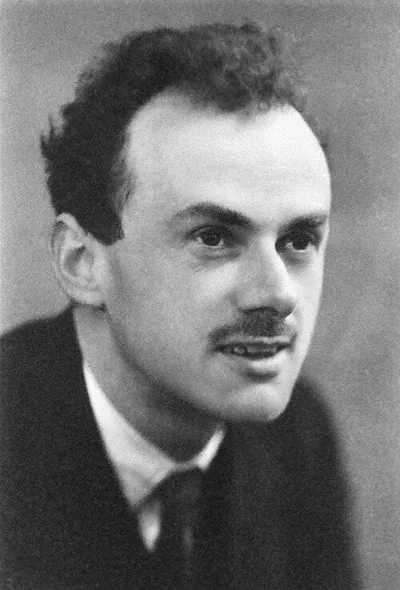 Paul Dirac1902–1984 · Physics
 Eugene Paul Wigner1902–1995 · Physics
