
Chris Lattner
American software engineer who created the LLVM compiler infrastructure, Clang, MLIR, and the Swift and Mojo programming languages · 1978
- Born
- 1978
- Country
- United States
- Section
- Computing
Biography
Christopher Arthur Lattner (born 1978) is an American software engineer who created the LLVM compiler infrastructure and the programming languages Swift and Mojo. His work belongs to a field that few people see but that shapes nearly all software today: the tools that translate code written by programmers into instructions a computer can run.
He started programming in high school with BASIC, then learned languages closer to the machine, including machine language, Pascal, assembly, C and C++. He studied computer science at the University of Portland, graduating in 2000. While in Oregon he worked as an operating system developer, improving DYNIX/ptx, a system made by Sequent Computer Systems.
In late 2000 he joined the University of Illinois at Urbana-Champaign as a research assistant and master's student. There, working with Vikram Adve, he designed and began building LLVM, an infrastructure for optimizing compilers, meaning tools that make the translated program run more efficiently. That work became the subject of his 2002 master's thesis. His doctoral thesis, completed in 2005 under Adve as well, used LLVM to study how to optimize programs that rely heavily on pointers, which are references to memory locations.
In 2005 Apple hired him to bring LLVM up to the standard needed for its products. Over the next twelve years he implemented many major new features, built and led a team of LLVM developers, started the Clang project, shaped the evolution of Objective-C and helped nurture the open source community. Apple shipped LLVM-based technology in several versions of its systems and in Xcode, its integrated development environment. From 2013 to 2017 he led the developer tools department, which covered the Xcode, Instruments and compiler teams. LLVM now sits at the heart of Apple's developer tools, and it is also the default toolchain on FreeBSD. In 2010 he received the first ACM SIGPLAN Programming Languages Software Award, and in 2013 the ACM's Software System Award, which recognizes systems with a lasting influence.
From 2010 he worked on Swift, a language that grew through the collaboration of many other programmers. It debuted at Apple's WWDC conference in 2014 and was designed to coexist with Objective-C, the language Apple had favored until then, while resisting erroneous code better. On 2 June 2014 the WWDC app became the first publicly released app written in Swift. In January 2017 he announced that he was leaving Apple and that leadership of the project would pass to Ted Kremenek.
Between January and June 2017 he was vice president of Autopilot software at Tesla, where he worked on moving the Autopilot hardware to a new design. From August 2017 to January 2020 he was senior director and distinguished engineer for TensorFlow infrastructure at Google. There he co-founded MLIR, a compiler infrastructure intended to reduce software fragmentation, improve compilation for heterogeneous hardware, make domain-specific compilers cheaper to build and connect existing compilers together. In January 2020 he joined SiFive as president of platform engineering, leading the product and engineering teams for RISC-V, an open processor architecture.
In 2022 he co-founded Modular AI with other partners, a company building a developer platform for artificial intelligence. Its first products are the Mojo language and an inference engine, software that runs models that have already been trained. Mojo is meant as an alternative to NVIDIA's CUDA language, which focuses on AI programming. Lattner is the company's chief executive. In June 2026 Modular announced an agreement to be acquired by the semiconductor manufacturer Qualcomm.
He is married to Tanya Lattner, with whom he co-founded the LLVM Foundation in 2015. She has served as its president and chief operating officer ever since. They have two children, Zac and Riley, and two dogs, Copper and Annie.
His legacy lies in the tools that turn code into working programs. LLVM and Clang underpin compilers used by Apple and other platforms, while Swift and Mojo aim to make systems and AI programming accessible to a wider audience.
Main contributions
- 2002LLVM, a compiler optimization infrastructure that became the basis of many development tools.
- 2014Swift, an open source programming language for building apps on iOS and macOS, introduced at WWDC 2014.
- 2022Mojo, a programming language aimed at artificial intelligence applications, developed by Modular AI.
- Clang, a compiler for C-family languages, started by Lattner at Apple as part of the LLVM project.
- MLIR, a compiler infrastructure created at Google to make it easier to build specialized compilers.
Teachers and students
Trivia and anecdotes
First Swift app
The WWDC conference app became the first publicly released app written in Swift, on 2 June 2014.
First steps with BASIC
Lattner began programming in high school with BASIC, before moving on to languages closer to the machine.
Their contemporaries
While Chris Lattner was alive (1978–)…
Alive at the same time
Discovered or invented in those years
- 1989World Wide WebA system of linked documents and resources, connected by hyperlinks and accessed over the Internet with web browsers.
- 1990Web browserA program that lets people access the web by fetching a page's files from a server and displaying them on screen as an interactive page.
- 1991HTMLThe markup language used to structure web page content so that a browser can display it.
- 1994SmartphoneA mobile phone that combines the functions of a telephone with those of a small pocket computer, featuring a touchscreen, internet access and installable apps.
- 1998International Space StationA permanently crewed research laboratory in low Earth orbit, about 400 kilometres up, built and operated by five space agencies from different countries.
- 2007IPhoneA line of premium smartphones designed and sold by Apple since 2007, built around a touchscreen and the iOS operating system.
 Andrew Y. Ng1976 · Computing
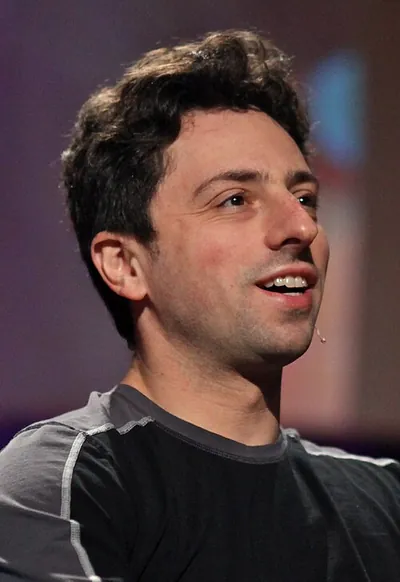 Sergey Brin1973 · Computing
 Linus Torvalds1969 · Computing
 Yoshua Bengio1964 · Computing
 Yann LeCun1959 · Computing
 Shafrira Goldwasser1958 · Computing
