
Clarence Zener
American physicist who discovered the Zener effect in insulating materials · 1905–1993
- Born
- December 1, 1905
- Died
- July 2, 1993
- Country
- United States
- Section
- Physics
Biography
Clarence Melvin Zener (Indianapolis, 1905 - Pittsburgh, 1993) was an American physicist whose name is attached to a basic phenomenon of modern electronics: the breakdown of insulating materials under a strong electric field, known as the Zener effect. He worked in the first half of the twentieth century, when solid-state physics was beginning to shape electronic devices, and his research ranged from quantum mechanics to metallurgy. His importance lies in combining theory and practical application with unusual ease.
He was born on 1 December 1905 in Indianapolis, to a family of German descent. He studied physics at Stanford University, graduating in 1926, and later earned his doctorate at Harvard in the late 1920s under Edwin C. Kemble. His thesis addressed the quantum mechanics behind the formation of certain diatomic molecules, that is, molecules made of two atoms. He also continued his studies at the University of Leipzig and, between 1932 and 1934, was a research fellow at the University of Bristol. From an early age he showed a strong talent for mathematics, which later allowed him to move easily between very different problems.
In 1934 he published a paper on what happens when an insulator is subjected to an electric field strong enough to let current pass through it. Zener explained the phenomenon through quantum tunnelling, a process by which a particle can cross a barrier that classical physics says it should not be able to pass. Some years later, in the early 1950s, William B. Shockley and colleagues at Bell Labs, following the invention of the transistor, studied reverse current in p-n junctions of semiconductors and found that it fitted Zener's theory. The work led to a semiconductor diode that Shockley named the Zener diode, a component still used to stabilise voltage in circuits.
His teaching career began in 1935 at Washington University in St. Louis. He moved to the City College of New York in 1937 and to Washington State University in 1940. During the Second World War he carried out research at the Watertown Arsenal in Massachusetts. After the war he was a professor at the University of Chicago until 1951. There he produced pioneering studies of anelasticity in metals, the delayed recovery of elastic deformation after stress is applied, and published the first book on the subject. For this contribution he received the ICIFUAS Prize in 1985, which later became known as the Zener Gold Medal in his honour.
In 1951 he joined the Westinghouse Electric Corporation, where he stayed for fourteen years and eventually directed the company's scientific research. There he developed geometric programming, a mathematical method for solving engineering problems by adjusting parameters constrained by mathematical functions. With this tool he modelled designs for heat exchangers and for systems that generate electricity from temperature differences in seawater, and he obtained several patents on the latter idea. After leaving Westinghouse he spent three years at Texas A&M University, and in 1968 he joined Carnegie Mellon University as a physics professor, remaining there until his final retirement.
Zener was known for disliking experimental work and for preferring practical problems in applied physics. Despite his success in that field, he considered himself less suited to purely theoretical physics. After dining with J. Robert Oppenheimer, he remarked that when it came to fundamental physics there was no point in competing with a person like that. He also researched the internal friction of metals and many other subjects, and published more than one hundred articles and several books.
His legacy survives in electronics, where the Zener diode remains a common component, and in materials science, where the Zener effect and his anelasticity work are still cited. His name also appears in several concepts, including Zener pinning and the Landau-Zener formula. One of his doctoral students was John B. Goodenough, who received the Nobel Prize in Chemistry in 2019. Zener died in Pittsburgh in July 1993.
Main contributions
- 1934Explanation of insulator breakdown: he described how an intense electric field lets current pass through an insulating material, through quantum tunnelling.
- Zener diode: a semiconductor component, developed in the early 1950s from his theory, that keeps voltage stable in a circuit.
- Anelasticity of metals: pioneering studies of elastic deformation that recovers with a delay, collected in the first book on the subject.
- Geometric programming: a mathematical method for solving engineering problems by adjusting parameters constrained by functions.
- Electricity from the sea: a system that generates electricity from temperature differences in seawater, covered by several patents.
Teachers and students
Trivia and anecdotes
A remark about Oppenheimer
After dining with J. Robert Oppenheimer, Zener remarked that there was no point competing with someone like him in fundamental physics.
A prize named after him
The ICIFUAS Prize, awarded in 1985 for his work on anelasticity, was renamed after Zener following his death.
Their contemporaries
While Clarence Zener was alive (1905–1993)…
Alive at the same time
Discovered or invented in those years
- 1916Black holeA region of space where gravity is so strong that nothing, not even light, can escape once it crosses a certain boundary.
- 1925TelevisionA system that sends moving pictures and sound over distance and shows them on a receiver, the television set.
- 1925Quantum mechanicsPhysical theory describing how matter and light behave at atomic and subatomic scales, where energy is exchanged in minimal packets and results are expressed as probabilities.
- 1931Big BangA cosmological model describing how the universe expanded from an early state of extreme density and temperature, about 13.8 billion years ago.
- 1945ComputerA programmable machine that takes in data, processes it by following stored instructions, and produces results, able to switch tasks simply by running different software.
- 1969InternetA global network of interconnected computer networks that communicate using the TCP/IP protocol suite.
 J. Robert Oppenheimer1904–1967 · Physics
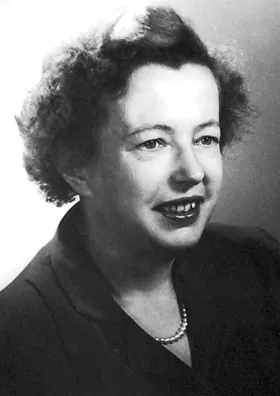 Maria Göppert Mayer1906–1972 · Physics
 Hans Bethe1906–2005 · Physics
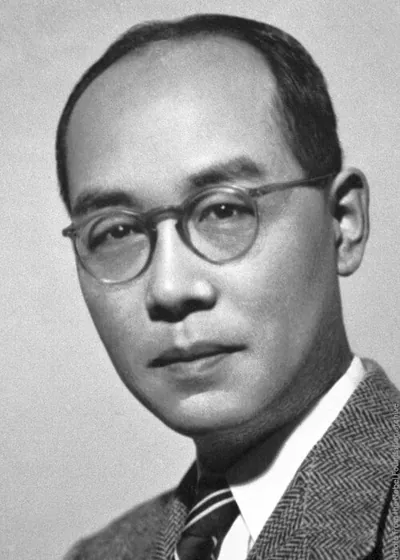 Hideki Yukawa1907–1981 · Physics
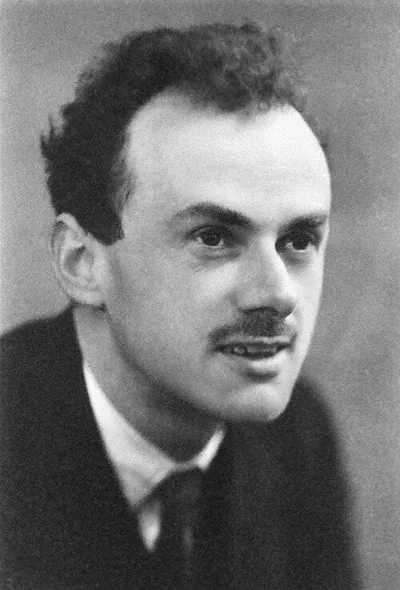 Paul Dirac1902–1984 · Physics
 Lev Landau1908–1968 · Physics
