
Craig Mello
American biologist, 2006 Nobel laureate in Physiology or Medicine for discovering RNA interference · 1960
- Born
- October 18, 1960
- Country
- United States
- Section
- Biology
- Awards
- Nobel Prize in Physiology or Medicine
Biography
Craig Cameron Mello (born 1960 in New Haven, Connecticut) is an American biologist who, together with Andrew Fire, received the 2006 Nobel Prize in Physiology or Medicine for discovering RNA interference, a natural cellular mechanism that switches genes off. Their work, carried out in the late 1990s, changed how biologists think about the way cells decide which proteins to make and which to leave unmade, and it opened a whole new field of research.
Mello was born on 18 October 1960, the third child of James Mello, a paleontologist, and Sally Mello, an artist. His paternal grandparents had emigrated to the United States from the Portuguese Azores, and his parents were the first in their families to go to college, meeting at Brown University. The family moved to Falls Church in northern Virginia when his father took a job with the US Geological Survey, and later to Fairfax, when James became assistant director of the Smithsonian's natural history museum. Mello treasured childhood trips with his father to Colorado, Wyoming and the Blue Ridge Mountains. Dinner-table debates were a daily ritual, and they taught him to argue, to listen and to admit when he was wrong, which gave him confidence during years when school was a struggle.
His early schooling was rocky. He started first grade at five, at a private school, and did not really find his footing until seventh grade. He is not sure whether he was a slow learner or simply uninterested; he preferred the woods and creeks to the classroom, and in second grade he pretended to read. From an early age, though, he was certain he would become a scientist. He went to Fairfax High School and then to Brown University, studying biochemistry and molecular biology. His cell biology teacher, Kenneth Miller, remembered him as an intensely curious student who was not top of the class but who would never let a lecture pass without asking for more references, questions or evidence. He graduated in 1982.
He began graduate work at the University of Colorado Boulder with David Hirsh, but when Hirsh left for industry, Mello followed his research to Harvard, working with Dan Stinchcomb, and completed his PhD there in 1990. He then did postdoctoral work at the Fred Hutchinson Cancer Research Center, in James Priess's laboratory. He has been on the faculty at the University of Massachusetts in Worcester since 1994 and has been a Howard Hughes Medical Institute investigator since 2000.
The discovery that won the prize began in 1998, when Mello, Fire and colleagues published a paper in the journal Nature showing that short fragments of RNA trick the cell into destroying a gene's messenger RNA before it can be turned into protein. In effect, the gene is silenced. This showed that RNA was not merely a passive go-between from DNA to protein but a key player in gene regulation. The Nobel citation described it as a fundamental mechanism for controlling the flow of genetic information, and other scientists remarked that few pieces of work so thoroughly reshape how biological processes are understood.
News of the prize arrived in an unusual way. Mello recalled a call shortly after 4:30 in the morning, just after he had checked on his daughter. His wife, assuming a prank, told him not to answer, but when he pointed out that the Nobel winners were being announced that very day, her jaw dropped. The voice on the line told him to get dressed, because in half an hour his life was about to change.
Mello has acknowledged the influence of the palaeontologist and essayist Stephen Jay Gould, whose writings on natural history and the philosophy of science he admired and whom he worked with. He has argued that the debate between science and religion is over, and that rationality and spirituality can be united in a worldview that celebrates the mysteries of existence. He is also active in biotechnology based on RNA interference. He co-founded RXi Pharmaceuticals, where he chairs the scientific advisory board, and in 2010 joined the technology advisory board of Beeologics, a company developing RNA-based products for honeybee health and for veterinary and agricultural uses. Monsanto acquired Beeologics in 2011.
His legacy lies in modern biomedicine. RNA interference is now a standard tool for studying what genes do and is being explored as a possible therapy for various diseases, a path that remains under development. Through this work, biology came to see RNA not only as a messenger but as a central regulator of the cell.
Main contributions
- 1998Discovery of RNA interference, in which small RNA fragments trigger the destruction of a gene's messenger RNA, silencing the gene.
- 2005Election to the United States National Academy of Sciences.
- 2006Nobel Prize in Physiology or Medicine, shared with Andrew Fire for discovering RNA interference.
Trivia and anecdotes
The Nobel phone call
He recalled that he learned of the prize early in the morning, and his wife at first assumed the call was a prank.
A restless student
His cell biology teacher remembered him as so curious that he would not let a lecture finish without asking for references or evidence.
Their contemporaries
While Craig Mello was alive (1960–)…
Alive at the same time
Discovered or invented in those years
- 1969InternetA global network of interconnected computer networks that communicate using the TCP/IP protocol suite.
- 1971EmailA network service that lets users send and receive digital messages through addressed mailboxes, much like postal mail but electronic.
- 1973Mobile phoneA handheld wireless phone that lets people make and receive calls while moving across a cellular network area.
- 1975Global warmingThe long-term rise in Earth's average surface temperature, driven mainly by greenhouse gases released through human activity.
- 1989World Wide WebA system of linked documents and resources, connected by hyperlinks and accessed over the Internet with web browsers.
- 1990Web browserA program that lets people access the web by fetching a page's files from a server and displaying them on screen as an interactive page.
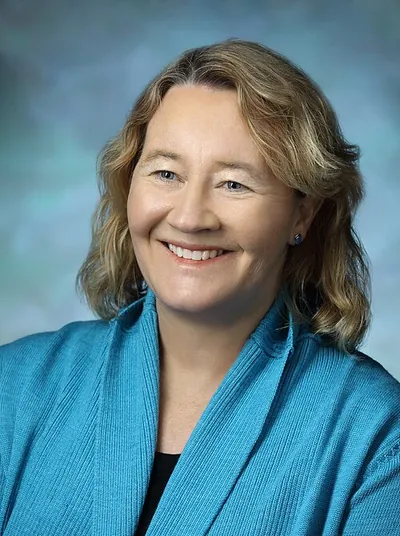 Carol Greider1961 · Biology
 Shinya Yamanaka1962 · Biology
 Jennifer Doudna1964 · Biology
 Svante Pääbo1955 · Biology
 Emmanuelle Charpentier1968 · Biology
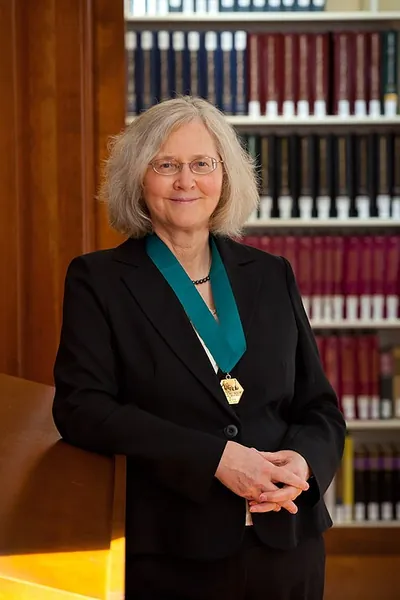 Elizabeth Blackburn1948 · Biology
