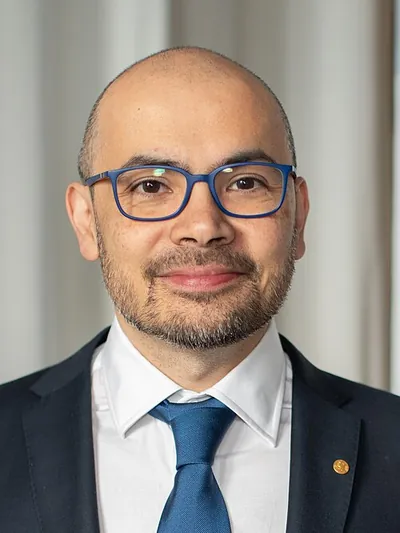
Demis Hassabis
British computer scientist and neuroscientist, co-founder of Google DeepMind and 2024 Nobel laureate in Chemistry · 1976
- Born
- July 27, 1976
- Country
- United Kingdom
- Section
- Computing
- Awards
- Nobel Prize in Chemistry
Biography
Demis Hassabis (born London, 1976) is a British computer scientist and neuroscientist who leads Google DeepMind, the company behind many of the recent advances in artificial intelligence. In 2024 he shared the Nobel Prize in Chemistry with David Baker and John Jumper for using computing and AI to design proteins and predict their structures. His path runs through chess, video games, neuroscience and programming, and it shows how today's AI grew out of very different fields.
He grew up in north London, the son of a Greek Cypriot father and a Chinese Singaporean mother. His original surname, Hassapis, means butcher in Greek, and he later changed one letter. He learned chess at four by watching his father play, and by 13 he had reached master standard with an Elo rating of 2300. With his chess winnings he bought a ZX Spectrum 48K computer in 1984, taught himself to program from books, and wrote a first AI program on a Commodore Amiga that played the board game reversi. He studied at schools in Barnet and East Finchley and sat his A-level exams at 16.
At 17, after winning a competition run by Amiga Power magazine, he joined Bullfrog Productions. He co-designed and programmed Theme Park (1994), a simulation game that sold several million copies and helped start a whole family of open-ended simulation games. He turned down an offer worth seven figures to stay in the games industry. He used what he had earned during his gap year to pay for his degree, and at Queens' College, Cambridge, he studied Computer Science and graduated in 1997 with a double first.
After university he worked at Lionhead Studios, the company Peter Molyneux had founded, where he was lead AI programmer on Black & White (2001). In 1998 he founded Elixir Studios in London. As executive designer he helped shape Republic: The Revolution, an ambitious political simulation that aimed to run an entire fictional country through AI. The project was delayed and scaled back from its original vision, and critics were lukewarm. Evil Genius, an Austin Powers parody, was better received. In 2005 the rights were sold and the studio closed.
He then returned to academia and in 2009 earned a PhD in cognitive neuroscience at the UCL Queen Square Institute of Neurology, supervised by Eleanor Maguire. His first academic paper showed, systematically for the first time, that people with hippocampal damage could not imagine themselves in new experiences, which linked imagination to the recall of memories. Building on this, he proposed scene construction, the generation of a complex and coherent scene, as a key process behind both memory and imagination, and later the idea of a simulation engine of the mind that could help plan ahead.
In 2010 he co-founded DeepMind with Shane Legg and Mustafa Suleyman. Its stated mission is to solve intelligence and then use it to solve everything else. In 2013 the company reported an algorithm that learned to play Atari games at a superhuman level using only the raw pixels on the screen. Google bought DeepMind in 2014 for 400 million pounds. AlphaGo followed, defeating top players at Go, a game long seen as a major challenge for AI because of its vast number of possible positions. From 2016 the team focused on protein structure with AlphaFold, which won the CASP competition in 2018. Hassabis has championed AI safety research, judges a worldwide pause hard to enforce, and calls for tests that measure how capable and controllable new models are. His legacy links games, neuroscience and biology.
Main contributions
- 1994Theme Park, a simulation game he co-designed and programmed with Peter Molyneux at Bullfrog, which helped launch a genre of sandbox simulation games.
- 2001Black & White, a game on which he worked as lead AI programmer at Lionhead Studios.
- 2013Deep Q-Network, an algorithm that learned to play Atari games at a superhuman level using only raw screen pixels.
- 2016AlphaGo, a program that defeated champion Lee Sedol at the game of Go.
- 2018AlphaFold, a system for predicting protein structures that won the CASP competition.
- Scene construction, a theory describing how the brain generates and maintains a complex, coherent scene in memory and imagination.
- Neural Turing machine, an AI architecture developed at DeepMind that combines neural networks with an external memory.
Teachers and students
Trivia and anecdotes
A surname one letter apart
His original surname was Hassapis, meaning butcher in Greek. According to an account cited by Ingo Althöfer, he changed one letter himself.
A computer paid for with chess
His first computer, a ZX Spectrum 48K bought in 1984, was paid for with his chess winnings.
A rejected offer
Although he was offered a seven-figure sum to stay in the games industry, he turned it down.
Their contemporaries
While Demis Hassabis was alive (1976–)…
Alive at the same time
Discovered or invented in those years
- 1989World Wide WebA system of linked documents and resources, connected by hyperlinks and accessed over the Internet with web browsers.
- 1990Web browserA program that lets people access the web by fetching a page's files from a server and displaying them on screen as an interactive page.
- 1991HTMLThe markup language used to structure web page content so that a browser can display it.
- 1994SmartphoneA mobile phone that combines the functions of a telephone with those of a small pocket computer, featuring a touchscreen, internet access and installable apps.
- 1998International Space StationA permanently crewed research laboratory in low Earth orbit, about 400 kilometres up, built and operated by five space agencies from different countries.
- 2007IPhoneA line of premium smartphones designed and sold by Apple since 2007, built around a touchscreen and the iOS operating system.
 Andrew Y. Ng1976 · Computing
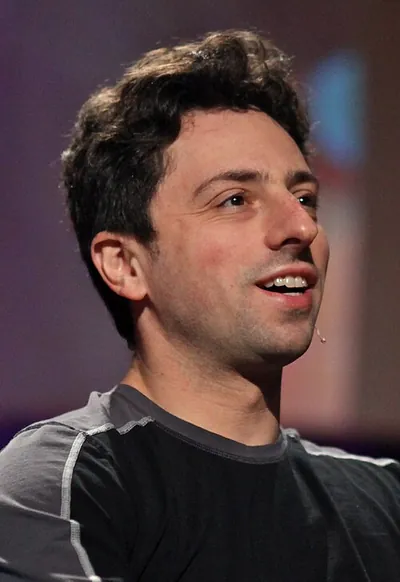 Sergey Brin1973 · Computing
 Linus Torvalds1969 · Computing
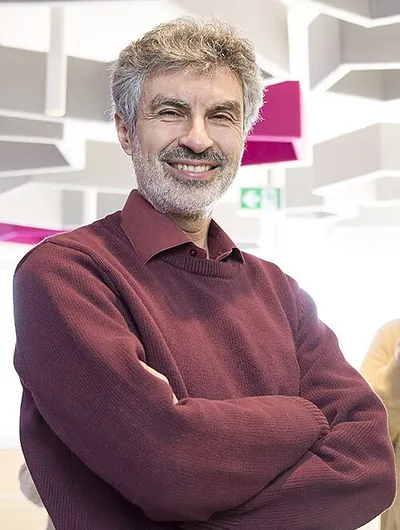 Yoshua Bengio1964 · Computing
 Yann LeCun1959 · Computing
 Shafrira Goldwasser1958 · Computing
